
It seemed like a shame that after 3 months of Bible School in July 2005, which
we started with 44 students though 55 registered to participate, only 6
students graduated in the end, despite the good publicity we gave it. What
contributed to the steady decline of the students was unknown to us until few
weeks before the end. The remaining students at the time were around 9 and out
of worry and a measure of sadness I must confess,
I posed this question to the class.
“Why have many of our
friends stopped coming to class?”
The reasons given were diverse, from having other programs,
to long distance footing and others too flimsy to consider. But one reason
stood out and it really shocked me.
Someone said, “… many of us started coming because we thought
i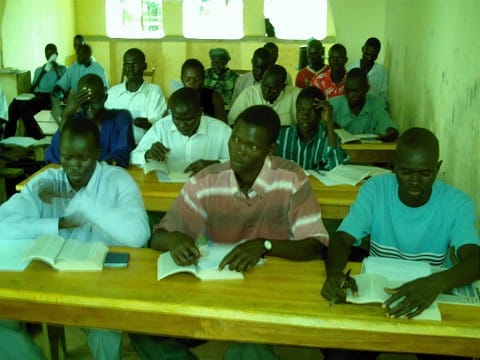 t will be like the one conducted by that Kawaja (white man) who paid students in
the Bible school weekly. There was tea and even lunch.”
“He paid the students for doing what?” I asked.
“Every student was paid 40,000ugsh ($20) weekly to attend the
Bible school.”
I was not sure I heard him right, so I asked again, “you
mean the Kawaja paid his students money so they could attend the
Bible school?”
The entire class now shouted “Yes!!” Their loud affirmation was a statement and a question wrapped together; “why are you not
doing the same… we are disappointed.” Pastor Stanley, the Director of our Bible
School confirmed to me that a ministry ran by a foreigner in Yei few years ago actually
paid students who attended the Bible School.
Then Peter stood up and said, “I didn’t know about that. I
came here to learn about God and I think my life has changed since I started
coming here.”
His words seemed to calm the class a bit. In fact I thought
they’d be ashamed to admit such a thing as coming to school for the money. But their faces didn’t reflect shame in
any way. Somehow it seemed they were asking for their right. It never crossed my mind that someone could be paid to come for Bible
School and worse still, just come because of the money. Considering the cost we incurred
on the materials we gave freely to the students which included notebooks and
pens, paying them too was unthinkable.
The class ended with much noise. I was not surprised. It was
a sad evening for me. I needed to think. Could this be a good thing? What are the
gains? Why did that guy pay them? What did he achieve after all? Why did
he stop? Where is he now? Where are those his students today? These questions seemed to be falling on me like
rocks.
I still lack the courage to totally condemn this guy’s
approach to discipleship, given that the nation was at war, people were hungry and could not farm or work and yet had their families to feed and protect. But I have learned from working here that
though you can’t compete with FREE, the premium placed on the free goods or
services may most likely be grossly misunderstood and abused by the
beneficiaries if it’s not God-driven.
binds and blinds its victims before destroying their dignity and value for
labor.

 Kingdom Exploits With Uche