
I’m an
admirer of national flags and coat of arms and I’m ever so intrigued by their
delicate designs, the meaning of the various colours, the symbol of the animals
and birds and other features therein. A study of these is called Vexillology.
Depending on
their form and function, flags are variously known as standards, banners,
ensigns, or pennants. They’ve been used as symbols of tribal, national, and
military identity since ancient times. Even the scriptures record, “When the
Israelites set up camp, each man will camp under the banner of his division and
the flag of his own clan. The camp is to be set up all around the Tent.”
(Numbers 2:2)
Lately, I’ve
been thinking about some national flags and asking a few questions. Are the
colours on this flag relevant to the nation’s current identity? What is
the connection between the colour(s) and design of this flag with its peoples?
What should prompt a change of these colours or the design? Should flags
reflect only a nation’s historical heritage or its anticipated future? Could it
be both? What part can they play in our daily living? I was reflecting on the
flags of Sudan, South Sudan and Nigeria when I heard over the radio that Malawi
has altered their national flag. The Raising Sun on it has now risen. They
say they’ve moved from developing
(raising sun) to developed (risen
sun). Awesome!!
The Flag of
Sudan 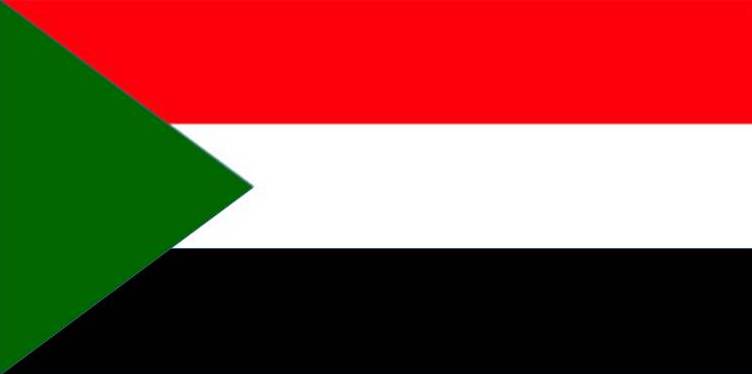
Red, white,
black and green are called the pan-Arab colors and have been historically
linked to the Arab people and Islamic religion for centuries. The colors stand
for Arab unity and independence.
The red
stripe represents Sudan’s struggle for independence and many other struggles,
and the sacrifices of the country’s martyrs. The white represents peace,
light and optimism. The black represents Sudan; in Arabic ‘Sudan’ means
black. Green represents Islam, agriculture and the prosperity of the
land.
Question: If Sudan means black, why the genocide in
Darfur? Why the current political tension on the issue of the referendum which
is part of the Comprehensive Peace Agreement (CPA)? Should there be a North
Sudan for Arabs and then The Sudan for the southerners since Sudan means
black?
The signing
of the CPA allows South Sudan to enjoy some level of autonomy and the prospect
of independence after a referendum. It will also be free to fly a distinct
flag.
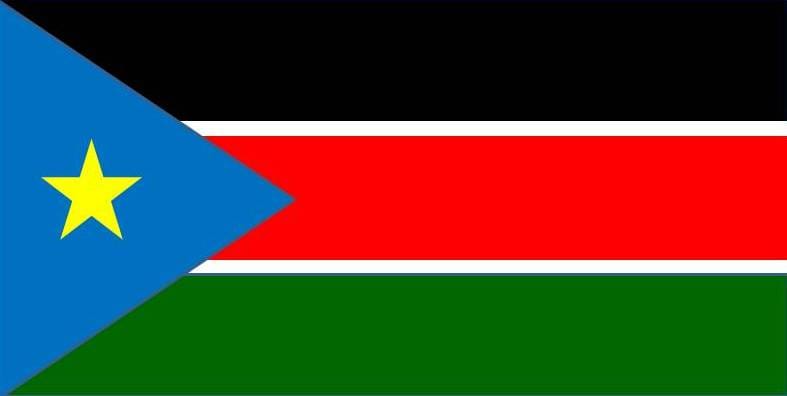
The south
has a flag that closely resembles Kenya’s in its features and colours. A black
stripe at the top represents the identity of the people. There is a golden
star which relates to the Star of Bethlehem, lying on a blue
triangular background representing the River Nile. It signifies a future with
optimism for the people of southern Sudan. Red stands for the blood shed
by the southern Sudanese in the 21 years of armed conflict while green
stands for the region’s great agricultural potential.
Questions: What of the oil?!! This one commodity which is
not reflected in the flag is at the crux of the current tension in the middle
belt of Sudan. Should the black on top represent the people and their
oil?
This brings
me to the Nigerian flag. 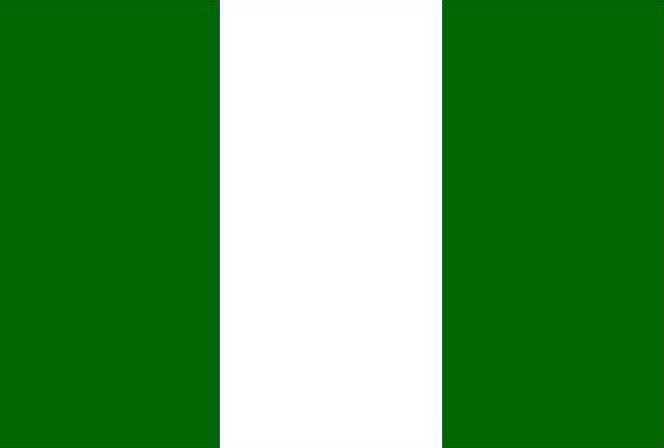
History has it that the Nigerian flag was chosen
in 1959 from among 2870 suggestions in a competition, which was won by Michael
Taiwo Akinkunmi, who was then, a student from Ibadan. His design showing two green
panels which represent agriculture sandwiching a white panel, which
represents peace and unity became the official flag of the Country on 1st
October 1960.
Questions: Green is for agriculture?!! Which agriculture??
Where are the groundnut pyramids in the north, the Oil Palm and rubber
plantations in the mid west, the cocoa in the west? What’s the price of a 50kg
bag of Garri (cassava flakes) now? How much of the rice we eat is grown
locally? Shouldn’t this flag be changed to reflect current realities? Shouldn’t
the colour black tell of the oil in the Niger Delta, which has helped
glue us together peacefully as a people 50years on? Imagine a black
white black flag for a minute.
What’s your country’s national flag saying to you? I’m still
wondering what a flag for the Kingdom of God should look like. As a Christian,
what core identities would you project on such a flag if you’re asked to design
one? Which colours and why?

 Kingdom Exploits With Uche