How Jonah’s Nineveh fueled our furnace

Every Saturday, in an informal discipleship
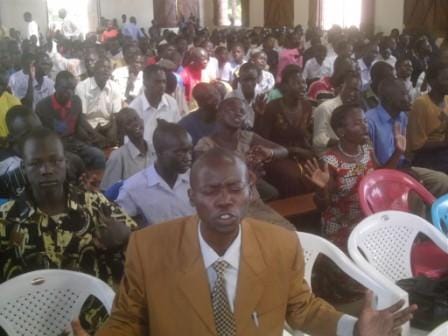
setting, youths within my network in Yei gather for 3hours to discuss challenging life issues. We call this forum – The Furnace; and truly, it’s been blazing
hot for us all.

The heat generated at the last Students’
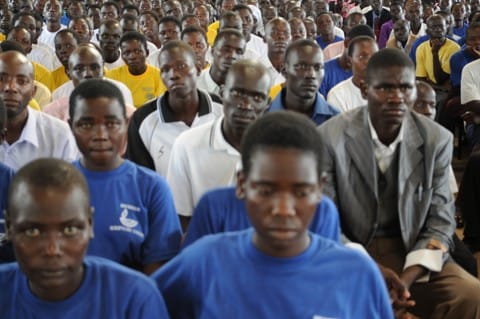
Prayer Conference
in May has continued to warm our hearts as we focused on Abba’s
love for unreached peoples and especially those against us.

At that Prayer Conference, the largely unaddressed bitterness we
Southerners have for Omar
al-Bashir
and his people was exposed.

The anger we feel is
understandable, as the level of wanton destruction in the south by President Bashir
and his army speak for itself. But the only
effective and lasting response to evil is love.

These youths and I have been
discussing love as central to Christian missions and ministry from the Book of Jonah and
pressing into practical demonstrations of the same.

Jonah’s consternation at the Lord’s command to go to
Nineveh resonates well with these young lads as we continue to cast our vision of taking the gospel northward.
It’s been a radical experience.

They asked, “Why did God spare Nineveh
but destroyed  Sodom and Gomorrah, when both Nations sinned greatly against Him?”
“Why should God allow our enemies to kill us, rape our mothers and sisters, destroy our land… and
still command us to love them…is that justice?”

The answers to these questions are not simple, especially if your scars are still fresh.

God rejoices in all His works. It is His nature to love. He can’t help Himself. He’ll never do wrong. He alone knows how to bring good from evil.

The perspectives of these
passionate folks on how best to deal with offense has been greatly challenged by the story of
Jonah. There’s
so much to learn from that story as it relates to us here in South Sudan.

Our “Nineveh” continues to hurt us
and everywhere we look, we see casualties nursing their loses with indignation,
hoping for Abba’s retribution.

Do you have a Nineveh type situation in your world? Most Christians in today’s South
Sudan and of course Nigeria, will say yes.

But what’s God saying about this Nineveh? Is
the solution… our safety, in the hands of the government? What is the
Church’s strategy for dealing with this-?

It’s doubtful the results we seek could come as
quickly as did the transformation of Jonah’s Nineveh. Most of us like Jonah, would wish for vengeance instead of salvation. How
many like Jonah, would rather die than go, or, would still go, knowing they’d be killed?

Much pain and suffering
will accompany an initial break-in, leading to an internal breakout, and
ultimately, the desired breakthrough.

When we meet tomorrow, I
will show my friends some video clips and tell them of Boko Haram’s terrorist attacks
in northern Nigeria. I’ll ask them what they’d do if such attacks happened in
our churches in South Sudan.

I’ll advise them to expect
persecution as one “good” reward for faithful service to the Lord.

We’ll feast on the rewards of
obedience, even unto death, as demanded and demonstrated by our Lord Jesus.

The Master loved us so much He
couldn’t deceive us about the sufferings we’d encounter for His fame sake. The Church
needs a long-term plan… response to the “Ninevehs” before us and especially the ones behind us.


Discipling with a new identity

No one can aptly answer questions
on the essence of being, without a direct and intentional relationship
with Jesus Christ. He calls it, being Born
Again
. It is in entering into this relationship with Jesus that the
journey towards discovering why and who we are begins.

The reality of our changed identity
is liberating. Years ago, slaves purchased their freedom with cash or in kind.
Till date, people’s privileges or its lack defines them.

But we become members of
Christ’s family and assume a great heritage as children of God only by believing
the finished work of Christ.

We immediately begin to enjoy
divine attributes and sonship rights
with Jesus; though our understanding of the total package may be limited. We
may not look it in the beginning, but the fullest potential is waiting to be
called forth from within, with the help of discerning leaders around us.

In John
1:42
, Andrew introduced his brother Simon (Peter’s original name) to Jesus.
Jesus looked at him and said,”‘You are Simon son of John. You will
be called Cephas’ (which, when translated, is Peter)” The name Cephas
(Aramaic) and Peter (Greek) means ‘rock’. As recorded in the Gospels, this
Peter was anything but a rock.

He capped it when he thrice denied
his close friend and Master, Jesus; after boasting he would die for Him (Mark
14:29-31; 66-72
). We can all identify with that can’t we?

I noticed Jesus called Simon’s
name twice (Luke
22:31-34
), kind of revealing His concern for this broken identity.
But He gently reassures him and affirms his leadership position while exposing
Satan’s prayer request to have him and the entire team as his play toys.

I imagine that the calmness
in Jesus’ voice and the look on His face drowned the import of that very
shocking prophecy about Peter’s denial.

Jesus renamed Simon and the Zebedee
brothers deliberately. He gives this inner circle of friends a new identity and
then sets about working on them to produce the character that is in line with
that identity. It takes a special relationship to truly rename another man, outside a
master-slave environment.

As I plan and pray for my time with
old and new disciples in Yei when I arrive there in a few days, I’m reminded
that when Jesus looks at us He sees beyond what or who we were. He sees and
longs to relate with us based on what and who He says we are and can become as
we yield to His leadership.

Those men were with Jesus for a
little over three years. He managed their childishness, chided their
faithlessness, tolerated their ignorance and corrected their misconceptions
with His eyes set on the end result.

Do you see beyond what they say
and what they see?

Leaning heavily on Abba’s grace,
I’ll once again give this discipleship thrust in Yei my best shot. I’m looking forward to connecting with some people at a whole new level on this trip.

The resurrection of Jesus was the
greatest event in all history. But without daily infallible proofs of changed
lives (achieved by making disciples), Easter would have been long forgotten.

Lord, when tomorrow comes with
demands for the worth of today’s tasks, may my service and focus reveal your
patience and matchless wisdom.

Who’s handling your private part?

If you’ve never been confused, broken, or messed up…

If you have no jagged edges in life, no disappointments, no deep questions, and are perfectly content with who you are, where you are, and what you’ve achieved…

Then maybe you don’t need a mentor.

But for the rest of us, Acts 16:1–3 offers a powerful illustration of mentorship that continues to shape my spiritual journey. It doesn’t answer every question on the subject, but it’s worth your study.

Timothy was a good disciple, well-spoken of by the believers. Yet when he came under Paul’s mentorship, he discovered that something was still missing.

That something… was circumcision.

I know this may sound crude or graphic, especially to modern ears, and clearly doesn’t apply literally to females. But if you lean in, you’ll find rich spiritual insight in this bold metaphor.

What are our “private parts”?

They represent the hidden places in our hearts, deep-seated issues, wounds, habits, and perspectives that remain untouched, unhealed, and unchallenged. These are the things that, if left unaddressed, can limit our effectiveness and ultimately alter our destiny.

Your “private part” might be:

• A longstanding pain or betrayal you’ve never released

• A decision made, or about to be made, that quietly undermines your calling

• A habit that quietly ridicules the power of the cross

• A belief rooted in fear, pride, or false motives

Whether what’s hidden in you seems good, bad, or just “not that serious”, the truth remains: you can’t handle it alone.

That’s where discipleship circumcision comes in. It’s a raw but redemptive image of what happens when a mentor helps shape you into who God called you to be. Here are some takeaways from that process:

The Principles of Discipleship Circumcision:

  1. It must be voluntary. Paul didn’t force Timothy. They both counted the cost. But ultimately, Timothy chose to undergo it. Mentorship cannot be imposed, it must be embraced. A forced circumcision can become a spiritual castration.
  2. There are two kinds of pain. The pain of the knife (change) and the pain of disclosure (confession). Sometimes, facing what happened to you, or what you did, is more painful than what you must do to heal.
  3. There must be vulnerability. Timothy had to strip completely. So must we. You must be able to “strip” before your mentor without shame, because trust exists. That’s non-negotiable.
  4. Nakedness and pain are sacred tools we handle poorly in the Church. Who wants to be the example? The guinea pig? But healing often begins where pride ends, in the willingness to be seen, emptied, and reshaped in places of pain.
  5. A sharp knife in the wrong hands is dangerous. Paul wasn’t a surgeon, yet Timothy entrusted him. You need a mentor who knows what they’re doing, one with discernment, not just zeal.
  6. Mentors must be willing and able. They must be able to take the most sensitive areas of your life in hand, cut where necessary, sit with your pain, listen to your groans, see your blood, and still not flinch or quit until the work is done.
  7. You’ll trust more when you know they’re also accountable. A mentor who regularly submits his/her own private parts for examination is one you can trust to steward yours.
  8. Healing takes time. If they cut you, they should also stay with you. A true mentor empathizes, walks with you, and celebrates your healing, not just your pain.
  9. Mentors inspire you to keep growing. Even in the mess, a good mentor sees your potential and motivates you to dream again, with spiritual maturity and God’s vision in view.

This ordinary Greek boy, Timothy, took a radical step by submitting to a Jewish custom for the sake of the gospel. But more than that, he and Paul needed each other to finish their race well, and what a legacy they left behind!

Maybe you’re due for a “circumcision” now.

Maybe you’ve withdrawn mid-process and are bleeding alone.

Please, don’t bleed to death, seek help. This isn’t a one-time procedure; it’s a life-long posture of humility and transformation.

May you find a Paul, someone you can’t outgrow.

And may your mentor handle the knife with wisdom and grace.

“Lord Jesus, I thank You for the mentors You’ve given me. And I pray for grace to fully engage the process of becoming whole.”

5 Lessons from that funeral

As they hauled the casket off the
ambulance, I asked someone to show us a close relative of the dead man. His
brother was pointed out to us and we asked him if we could pray for the dead
man to rise again. I was in company of two younger disciples in Yei, South Sudan.

The elderly man looked at us with
shock written all over his face, waved us towards the casket and
said, “Go ahead, pray.”

Unknown to us, there was a
presiding Priest who was paying close attention to our discussion with the dead
man’s brother. As we approached the casket, which was now being opened for the
relatives’ final viewing and rites, the Priest, armed with a bottle of “holy
water” and a prayer book, raised his hand and said in the local dialect, “We’ve come here to bury
this dead man and not for a prayer meeting. There will be no praying here until we
have finished burying the dead man.”

Annoyed more than surprised, the two young
disciples looked at me and when I said nothing, they wanted to challenge the
Priest. I stopped them.

“Let’s mourn with the family.”

As the lid of the casket was being
nailed back by this Priest and his assistants, each strike was with such ferocity that I wondered
if he personally wanted the man dead or just making a point to us that this is
a finished case.

Burial over, we shared precious
moments with the widow and her two daughters present and headed out.

“What did you learn from
this encounter?” I asked the two guys as we walked home.

“Remember we prayed that God should
grant us opportunity to raise the dead, now it seems we missed our chance.” One said,
still very upset. Guess he felt it was my fault.

Lesson One: God never gives us all we ask for when we ask for it. In fact,
sometimes we don’t understand what we are asking Him.
Were we prepared to
engage heaven that evening until the dead man was raised? In retrospect, I don’t think so. I read the
story of Pastor Rago from Mozambique- [Does
God still raise the dead]
, and that of two African believers- [Has
anyone died today?]
and noticed that it could take hours and even days of
praying over a dead body before life returns. But we should be prepared for such moments and look forward to
them.

Lesson Two: The sin of unbelief cripples great faith. Jesus prayed (God prayed
to God) but couldn’t do many mighty works amongst His own people. In fact, their
unbelief shocked Him. (Mk 6:5-6) It was no different here. We met with
religious opposition and had to let the dead bury their dead.

Still wrestling with the
anger and I guess also some measure of humiliation he thought was meted to us there,
the other disciple said, “If we had raised our voice there to tell the people
we wanted to pray for the dead man to rise, they would not refuse; we could have preached first and prayed in the end. I’m sure that man will rise up.”

Lesson Three: Love never insists on its own way and in the absence of their faith, their consent is important. Jesus
often asked, “What do you wish I do for you…” They made it clear we were not
welcomed there. Should we have insisted? Someone said, “
I’d rather be a righteous
scoundrel than a religious bigot…” What do you think?

Lesson Four: Take advantage of every scenario for a discipleship tutorial, either
for yourself or for those with you
. Jesus always had a lesson to teach with
each encounter. He marveled some people and some others marveled Him as well. Each time, His disciples went away better prepared for their own encounter.

Lesson Five: Not everyone at a funeral may want the deceased brought back to life. But what could God be aiming at with each case? A
huge stone was used to seal-off the tomb where the Lord Jesus was laid. But His
resurrection not only gives impetus to our message, it is The Message!

Jesus therefore commands
us to, “Bring health to the sick. Raise
the dead
. Touch the untouchables. Kick out the demons. You have been treated
generously, so live generously.
(Matt 10:8 The Message & my emph)

May
He find you and I doing these.

Training, trying and spiritual tests

The sources of tests and the circumstances warranting
them in our walk with Christ
will continue to vary from person to person. But it helps always to acknowledge that testings are inevitable, continual, necessary,
productive, influential and are ultimately crafted by God.

Here are some tests most Christians endure:

1 – The Faith Test (Can God…?) 

2 – The Discouragement Test (Isn’t all lost now?)

3 – The Motivation Test (Can I…?)

4 – The Frustration Test (How did this happen again?)

5 – The Self-will Test (I don’t need God’s help here do I?)

6 – The Time Test (How long should I wait for God?)

7- The Betrayal Test (How could s(he) do that to me?)

8 – The Misunderstanding Test (Don’t you think a divorce is it?)

9- The Failure Test (Can I have another chance?)

10- The Servant Test (Who’d take care of this…?)

11- The Success Test (Can’t you see I’m made?)

12- The Money Test (Where’s the the 90% going?)

13- The Leadership Test (Who succeeds me and how?)

14- The Wilderness Test (Where’s God in this?)

We all find ourselves wrestling with one or more of
these as God aims to
reveal what we really believe, help explain what we don’t understand or
show us the applicability of the lesson(s) He intends to teach.

There are always challenges that accompany tests
which could be devastating when the tested
become disillusioned
(asking why me?), distraught (doubting God and lose hope), distracted (focusing
on the test and miss its purpose), angry (hate on the source and seek
vengeance), bitter (wallowing in self pity) or even hardened (embrace their
failure as normal, making it a lifestyle).

As I press on with discipling a hand full of passionate youngsters here
in Yei, I am more convinced than ever that spiritual discipline does not come
by trying harder but by training better for these inevitable tests of life.

I come from a place where being told, “You’ve tried”
is often a huge compliment; meaning you’ve offered your best. But trying to do
something is not the same as training to do something.

This need for preparation, or training, does not stop when it comes to
learning the art of forgiveness when people hurt you, or living joyful when suffering
persecution
, or courage when surrounded by fear. These three elements in
spiritual grounding are inevitable for all disciples.

Learning to think, feel, and act like Jesus is just as demanding as
learning to run a marathon or ride a bicycle. So Paul told his son Timothy, “Workouts
in the gymnasium are useful, but a disciplined life in God is far more so,
making you fit both today and forever.” 
(1Tim 4:8 The Message)

The true indicator of spiritual well-being should be growth in the
ability to love God and people; which is revealed by various tests, with
the evidence of abounding fruit.

Looking for a Timothy, a Phebe… in Yei

“Lord, give me a
Timothy, a Phebe, Aquilas and
Priscillas,
more, more of these kinds of disciples…” Has been my heart cry for over three
months now, as I continue to think and dream of our thrust in Sudan.

I was meditating on
this as our overloaded bus drove all night from Kampala to the border town of Koboko in Northern
Uganda on Monday; wondering what the Lord will do, how He’ll respond to my
petition, who these Timothys and Phebes could turn out to be. People I could
leave the task here with and head on to new fields in the interior. The time for
that move is around the corner. I know it but do they??

I’ve met three kinds of
disciples since my arrival.

The hungry, who like
new born babes can’t wait to engage a familiar source from which nourishment flows.
They remind me of the disciples in the Suck Zone. I see more than hunger for food, I behold and hear of a passion for something the food was meant for- spiritual growth; the kind that gives momentum to Kingdom expansion here. They fulfill Abba’s joy.

They’re also those stuck
in the mud of life by reason of the heavy
and unnecessary luggage they insist must go with them to the Promised Land.
They appear standing but alas, they are sinking. They have to be told the hard truth about their situation. We’ll get to this
messy place later and my prayer (please join me) is- “Dear Lord Jesus, please make
these baggage become irrelevant enough for the barriers to cast them aside, receive strength to
press toward the mark.”

The last group need
a fresh start altogether. Their very bad condition is public knowledge. Some of them
have changed churches, acquired new spiritual counselors and comforters; while some have left town outright.
I pray the right prescription is administered to them here or there. Our God offers
second chances and much more, in His package called riches of grace.

For all three
groups, the team and I; we’ll need a great deal of three things:

1. Faitha commitment to grow
beyond the present
: We must dream and see ourselves not only as we are, but
as we could be, – depth in the knowledge of the Lord and fruit to show
for it. A corporate thrust towards church planting, where every man comes with
their own log (2Kings 6:1-2) is key to expansion. If they truly want this as bad
as I do, they’ll trust me and other coaches in our small team, valuing our
counsels and instructions, which may not make sense sometimes.  

2. Hopea commitment to a healthy attitude:
We must all have a sound hope-filled attitude. In a world saturated with professional
critics and negative people; a never-say-die mind-set is needed for every step
forward as the grounds that are yet unclaimed for the Master are the toughest to
occupy. On the flip side, I recall Butch Maltby’s comment, “I
am weary of listening to the cheerleaders encouraging deep leaps of faith even
as they make their way down the long ladder saying… “excuse me!

We must pledge not to be discouraged as we see their lousy meandering down the high calling set before us all.

3. Love – we must commit to righteous suffering: The first thing Paul said
about the agape love in 2Cor. 13:4 is that it suffers and does so for a long time, as there’s no telling when
God will breakthrough with ultimate victory. We must be pressed towards giving
more than we take. If we become self-centered or acquire bad habits, the team
could be destabilized. Some disciples and especially leaders, easily fall into the trap of not seeing how
entrenched and disruptive their bad habits have become in their lives; though they may spot it quickly in others. We all
need healing in needful or hurtful areas before we can venture into the world filled with wolves. Lord, may we meet the loving embrace of other saved sinners and reassure one another.

In all, few life pleasures
are sweeter and even greater than seeing your disciples grow and discover for themselves
that the promise of Christ’s presence, provision and power are as available as they are real; experienced in full as
they go for Him. While the stretching and
growing process may be awkward, I confess I’m becoming comfortable in
my own skin, sure of the fruit God is producing through our corporate thrust. All glory to Jesus!

Did you send your
funds to get me here again? Did you plan to but forgot? Are you praying for our efforts out here? Abba
smiles on you and please know that every thought of you in my heart brings a smile, a lifting that’s hard to express in words.
Thank You, true yoke fellow!

Discipling with The Mask

We called it: Coach MeYouth
Forum
. We set out with some youths in our church here in Yei, on a trip to
somewhere and in search of something we all knew we desperately needed – TRUTH.
This invaluable commodity seemed to
be elusive.

To move as a team, we had to define the terms governing our
time together. We agreed to meet every Sunday evening for 2hrs, we agreed on
this and that. God would be the Driver and Uche will serve as the conductor,
which meant he’d call the stops and be on the trip till we arrived our final destination.
Anyone was free to get off wherever they wished so class ended with 25
disciples out of 34 that started.

When at our first meeting I introduced The Mask to these young
chaps and used my life, my past failures and hypocrisies as the guinea pig, explaining
the stifling and fearful nature of a masked life; I didn’t know what to expect.
But I knew that whoever among them would embrace the profound message of the
Mask before we depart the station
would never be the same again.

When they finished reading this great article which I had
reworded a little for their understanding, it was as if a bomb went off inside
every one of them. That was the same experience I had! It was the moment of
TRUTH for me and them.  Age old Masks must
be removed as a prelude to this class.

After that first class, it was clear that something had gone
right. The demystification of the Masks and the persons behind them completely
changed many lives here in the past 7weeks. The Mask served as the compass to our final destination.

We held a total of 10 meetings, discussing various life
matters from how to remove our masks and why it’s necessary for discipleship,
dealing with spiritual strongholds, understanding and dealing with the four
personal fears.  Embracing pain as a
divine tool was not left out.

They gathered for each meeting and like sponges, soaked up
every detail, asking awesome questions in the process. How do I narrate their
facial expressions when shocking revelations were understood or the anguish
conveyed, on seeing how insidious self preservation could be? The sound of
laughter and pure fun greeted every joke from anyone. This was a family affair.
It was deep, rich and liberating. I had some of my best moments ever in Sudan
within the last 2months.

Their open confessions of wrong and the desire for change
shocked me. Week after week and up till yesterday’s meeting, there were still unforced
open confessions and repentance. The small group discussions during the
meetings awakened a passion to be real and to know more. Never
underestimate the power of openness and truth.
This is one profound lesson I’ve
learnt from these lads.

How can there be
authentic worship without the freeing of the human soul to embrace truth,
regardless of the discomfort it could render? When we are unfettered by
lifestyle strictures mandated by theological curmudgeons, we find our wings and
take flight. That’s a great line from Seth Barnes.

Here are the brief comments of some of the disciples after the last
class.

Looking for a remnant


A book I browsed through on community building says, “Ninety-five percent of inactive church members have experienced a cluster of “anxiety-producing events”-a snub, a lack of care when really needed, a moral lapse by a church leader. If we learn to hear and respond to people’s cries for help, we can usually prevent their dropping out.” This sounds right but is it always true?

Some people who are fed up with church have defined their own terms for fellowship. If Jesus attends their meetings, good for them. Some are jumping from one church to another looking for something they may or may not have a definition for, but may identify it when they see or experience it. For those ones, I wish it is love, the Agape, given and received without strings attached.

But some people will never be committed to any gathering of believers for the simple reason that their salvation is suspect. They’ve learnt to act and talk like the people they meet during Sunday services and have successfully blended into the mixed multitude. Their conscience tells them, “You belong here”. But one can never be half pregnant.

Last Sunday, we held meetings with two groups of people in our church here in Yei after the worship service. One group was made up of older folks; members who felt an urgent need for authentic spiritual growth and are willing to covenant with us as we take a trip together, and unmasked towards reality and truth land. The second group, my prime target, were the youths. They insisted on an encounter with God with a hunger that both encouraged and scared me.

So, two groups, agreeing on two different meetings every weekend (aside regular church meetings), with two different agendas, one aim, all bound by a covenant. God is up to something here.

As we pray and plan for these meetings, it gives me so much joy to imagine that God is always looking for a remnant not a crowd. A few that may have been snubbed at one point, ignored by leadership knowingly or unknowingly, discouraged over and over again by moral lapses within the church. But something inside them yearns for truth and drives them towards it.

By God’s mercies, these remnants often arrive at a point of no return; where they pull through a crisis of faith and cross their individual River Jordans, with the assistance of a coach, and together, they begin to engage a future and hope reserved for them before the foundation of the world.

It’s going to be a busy season for me as I PIECE several puzzles together, with my gaze on the Master, asking Him to assemble for Himself those that will drink His blood and eat His flesh indeed… His tribe’s men and women, who belong to this clan. Even so Lord!

Discipling adults is tough. They have a lot to contend with, to give up and eventually buy into.  But there’s always a remnant and I’m looking for them with the eyes of faith, hoping to see clearly and further.

I’m surrounded by many young minds who continue to wonder what lies beyond “there”; that unfamiliar and seemingly distant place tickling their fancy and arouses their adventurous spirit, which poles both negative and positive ends. But we dare to step out in the right direction, regardless of the pains accompanying these initial baby steps.

I’m unlearning a lot and it feels very awkward. But I’m seeing results. I welcome your questions, counsels and certainly covet your prayers.

Battling for the truth in this generation

I leave Kampala in a few hours from now for Sudan. It’s been
a great time of ministrations, counseling, praying and preparing. One major challenge I’ve noted here is the
overwhelming need for discipleship among youths in the church.

Truth, fantasy, fiction and deception play a great role in
shaping every generation. I’m seeing less of truth and more of the rest in the
past couple of weeks. As I think and pray of what and how I would engage these
issues among the youths in Sudan and in Uganda, I reminded of this story told
by Dr. Ravi Zacharias, one of my favorite apologetics ministers.

A young couple who got married some years ago were the mascot
of excellence before the youth of their church. Both were in preparation for
the practice of medicine, and were on sizable scholarships of merit.  

But then like a shattered
dream, only a few months into the marriage there was a dreadful awakening. In
the pre-dawn hours of a wintry night their pastor was aroused by the telephone,
and a voice out of control which begged him to come to their apartment.

 What had happened? What had led to this
pitiful state of affairs?  

Some weeks earlier this
young woman had discovered that she was pregnant. With years of study still
ahead, neither of them had wanted to start a family.

This sudden turn of events
spelled chaos into all their plans, and drove them desperately in search of a
solution. Every option was considered. Finally, one statement escaped from the
young woman’s lips that she had never dreamed she would utter.

“This is completely
devastating,” she said. “There is no other way but to abort this
child if our careers are to survive.”

The very suggestion precipitated
a deep rift between them. They were both known on their campus for their
outspoken conviction on the sanctity of the child’s life in the womb, and that
that life, they fervently believed, had a right all its own.

Now, their controlled contingencies
had invaded their absolutes, and “fate” had threatened their
autonomy. Conviction was in conflict with ambition, and a private decision was
being made that they hoped would never be betrayed in public. Husband and wife
were uncompromisingly on the opposite ends of this dilemma as he pled with her
to reconsider.

That is when her final
solution was proposed. “Then let us do this at home,” she said.

“You bring all the
equipment we need to the apartment and no one need ever know.”

As a young medical student,
he felt this could be accomplished, and so meticulous plans were nervously laid
for that fateful night. Not yet fully trained in the administration of an
anesthetic, he stumbled through the procedure and unwittingly gave her a much
larger dose than he should have.

His greatest fear became a
ghastly deed, and he lost her. In the panicking moments that followed, with
trembling hands and a cry of desperation he reached for the telephone and
uttered those remorse-ridden words, “Pastor, please hurry and come to our
apartment. I think I have killed her.”

Anyone who has experienced the immediate or even delayed
consequences of a tragic act or event, knows the horror of such a feeling, from
which no amount of human ingenuity can bring about an undoing. The most
agonizing effect of such irreversibility is the very humbling fact that it was
human finitude that brought about the consequence in the first place.

As I grapple with the huge responsibility
of coaching youths and pressing them to embrace and live the truth; I shudder at
the consequences of half baked convictions revealed by wrong choices in moments of unrehearsed pressures that may leave eternal scars in the soul of a young disciple.

Youth Ministers tread on delicate grounds and we dare not lose focus. I
desire to raise youths that will stand for and die by the truth at all cost.

I continue to covet your prayers.