Can children be witches?

I got an email yesterday from a
friend that wanted to know what I thought about the News on CNN here of children abused and even killed, being
labeled as witches. As I watched the documentary on CNN, I knew I had to say my
mind. Feel free to say yours.

An extract of the article from
CNN reads, “A child witch is said to be a witch
when that child possessed with certain spiritual spells capable of making that
child transform into cat, snake, vipers, insects, any other animal and that
child is capable of wreaking havoc like killing of people, bringing diseases,
misfortune into the family,” Sam said.

“When
a child is accused of being a witch — that child is hated absolutely by everybody
surrounding him so such children are sent out of the home… But unfortunately
such children do not always live long. A lot of them, they’re either killed,
abandoned by the parents, tortured in the church or trafficked out of the
city.”

Sam
doesn’t believe in witchcraft and is trying to raise awareness in local
communities now gripped by hysteria…”
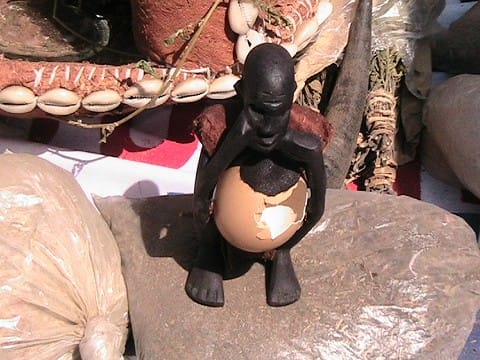
Sam could as well doubt the
existence of the devil for all I care. Get it from me here, witchcraft, voodoo
or Juju is alive and well in many cultures all over the world. Witchcraft and
occultism have been from ancient times. The questions begging for answers in this
story are; what is witchcraft? Who is a witch? Do you have child-witches or
wizards? And if you do, what should you do with them?

I’m not an authority in
occultism or demonology, but I have experienced firsthand, the operation and
manifestations of demons in people, including innocent kids. I have many
stories to tell.

People who are referred to as
witches or wizards are so called because they manifest some measure of power to harm others through supernatural means, which often
involves invocation of spirits via incantations and the use of assorted charms.

Witchcraft
is more than a craft; it’s a way of life. It runs in some families and it can
also be learnt and perfected like any trade or gift. It’s chief aim is to
connect with the spirit world in other to manipulate people, incapacitate them
or kill them outrightly.

An
individual could have progressive contact with the spirit world through many
means. Here are 5 common ways.

  •         
    It could be via initiation,
    whereby incantations and bodily incisions are made on the individual, thereby introducing
    him or her to the spirit world.
  •         
    It could be
    through ingestion, whereby the targeted victim usually unknowingly ingests some
    substances (charms) put into their meal or drink that eventually takes control
    of their mind and body.
  •         
    Witchcraft
    activities could run in some families and handed down from generation to
    generation.
  •         
    A visit to a
    sorcerer could also open the door for one to encounter supernatural forces that
    could lead down the wrong path.
  •         
    Lastly, one could
    be dedicated to the cult or the devil as a baby or even before birth. Like
    Samuel of Hannah, some children are dedicated to cults and the devil either as war or peace offerings or a pledge of loyalty.

Some
children are victims of wickedness perpetuated by adults, who themselves are
under the bondage of the devil. Children don’t belong to witchcraft cults and
covens willingly; else their nature will not serve as the blessed example that
Jesus recommends for His disciples. 

The truth is that they are children who having
been bewitched, become possessed by evil spirits and these spirits could
manifest abilities and strength beyond what is naturally expected of a child.
Does this make a child or anyone for that matter a witch? NO!

Based on
several cases I’ve encountered and those I’ve heard of, I confirm that demons can
operate through innocent children and they do. If you don’t believe this, then
you grossly underestimate the wickedness of the devil and his agents in this world.   

The
issue is not if children can possess
witchcraft abilities but how do we
respond to the challenge that such cases present. If a child demonstrates
witchcraft traits, do they cease to become humans? No! They are operating under
an influence beyond their control and need help which can only be found in
Jesus Christ.  Demons don’t differentiate
between adults and kids. Everything they do is against God and all He loves. Ridiculing
God is their primary assignment.

It’s a pity that some
overzealous ignorant exorcists who use the name of Jesus like a trading
facility treat demoniacs like wild animals. This is not only wro
ng but evil. When
innocent children are involved in bizarre cases like the ones reported in the

CNN documentary, it makes one sick. 

Any child under the influence of witchcraft cannot be helped by NGOs without good grounding in Jesus Christ. These organizations can provide food, accommodation, education and clothing for the body which is good but deliverance for the soul is the ultimate need and that is the job of followers of Jesus Christ.
 
Some beguiled parents running from the responsibility
of childcare could reject their children, claiming that they are witches. Can
anything be
more sinister than this? YES!!

We read in the Bible an incredible story of two mothers
agreeing to a most unspeakable and barbaric act of cannibalism against their own
kids.
  2Kings 6:28-29 “…What’s your
trouble?” She answered, “The other day this woman here suggested that
we eat my child, and then eat her child the next day. So we cooked my son and ate him. The next day I told her that we would
eat her son, but she had hidden him!” Yes, they cooked and ate the innocent
little boy. He was not a witch. The women were among the many that were starving those terrible days.

Some
years ago, in the company of two beloved brothers, Ken Nwaoparah and Austin
Okeke, I had what I consider till date, the most harrowing encounter with 15
demons that made their home in a 15year old boy.  They claimed to have been there since he was
born. I will tell of this encounter later to underscore the wicked operation of
demons in children.

People
can choose to be sentimental about this topic seeing that we are talking about innocent
children. But please don’t conclude on any matter you know little or nothing
about.  

If you
have had a personal encounter with children that manifested witchcraft traits
or gifts, let’s hear your story. What do you do to help?


Making sense of national flags

I’m an
admirer of national flags and coat of arms and I’m ever so intrigued by their
delicate designs, the meaning of the various colours, the symbol of the animals
and birds and other features therein. A study of these is called Vexillology.

Depending on
their form and function, flags are variously known as standards, banners,
ensigns, or pennants. They’ve been used as symbols of tribal, national, and
military identity since ancient times. Even the scriptures record, “When the
Israelites set up camp, each man will camp under the banner of his division and
the flag of his own clan. The camp is to be set up all around the Tent.”

(Numbers 2:2)

Lately, I’ve
been thinking about some national flags and asking a few questions. Are the
colours on this flag relevant to the nation’s current identity? What is
the connection between the colour(s) and design of this flag with its peoples?
What should prompt a change of these colours or the design? Should flags
reflect only a nation’s historical heritage or its anticipated future? Could it
be both? What part can they play in our daily living? I was reflecting on the
flags of Sudan, South Sudan and Nigeria when I heard over the radio that Malawi
has altered their national flag. The Raising Sun on it has now risen. They
say they’ve moved from developing
(raising sun)
to developed (risen
sun).
Awesome!!

The Flag of
S
udan 

Red, white,
black and green are called the pan-Arab colors and have been historically
linked to the Arab people
and Islamic religion for centuries. The colors stand
for Arab unity and independence.

The red
stripe represents Sudan’s struggle for independence and many other struggles,
and the sacrifices of the country’s martyrs. The white represents peace,
light and optimism. The black represents Sudan; in Arabic ‘Sudan’ means
black. Green represents Islam, agriculture and the prosperity of the
land.

Question: If Sudan means black, why the genocide in
Darfur? Why the current political tension on the issue of the referendum which
is part of the Comprehensive Peace Agreement (CPA)? Should there be a North
Sudan
for Arabs and then The Sudan for the southerners since Sudan means
black
?

The flag of South
Sudan

The signing
of the CPA allows
South Sudan to enjoy some level of autonomy and the prospect
of independence after a referendum. It will also be free to fly a distinct
flag.

The south
has a flag that closely resembles Kenya’s in its features and colours. A black
stripe at the top represents the identity of the people. There is a golden
star
which relates to the Star of Bethlehem, lying on a blue
triangular background representing the River Nile. It signifies a future with
optimism for the people of southern Sudan. Red stands for the blood shed
by the southern Sudanese in the 21 years of armed conflict while green
stands for the region’s great agricultural potential.

Questions: What of the oil?!! This one commodity which is
not reflected in the flag is at the crux of the current tension in the middle
belt of Sudan. Should the black on top represent the people and their
oil?

This brings
me to the Nigerian flag.

 History has it that the Nigerian flag was chosen
in 1959 from among 2870 suggestions in a competition, which was won by Michael
Taiwo Akinkunmi, who was then, a student from Ibadan. His design showing two green
panels
which represent agriculture sandwiching a white panel, which
represents peace and unity became the official flag of the Country on 1st
October 1960.

Questions: Green is for agriculture?!! Which agriculture??
Where are the groundnut pyramids in the north, the Oil Palm and rubber
plantations in the mid west, the cocoa in the west? What’s the price of a 50kg
bag of Garri (cassava flakes) now? How much of the rice we eat is grown
locally? Shouldn’t this flag be changed to reflect current realities? Shouldn’t
the colour black tell of the oil in the Niger Delta, which has helped
glue us together peacefully as a people 50years on? Imagine a black
white black flag for a minute.

What’s your country’s national flag saying to you? I’m still
wondering what a flag for the Kingdom of God should look like. As a Christian,
what core identities would you project on such a flag if you’re asked to design
one? Which colours and why?

Silence can speak loudest

“Even
the foolish man, when he keeps quiet, is taken to be wis
e: when his lips are shut.”Prov 17:28

“Most
of us know how to say nothing; few of us know when to let our silence speak
louder.”
C. Krosky

As Elisha followed
his master Elijah out of Gilgal, the sons of the prophets in Bethel and Jericho
had something to tell Elisha (their contemporary) which they thought he didn’t
know, though they had the option of keeping quiet like those in Jericho.
 “I know, keep silent” (my paraphrase) was his reply to them.
2Kings 2:1-5

Have you
ever felt so pressed during a conversation such that you couldn’t wait for the
speaker to finish their sentence, before you gave your response? The moment
something is said which may or may not agree with you; instinctively, you feel
you must interject that very second; else you’d miss the chance to hit your
mark.

Most times,
what happens here is that when we miss that first chance, we put our listening
in pause mode. Though we may appear to be holding our peace, no,
we’ve let it out through the back door the moment we started preparing how we’d
express our thoughts with the next opportunity, thus missing succeeding remarks
or even bubbles (unspoken expressions) that may explain the initial
comment(s).

Have you
ever been in a formal or informal meeting and comments on an issue you
are passionate and knowledgeable about were made and you felt pressed to
contribute but for some reason, you kept silent? And just as your patience was
running out, someone makes the exact comment you wanted to make. Do you feel
elated, deflated or comforted? The temptation to say something at that very
moment could be over bearing, but you can opt for silence.

On
the other hand, have you ever witnessed a crime and for some reason(s) you
thought appropriate, kept silent about it? Is it still a weight on your
conscience or have you silently silenced the voice of truth by amplifying
logic?

Silence is a
double edged sword. We can use it to gain time for increased understanding of
projected issues and learn more about the listener (observer) or the speaker
(actor) as they respond to its application; but sadly too, it could be used to
strike a below-the-belt punch.

When used in
love, it shows we respect and care deeply enough for the speaker to want to
understanding what they are saying before we reply, if we need to. We may turn
off our cell phones to avoid distractions or relocate to a private spot in
search of serenity to aid our listening.

Our silence
could also give the speaker time to process their comments and make corrections
if necessary. Anyhow, being comfortable with silence, as a receiver or a giver
takes practice, love, self-control and I think, good understanding of the given
cultural setting.

If your
intention is to ridicule, hurt or let someone know you are displeased with
them, silence could be a risky weapon to deploy. In some marriages, couples use
the “silence treatment” on their spouses and the result is often
messy. Someone in there may need control and the other, connection.
Unfortunately, where noise is the norm, one is most likely to mistake
silence for a lack of understanding but especially indifference.

Prolonged
silence in any relationship or in the course of a conversation can provoke
unnecessary emotional tension; as the speaker may not know if they were heard,
understood or just being ignored. The latter is often believed to be the case
but a sincere and skillful user of the art will notice, and address the
situation wittily.

Silence can
communicate many messages. It can help shed light or place a veil of darkness
on a conversation. There’s a place and time to speak out and even shout; and
there’s a time for silence. But the value of silence is diminished wherever
noise is celebrated. The ability to effectively use silence is one of the
greatest conversational arts.

Is your
silence speaking loud enough to the people around you?  Can you use
silence to make your point? Have you ever consciously tried it? Were you
successful? If you were successful, perfect the art with practice. If you
failed, try listening more and hold your peace the right way up
lovingly.

As I
continue to practice this art, I must confess it is quite challenging.

Introducing: Perspectives On The World Christian Movement


When a dear senior friend Pastor Austin Ukachi recommended this internationally acclaimed course called Perspectives to me in 2005, he told me I’d need what this course is offering to help me step into this new life of missions and ministry. I didn’t understand what he meant but I trusted his judgment. Necessity met with opportunity and I took a bite. Life has never been the same for me since then. What a joy! What a privilege!  

This course, Perspectives On The World Christian Movement developed by U. S. Center for World Mission (USCWM) is currently running in Aba, Abia State Nigeria. Thanks to God and my mentor Tim Olonade, the Executive Secretary of NEMA, I had another wonderful privilege of gathering with 120 Anglican Priests and some of their Bishops in a camp-like atmosphere to facilitate and engage a few ideas projected by this life transforming ministry tool. It is wonderful to watch the Anglican Communion in Nigeria embrace this course with such indescribable passion. They know where they are going.

Billy Graham said of this course, “There is no course of which I know that will inform, inspire and motivate Christians for world evangelization like Perspectives. It will stretch your mind, warm your heart, and stir your will.”  

Pastor Mrs Aina of RCCG Lagos said, “Since I started attending conferences and courses…I have never attended one like this…with such depth, profound convictions and motivation.” 

Perspectives is introduced as a course of vision – a vision that mobilizes and equips the people of God to live a life of passion and purpose as Jesus did. It is aimed at helping participants grasp a clearer understanding of God’s mission in the world so as to enable them make informed decisions about their strategic participation with Him in world evangelization.

This 15 lesson course insists that God has a ‘world-size’ role for every Christian in His global purpose. Whether people go to distant countries or stay at home is a secondary issue. The primary issue is what most people are hungry to discover – vision to live a life of purpose. Discovering that vision makes this study program valuable and I dare to add, crucial for every Christian.

Carefully selected articles from over one hundred authors like the late Dr. Ralph D. Winter, Steve Hawthorne, John Piper, John Stott and a host of others make up the Perspectives Notebook.  See these few ideas extracted from the Notebook.

“Understanding the promise God made to Abraham is indispensible to understanding the Bible and Christian mission. The whole of God’s purpose is encapsulated here.”

“The ultimate value of [our] salvation is not to be seen in what [we] are saved from, it is what [we] are saved for that really matters. People are saved to serve God in worship.”

“The only heroes who operate alone are figures of fiction. The stories of accomplishment and significance always unfold as stories of teamwork…. The only way to exchange the illusions of fame and self-importance for God-granted greatness and blessing is by working in partnership with others.”

“Missions is not the ultimate goal of the Church. Worship is. Missions exists because worship doesn’t. Worship is ultimate not mission because God is ultimate not man.”

“World Christians are day-to-day disciples who Christ’s global cause has become the integrating, overriding priority for all that He is for them.”

“Obedience to the Great Commission has more consistently been poisoned by affluence than anything else. The antidote for affluence is reconsecration. Consecration is by definition “the setting apart of things for a holy use.”

I’m always awed and sometimes amused by the initial attitude of some participants towards this course, especially those who have been in ministry for a while. They come, wondering what new teachings or ideas this course has to offer. Their initial queries and even body language reveal a measure of indifference difficult to disregard. But ignorance is soon exposed and a fire ignited in their hearts as perspectives on familiar Bible stories and events from history are blended into one unfolding saga. Ordinary Sunday school stories suddenly mean more than simple lessons in righteousness, obedience and faith or their lack.

In Nigeria, the Perspectives Study Program is coordinated by Nigeria Evangelical Mission Association (NEMA). This Association exists like an umbrella body for mission’s thrusts in Nigeria, with a broad spectrum of membership from the core Evangelical Community, Mainline Denominations, Charismatic and Pentecostal Communities and Non and Inter Denominational Bodies. Serving as a networking and equipping para-church organization, NEMA strives to mobilize the Nigerian Church towards fulfilling its role in world evangelization.

I recommend this awesome ministry tool to you and your organization. If you’ve passed through this class at any time, please comment on your experience. If you are interested in the Perspectives Study Program in Nigeria, kindly express your intent via this email to the National Coordinator: pspnema@gmail.com

A few more classes are lined up for this year. Seize the opportunity. You’ll be glad you did. This is a course of vision, hope and passion. Engage!!

Flunking forbearance: two cripples at war

 The phrase in
Colossians 3:13 that command forgiveness and forbearance deserve a diligent
study. I’m not a fan of the King James Version of the Bible (though I was
thereby nursed), it uses an expression in that text I feel is foreign in modern
grammar- “Forbearing one another…”

To forbear or forbearance isn’t very romantic or inspiring;
in short it means “to put up with, to endure.” It may not sound very
spiritual to say that we have to “put up with” some kinds of people,
but isn’t that exactly what this scripture and Ephesians 4:2 are requiring of
us?

There are some people and some things we need to forgive.
Many more, we need to grit our teeth and put up with and endure. I’m learning
my lessons by observation and examination. We need wisdom to be able to make a
distinction between forgiving and forbearing. If I turn every grievance into a
forgiveness issue, I could become a very lonely person. I could also appear to
others as proud and they may choose to avoid me or labor unnecessarily to
satisfy me; thus making me a graceless egghead.

Dictionaries give a variety of definitions of forbearance:
“a delay in enforcing rights, claims, or privileges”; ” self-control,
especially in not responding to provocation “; “a good-natured tolerance
of delay or incompetence.”

For some people, forbearance refers to the postponing or
reducing of payments on a debt, though the interest keeps accruing and the loan
is still due; they says, “I may not make you pay now, but your day is
coming and the interest is growing!”

Forbearing is not about postponing repayment, but rather
involves putting up with the weaknesses, frailties, and failings of others, without
charging it to their account or making it a big issue; without continuing to
relate to them based on their past errors. It is like a lubricant that helps
minimize interpersonal friction which abounds in any relationship.

We are usually convinced that it is other person, not us,
who possess irritating mannerisms, annoying habits and negative personalities.
We wonder why they seem to enjoy such bad music (not our kind, the good stuff),
have such a poor taste for clothes, seem to demand or command special attention
or act immaturely? They probably feel
the same way about us! One of the great surprises of the first year of marriage
is how many unexpected and some unexplainable things you discover in the person
you once viewed only through the misty lens of romantic love. But marriage,
friends, family, and church exist in the cruel world of reality.  Our reactions and responses matter more than
we think they do.

The great missionary leader Hudson Taylor was once
challenged by his fellows about the incompetence of some of his missionaries.
His response- “My greatest temptation is to lose my temper over the
slackness and inefficiency so disappointing in those on whom I depended. It is
no use to lose my temper-only kindness. But oh, it is such a trial!”

To forbear is to grit your teeth and to put up with
differences, mistakes, and failures in an attitude of grace, because we are
deeply and humbly aware of our own need of grace. Forbearance is all about enduring
discomfort on account of love without showing it. I wish I could stress the
importance of not SHOWING IT. I mean not hoping the other party learns their
lessons from your coded silence or comments. I know my wife will certainly take
me up on some of these comments and she should.

I’ve thought much about the story behind the fight captured
in this video clip between two friends, cripples. They fought the way to
national fame on TV over a girl and some few change. Could this their disgraceful
public row be better than your private graceless restraint?

How are you dealing with hurt from friends and
family? Have you started asking that dreadful question, “for how
long…?” If yes, then it’s time to acknowledge, embrace and dispense the graciousness
of a love-charged forbearing spirit which we enjoy freely in and with Jesus Christ.

A new breed of beggars in town

As I sat in a particular restaurant in the middle of town,
an elderly man somewhere in his sixties, dressed in a local security uniform
walked to me and sat beside me. He turns his head to one side and looking me
right in the eyes he said, “Please help me with anything. I just started work
in this place this week and I don’t have anything to take home to my wife and
children. Please help me, anything is something.” I kept my face as expressionless
as I could. He thought I didn’t understand him and wanted to repeat himself. “I
heard you sir. Please give me some time.” I said, stopping him. I was
reflecting hard on this man’s situation, not knowing how to assist him. He
needs more than the change in my pocket. I planned to engage him in a chat when
I’m ready to leave but he went from table to table and left before I was done.

While on the same table, another woman dressed in black walked
in and came straight to me. “Please help me sir. I’m a widow with four
children. We don’t have food at home please assist us.” I parted with some
money immediately and continued with my meeting.

Later that day as I reflected, it dawned on me that there are
lots of corporate beggars roaming the streets now. I was startled by the fact
that within a few weeks, I’d met with different kinds of beggars, each with their
pitiable stories of difficulties.

The worst cases are those that move from place to place with
children. In one night, I met two women in the same area, each with a child not
more than three years old. Their stories were the same. I took time to observe
them and noticed they knew themselves. It’s like a business. They used the kids
who they claim are their children as begging tools, objects that are meant to
provoke public sympathy and generosity.

I met a man at a bus stop with a little girl he claimed
was his daughter. “Please help us, my car ran out of fuel just down the road and
I need some money for fuel.”  He held out
the four liter keg in his hand to me, almost kneeling down there as he begged
for assistance. I helped him. Few weeks later, I met the same man again with
the same girl and the same story. I was very upset. Before he spoke a word to
me, I let him know we’d met before. “I’m sorry sir, please go your way and
leave us alone. Someone else will help us if you won’t.” His response shocked
me. He’s a lost case and the future of that little girl seems in jeopardy.

Have you ever met any of these corporate beggars recently?
How did you deal with them, with scorn or with pity? With suspicion or with love? Women beggars carrying babies are common sight around. How should we respond to them?

The Lord Jesus says, “Be
generous. Give to the poor. Get yourselves a bank that can’t go bankrupt, a
bank in heaven far from bank robbers, safe from embezzlers, a bank you can bank
on.”
(Luke 12:33.  The Message)

All the same,
some of us don’t want to be ripped off by some Con, especially one that
uses children as their offering basket.

In pursuit of joy: A tribute to Esther in Sudan

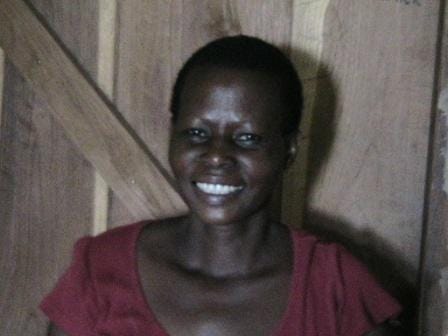
The story of Esther, our widowed lovely Care-taker and Cook
in Sudan continues. Pastor Stanley wrote me recently and said, “Esther
is still struggling… we do not have any responses for her (housing needs) yet but
can you imagine, Esther has adopted a three month ol
d girl called Rebecca who
is an orphan? Rebecca lost her mom and was left with an old grandma who does
not know how to keep this little girl…”

Caring for people comes naturally for Esther. Adopting
three month old Rebecca is a wonderful expression of love and the pursuit of a
joyful spirit that’s worthy of praise. She’s quietly scripting glorious lines about
her gracious and generous personality than many in Yei may be willing to acknowledge and
commend. But God sees her insatiable passion for a joy-filled life.

Joy doesn’t
depend on circumstances; it’s more than a state of happiness.
Paul wrote
the Epistle to the Philippians from a jail cell, which is a place of insignificance and ignominy even in our day, today. He was criticized and
misunderstood by many but rather than allow his challenging circumstances to choke
out God’s word and life in him (as Mark 4:19 says they often can), Paul chose
to concentrate on the joy of knowing and serving Christ (Philippians 2:17). 

Joy is a
transaction between us and God that others can’t help but notice. It’s God’s life
spilling over the brim of our lives and into others’ lives. When we trust
Christ with the details of our individual life, we experience His life in
wonderful excesses that soon give us and people around reasons to smile and
thank God.

Esther has no paying job, which means no money to take
care of her needs but she has the faith to take on the challenge of caring for 3months old baby
Rebecca for the rest of her life. Aren’t her joy, faith and love spilling over
here?

I know Esther can do a whole lot more than she’s
currently exposed to. For instance, she speaks four languages excluding English
(which she understands pretty well but not so fluent in). Her knitting skills
showcase a creative and colorful spirit which she freely expresses in cotton
linen. You need to see her needle works in bed sheets, pillowcases, blinds,
table covers and much more. She’s also an intercessor.

This richly gifted young widow has taken her case to another
level. A level that I believe will provoke God’s grace and blessings in ways
beyond her imagination. Even so Lord!

One thing excites me the most about Esther; she’s a
disciple that seeks to make a difference with little things. She has out-done herself by adopting baby Rebecca. The tragedies of her past have not stifled her joy nor
stunted her vision for a greater and better tomorrow.

But whose joy will overflow towards her and Rebecca so that she could fulfill her dreams?
 
If God is stirring your heart towards Esther and baby Rebecca, please contact her Pastor, Stanley LoNathan- stanleylonathan@gmail.com 

Remember the missing Bibles?

In July 2009, I
told the story here of how someone stole the 300 B
ibles and 600 Bible study materials
packed in 8 boxes I was carrying into South Sudan.  The tra
nsport company took responsibility only after I contacted my lawyers, Messrs Kasekende, Kyeyune & Lutaaya Advocates in Kampala, Uganda. This firm of young, vibrant and enterprising lawyers took this matter over and
promised I would not lose my consignment. We were all confident.

I sent them my Statement and they responded with a three page “Notice
of Intention to Sue”, which they sent to the transport company. I’ve never had
cause to exercise my legal rights until this time. I was impressed with the
composition of the Notice which was summarized thus:

TAKE NOTICE
that if the sum of Ug. Shs.1, 200,000/= (Uganda Shillings One Million Two
Hundred Thousand Only) plus legal fees so far incurred of Ug. Shs.500,000/=,
a total of Ug. Shs.1, 700,000/= (Uganda Shillings One Million Seven Hundred
Thousand Only) is not paid to us within 7 (seven) days from the date
hereof, our instructions are to;

i)         To enforce recovery of the said goods against
you and (Name withheld) Bus Services jointly and severally,

ii)        
To institute a civil suit to recover the said
money for breach of contract and damages from your, at your own cost and peril.

TAKE HEED.

Yours Faithfully,

On receiving this notice which had passed through the central
police station for stamping, the transport company immediately “took heed” and
began to make moves to pay for the goods. First, the store manager who acted
irresponsibly in giving the consignment to the wrong person sold his property
and brought the money. But it was not enough.

The time given for the payment elapsed and I gave more
time. When nothing was happening, the law firm pressed them again with threats.
Their pleas for leniency made me seem like a heartless, unforgiving, man who
claims to be a pastor from Nigeria. Finally on August 1st,
they paid up.

We had bought the Bibles we used during that trip on
credit so we immediately paid back what we owed and bought more Bibles for the
students.

Since this unfortunate incident, I’d carefully avoided traveling
to Kampala with this transport company from Koboko. I needed to keep away from
those folks. Someone could be tempted to attack me because of this case. I had
to be careful.

But my plan was short-lived. The vehicle I boarded from
Yei on my last trip in October stopped at Koboko; right in front of this
transport company’s bus park. When some guys there saw me, I knew I had to go
and say hello else I’d have sent a wrong signal to them. I told them I had to
involve lawyers to get my goods back. I spoke gently but confidently and not one
person among them responded. I shook a few hands and walked away. I was
surprised to see the same Store Manager that gave away my goods still dressed as a staff there. I later heard he’s
related to the Managing Director of the company, so he cannot be fired.

Someone asked me what lessons I learnt from this
unfortunate event. I reflected on the question and felt that I’d sacrificed my
primary goal (getting the Bibles and study materials to the end users) on the
altar of ease. Traveling with 8 boxes was going to be a pain and I tried to avoid
that pain but got something worse. I also learnt that I should be ready to
suffer losses if I’m going to entrust my valuables to others. They will rarely
treat my treasures like I would. Lastly, I learnt to employ the service of professionals like lawyers.

I guess it would have been better if I asked the transport
company to provide the Bibles and the books and deliver then at their office in
Koboko, instead of the equivalent in cash. But that could take a longer time to
accomplish, seeing that those particular Bibles and the books were not common commercial products.

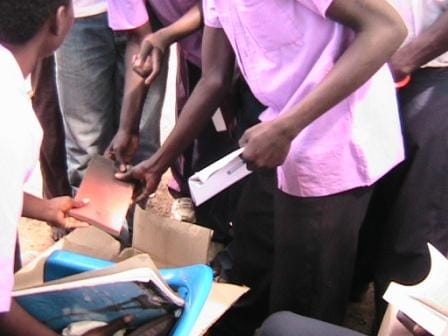
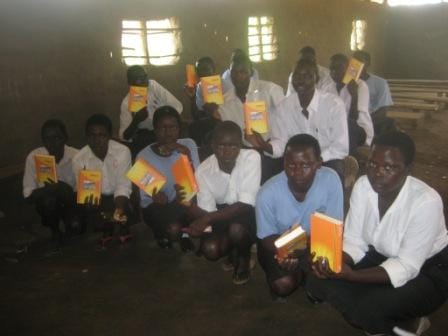
Our mission to put a Bible in the hand of every student
in Yei is still on course. It may not happen as quickly as we expect but
surely, we’ll see to it that every student in Yei has a copy of the Bible in
simple English.

A copy of the New King James Bible which is readily available
in Yei costs $2. But we wish to give other simpler translations like the New
Living Translation and Good News.

I greatly appreciate all those that have given towards
this project. Your sacrifice will not be in vain. We continue to covet your
support.

The challenge of childless widows in Africa

It’s sad enough mourning the death of her husband. But what
do you say to her when all she labored to build with her husband is taken away from
her by her in-laws? Why? She had no child for their late son, brother, uncle,
nephew… whatever.

This is the story of Esther, our precious care-taker and
cook at our missions’ base in Yei. She met and married her darling husband, a

pastor, in 1996. Before they met, his first wife had run away leaving him with their
three kids, all boys. The oldest was 5 at the time. She took them as her own
children and brought them up.

As the years passed, medications and several visits to
the hospital for operations could not help in her quest to have a child of her
own. They arrived at that point where only God could step in and act. So they
continued to pray and trust Him.

In March this year, the unexpected happened. Esther’s
husband passed-away. He’d complained of pains and aches in a number of places.
Death was the last thing on anyone’s mind. You are never fully prepared for
death and its consequences.

The burial went well but that marked the beginning of new
sorrows. “What shall we do with this barren woman and our brothers’ belongings?”
This was the big question before her in-laws. After several meetings, it was
agreed she should stay in the family house until the man’s eldest son is old
enough to inherit his father’s property. When will that be? When he feels up to
it, seemed to be the perfect answer.

Barely 6weeks after the elders’ final verdict on her,
while she was at work, her eldest step-son who is now 18 came to their home
with a truck and carried all the furniture and electronics in their family home
and moved them to an unknown place. She was too hurt to come to work the
following day. I thought she was sick so went looking for her in the company of
another disciple.

“Uche, Benji (not his real name) has come and carried
everything in the house.” She cried. I was shocked. She went to borrow three
plastic chairs from a neighbor for us to sit down. The house was bear,
everything was gone, beds, settee and all. Only her box of clothes remained.
Her tears were much.

“I brought up these boys from when they were small till
now. I fed them and bathe them, but now, look at what they gave me as- thank
you present.” I went to work immediately on her. Self-pity has a way of making itself appealing to the wounded heart. Roots of hatred and bitterness soon become difficult
to deal with at later stages, if allowed to sprout. She had to let go of these things and give God room to be the All Sufficient One for her. It was hard reaching her then,
but she’s coping better now.

This is not a strange case. In many African cultures,
when a widowed woman has no children, she losses all rights and privileges to
the family of her late husband. Her options could depend on a number of variables like her age, job, education, past relationships with the in-laws, sheer poverty and others. The stigma of childlessness is huge in Africa. I recall
a preacher’s wife say, “…God can test me with anything in this world but NOT
barrenness.” The bottom line for the widow here is CHILDREN. Many African cultures
say she needs them to belong, in some cases, she needs them to survive.

The levirate practice (where a man may be required to marry his brother’s widow if he had no children with her) was
permitted in the Old Testament and is still being practiced in some African
cultures today. But someone reminded me that the current scourge of HIV/AIDS is
silently phasing out this age-long custom.

Do you know any widows like Esther? Kindly
connect with them this season, support them in anyway you can and reassure them of God’s love and care.

Sudan – to go or to stay home, my fears


In a few hours from now, I’ll be airborne, headed back to Yei via Nairobi – Kenya and Kampala – Uganda. Thanks to Brother Scott Davis for sacrificing much to set me on my way once again.

Someone asked me recently, “What do you fear the most about your mission in Sudan?” Without thinking very deeply, I replied “Nothing.” I was wrong. I have since noted some things I truly dread about going to Sudan, and a lot more on the consequences of my choosing to stay home and mind other duties.

To start with, I don’t like long rides, even on the best of roads. The video clip and the photos speak silently on the condition of our roads in Sudan. It’s roughly 80km from Aura in Northern Uganda (where you leave paved roads and enter dirt roads) to our base In Yei, South Sudan. As short as the distance is, that road trip takes many hours to accomplish on any given day. One is certainly guaranteed five hours of a dust bath in the dry seasons, which I think is tolerable; considering the hours and sometimes days spent riding on mud during the rainy seasons. The fear of getting stuck in the mud lingers in every traveler’s mind per mile. Sometimes you don’t know what’s causing a particular holdup and an attempt to find out the problem could mean an hour’s trek to and fro the source.

Though some parts are now being leveled out, thanks to the efforts of the UN, whose presence in South Sudan has been a great blessing but there’s so much damage to contend with. I wonder when we’ll be delivered from these perilous roads. We once did 50km/h on one stretch and I celebrated it. I wish to see more development when I arrive.

I marvel at how haulers and other road users who ply these roads frequently manage the grueling situations caused by break downs in the center of the narrow road and heavy duty trucks caught in mud ditches. These are regular occurrences on those roads from season to season. It takes me a full day and sometimes even more, to recover from the long ride from Kampala to Yei.
 
We have flights into Yei from Nairobi and Entebbe very regularly. The dirt airstrip in Yei can handle two 19-seater aircrafts at once but with all the heavy load of supplies one travels with, the cost per seat is high. 

What would happen if I chose to stay home? My fears are encapsulated in this one question. It’s not really in the bad roads or the dangers that could prevent me from ever returning home each time I go.

Someone said, “The true cost of missions is not what happens to us when we go but what happens to them when we choose to stay back. It’s not what happens to us when we fast and pray for them but what happens to them when we feast and play. It is not what happens to us when we give (our money, time or training) but what happens to them when we hold back.
 
The high cost of missions lies in our DISOBEDIENCE, not in our OBEDIENCE.”

Or what do you think?