Yei, the remaking of small London


My first impression
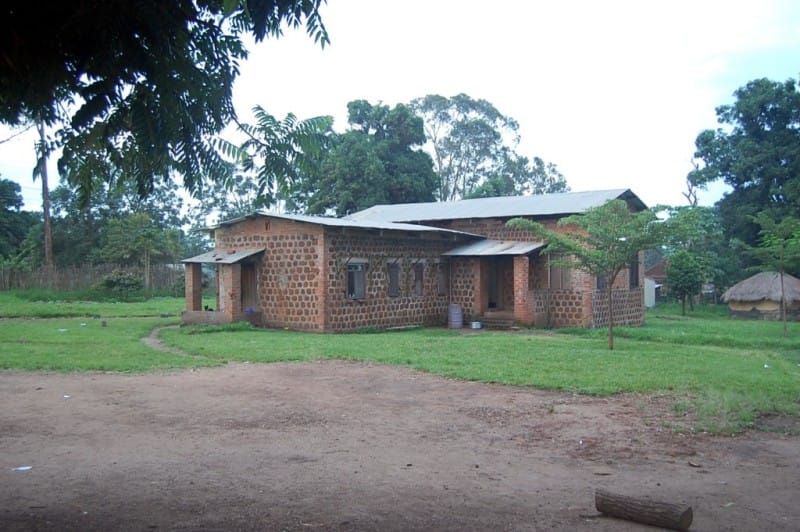
of Yei was mixed. It reminded me so much of my village, Ogidi in Anambra State,
east of the River Niger in Nigeria. It also gave me a vivid idea of what many
churches, sc
hools and homes looked like before and after the civil war. The
Sudan civil war ended in 2005 with bombed out schools, churches and homes all
over the south. 

The few surviving structures were riddled with bullet holes and
wounds of various sizes, reminding whoever cared
to note, of the horror that
once ruled these parts. But one will notice the colonial touch from the kind of
buildings that served as homes and offices of the masters back then. London was
not a bad name truly. Those guys from Europe really intended to make Yei home
away from home.

I arrived Yei for the first time on the
4t
h of July 2005 in the company of Pastor Stanley. We drove in by
road from Bazi where we had camped for 5days with some other friends from the
USA, ministering to locals and distributing food to the people in Bazi. More on
this Bazi outreach later.

The sight of
deminers working with great care, just 6 meters from our gate unnerved me
immediately on arrival. War was still fresh in many minds. Chills ran through
my spine as I imagined what could be that must not be. Th
e sign, “Walk
along the Path” posted around the town in several places could
be
interpreted, Mines!! The guys were all well kitted and worked together to
unearth the “thunder in the ground” as some call it. I didn
‘t wait to
see if they succeeded.

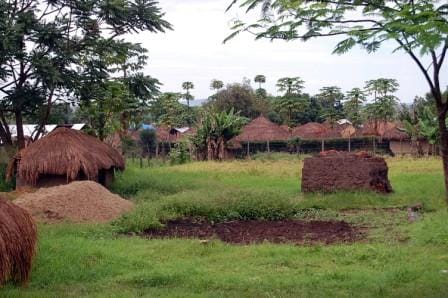
Yei is located 68km
from the Ugandan border to the North and 160km from Juba, the Capital of South
Sudan on the north east axis. What makes the town strategic is that it is the
first major t
own you arrive at, coming from Uganda or the Congo northward in Sudan. Many
returnee
s transiting to various parts of Sudan after the war hang around in Yei
for a few days, looking for means to get to their destination and many times,
they preferred to settle. 

Thus, this town holds a vast collection of native
Sudanese, people from least reached and unreached areas. We are targeting their
students as our tools to reaching their unreached. It must happen!

Before the civil war
broke out in 1983, Yei was a booming busin
ess town because of its proximity to
the Ugandan and Congolese borders. To get into the inner part of south Sudan,
most traders had to pass through the tow
n. 

The result was that it became a key
trading center for farmers and traders from the hinter lands and those from
Uganda and Congo. Hoteliers flooded the town. Guest houses called “Lodge” and
huts for rent provided ready shelter for wayfarers; while drinking bars and
shops offering mixed goods are on every corner. We are back to that life now.
In fact, we’ve gone beyond that with the arrival of movie centers, where all
kinds of movies and of course, the British
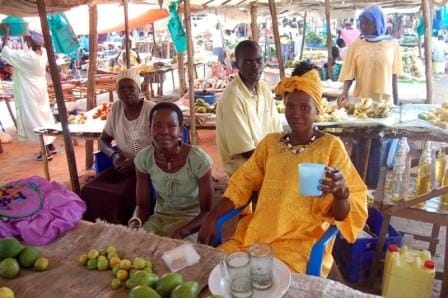
Premiership league football could be
viewed for a fee.

Civil servants and
other high ranking government officials posted to Juba come over to Yei to
unwind quite frequently. Yei is so different from Juba, which is hot and humid
almost all year round.

The population of
Yei is put at 45,000 after the war in 2005, counting women and children. Since
then, it now hosts over 75,000 people over 70% of whom are youths. The
growth and expansion of the town within four year is encouraging. 

There’s an airstrip where 19seater
airplanes can land comfortably. We have electricity, powered from a generating
plant from 7am till 12night daily. Two FM radio stations operate here and one of them is ministry based, granting Christian programs free airtime very often. With four cell phone networks around, there’s a scramble for
customers. 

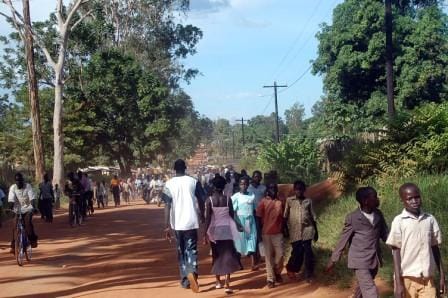
You can even get a free SIM card from some.  The government is currently fixing major roads
and trying to plan the town’s streets. Most places are known by
the name of the villages near them. Streets are yet to be named as they’ve
not been intentionally created. We tread more on pathways than streets. Healthcare is still a challenge but more private hospitals are coming in.

Yei is pretty
safe. Though we’ve h
ad a few unsecure moments with LRA (Lord’s Resistant Army)
rebels of Uganda; who are hiding in forests of Congo, and invade villages near
and around Yei when our soldiers doze off on duty. Some have lost their lives
and a few abducted during the attacks. Nonetheless, this place is safe.

Yei has over 20
primary schools and 9 secondary schools. It’s a joy to note that all but one of
these secondary schools has a Scripture Union
fellowship that meets weekly to
pray and worship. 16
different denominations are resident in Yei with many churches. There’s
a pastor’s forum that meets often with a goal to sharpen one another. 

Many
ministries and
NGOs are here too, each with its own vision. There are three
orphanag
es in Yei, with over 300 kids.

Yei and the
surrounding villages are virg
in lands for ministry. The needs are real and must
be engaged for the K
ingdom’s sake. 

The challenge of youth development, orphans,
women empowerment, vast uncultivated fertile lands and church growth stare us
in the
face with an intimidating gaze. Now’s a good time to engage.

Feel free to get in touch
and let’s know your passion and pursuit. We could work together. There’s surely
a place for your experience here in Yei. Ask me, plan to come, you’ll be
amazed.
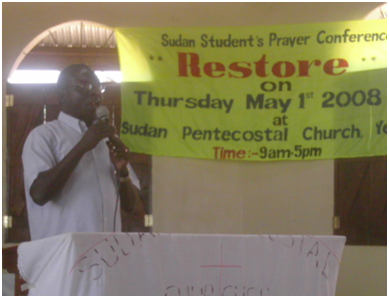
 

Pastor Stanley: The journey of a disciple

I met Pastor Stanley Lo-Nathan, the Director of Sudan for Christ Ministries in June 2005. It was on the recommendation of Greg Ford of Global Quest Inc. Greg is a friend of the leaders of my church in the USA, Victory World Church in Norcross, Atlanta, Georgia. When I shared with them in 2004 of God’s leading to North Africa, they suggested I link up with Greg who has ongoing work in Sudan. When I met with Greg he said, “Uche, I’ll have to get in touch with Pastor Stanley in Yei, Sudan. If he wants you with him, I will get across to you but first, finish your training at the school of ministry.” I was at VWMTC with Victory World Church at the time.

I connected with Pastor Stanley on my first mission trip to Sudan. We met in Entebbe Uganda and drove in the company of other mission-minded folks from the USA to a small Southern Sudan village called Bazi for our outreach. It was an unforgettable experience. Stanley and I later left for Yei where our bonding continued. It was clear our passions aligned and other things flowed naturally. He’s a man I’ve grown to love and respect.

This is his heartwarming story.

I traveled to Cairo Egypt in 1990 with several other students from South Sudan on a government scholarship to study. After I graduated I could not come back home because of the war. Like many of my colleagues, we didn’t have anything to do, there were no jobs; the only jobs available were to work as house boys for the Egyptians. They were real taskmasters just like Bible days. The work was too much but I had no choice. Frustration drove me to alcoholism.

In 1994 UNHCR opened up their offices to help hundreds of the Sudanese people from the South who were caught up in Egypt to apply for refugee status. I submitted my application with a lot of lies to prove that I was a political refugee. During the confusion and frustration of those days, I received Jesus as my Savior in 1994.

I received the call of God in my life in 1995 and I began to preach. The same year, I was called to the UNHCR office for my interview for the asylum. I did not go because all the information I gave on my application was false. I had applied before my salvation experience. The Holy Spirit spoke to me that now I am saved I cannot defend the lies I sent in. After that many doors to travel to the USA and Canada came but I could not travel because God had removed the desire and quest to travel abroad by all means from my heart.

After I got saved, I was introduced to a church where 90% of the congregation were foreigners. Most of whom were from America, Canada, and other parts of Western Europe. I became the leader of the Sudanese people worshiping in that Church. The pastor of that church, Pastor Dave Petrecue who has gone to be with the Lord was from Canada. One day the pastor called me to his office and told me that the Canadian Ambassador asked him to send all the Sudanese families worshiping in his church to the Embassy because interviews will be conducted for them and those who are successful will be resettled in Canada.

I was called to screen all the Sudanese families immediately. I did, and within four months all these people were resettled in Canada. Many of my friends, including myself, were amazed that I did not include my name on that list. That list was like the List of Life, of Prosperity, a list of HOPE. However, I have never regretted the decision.

In 1996, I began to nurse the vision to return home to Sudan and to plant churches and Bible schools. So in 1997, I joined Victory Bible Institute in Cairo to prepare and equip myself to be a blessing to my people. I graduated in June 1998. During the Bible school days, God spoke to three of my colleagues to join me in the mission to Sudan. We departed Egypt in 1998 traveling through Uganda. Our plan was to stay in Arua, a border town in northern Uganda, where we will be ministering in refugee camps before we would finally venture into Sudan. The civil war was still raging at this time and Sudan was a death zone.

We didn’t know at the time that God was setting us up on a pioneering ministry to break the ground for other ministries to follow. When we arrived in Uganda, we were detained at the airport in Entebbe for 8 hours before we were finally released; their reason was that we were spies from the government of North Sudan. The relationship between Uganda and Sudan was bad, such that both Embassies were closed. After a couple of days’ rest in Kampala, we headed north to Arua, and just one night in Arua, we were arrested and locked up by the police. In the cell, we were stripped bare, our shoes and all the money in our pockets were taken. Up till that moment, none of us thought of returning to Egypt, though some of us had a return ticket.

I have never been in a police cell since I was born, it was a shock to all of us but thank God we were together. We sang and prayed and the presence of God was and will always be in the police cell. The first day, the inmates were rough, demanding money or they would beat us up. Thank God by the following day they became our friends. But the worst was yet to come as the police told us on the third day that we were to be deported to South Sudan, we were afraid at first but then we didn’t have any choice, so we trusted God, after all that was where He wanted us to be.

The police made sure we traveled all the way to the border. On arriving Yei, the SPLA (Sudan People’s Liberation Army) authorities arrested us on the allegation that we did not have proper documents to enter South Sudan. Our passports were taken and we reported at their office every day for one month to make sure we were not enemies of the Movement. Yei was not safe, we lived in bunkers most of the time, fighter planes dropped bombs twice or thrice daily and many people we knew died some of them were our disciples. God kept us alive and He continued to use us.

Two years later it became easier for foreign ministries and churches to come to Yei and we thank God for the grace He gave us to go through all the pains we experienced for His cause and glory. We have since hosted many foreign ministries. Our ministry, Sudan for Christ Ministries has always been a platform for ministry expression. We welcome those that want to come to South Sudan to fulfill God’s call on their lives. We would be willing to assist them in any way possible to see Jesus honored with their visit and our partnership.

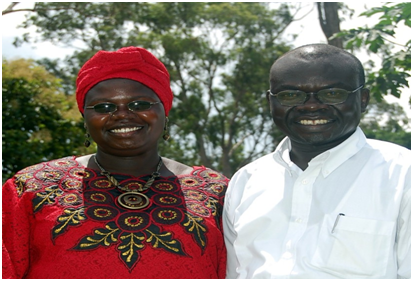
Pastor Stanley is married to Vicky.  Vicky heads the ministry’s nursery and primary schools with over 540 kids. They are blessed with three lovely children.

4 years ago today in Yei Part 2

When we heard that hell, accompanied by his brother death had arrived Juba and Khartoum, I began to pack a few needful items together. Most foreigners did. The shortest route to the border was in our thoughts but no one said a word about that. Killings, lootings, burn fires and riots raged in Juba and Khartoum.
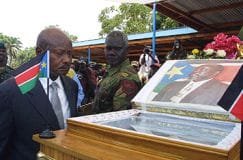
 
But Yei was quiet, except for occasional gun shots from here and there.  No one was killed in Yei, though a few foreigners who looked like  Arabs lost a few items. They took shelter at the police station.

I was folding a shirt when Mama Rebecca Garang’s voice came on BBC radio. She spoke well, trying to stop the tension that was already out of control in many parts of the country.   She asked the people to be calm and law abiding and to not jeopardize the peace they’d fought so hard to achieve.  People did listen to her words of encouragement and it paid off in some areas.   But over 60 people had been killed by that  time and many more were to follow within the week.

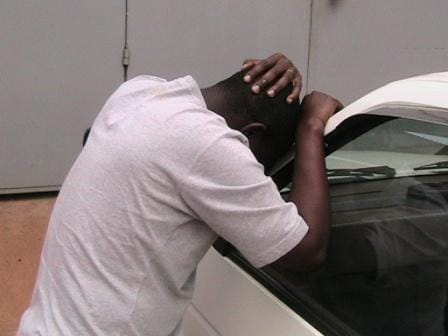
All week long, the radio station was playing only martial music.  I have never seen so many people grieve so deeply all my life.  You’d not see so many people gathered and suddenly there’s no reason to laugh or even smile.  No one dared a joke only tears flowed. What would be so funny at a time like this?  I imagined how much the war had formed the emotions and ideas in  the minds of those that lived through it.

The next day, the church leaders in Yei called the people together for prayers and many turned up at the Freedom Square.  I was there.  Though it turned out to be too religious for my liking the act was a noble one by the church leaders.  I was glad to see that the Church in Yei commanded the respect of the soldiers and the general public. Truly, we achieve more as a team with well defined goals.  We were at that meeting when news came that the body of the late leader will be taken to a few key towns so that his people can pay last respects.

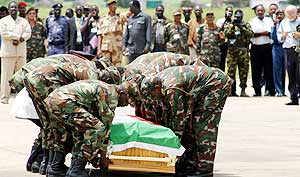
When the body arrived Yei around 10.45am on the 3rd of August; a cry like I’ve never heard before filled the air with true human sorrow and love for our lost leader.  A few people fainted and where carried off to the general hospital which was a stone throw away.  Men and women wept freely, even some soldiers couldn’t hold back.  I wept too, not because I knew the man,  but the pain expressed by so many people around me brought tears to my eyes.  They loved this man and the dreams of a new reality that he wanted to bring to the people.

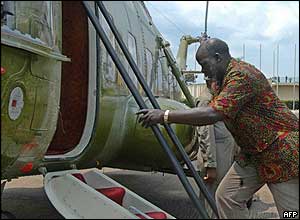
Unknown to many of us that day, over 1,500 soldiers all fully armed, with armored tanks and all manner of combat gear and vehicles were on their way to Yei from Uganda to grace the occasion. Their mission was to give their President, Yoweri Museveni of Uganda maximum projection.  He was a personal friend to the late leader and due to the circumstances surrounding the death of his friend, he needed to come to Yei to clear the air.  In the heart of some people, he was a suspect. He’d not fly into Sudan for obvious reasons.  He opted to travel with his wife by road into Yei.  It was a sight.
The setting was grand for speech making and we heard a few.  I personally admired the wife of the late Dr. Garang.  I heard she was a very senior officer in the SPLA (Sudan Peoples’ Liberation Army).  So I was looking at a woman who commanded troops alongside her husband for years in the bush.  Her composure was awesome and motivating all at the same time.  “SPLA Oye! SPLA Oye!!”.  She greeted her comrades and moved the crowd with passionate oratory.

On that day, I concluded that the civil war was far more than a South vs North, Christian vs Muslim or African vs Arab war.  I’m strongly persuaded that it was and still to this day is a Light vs Darkness war.  God’s quest for global worship was at the crux of battle.  His will and hunger for hot worship from all tribes can only be delayed the noise and rumors of war through out the countries.  On this day, so many stopped and cried to hear the true words of peace.  Today, you could tell that our leader’s death was not in vain.

During that week, a Sudanese commentator speaking via BBC radio on the tragedy in land said, “…if this happened in the olden days, several young men would go into the forest unarmed and wrestle wild animals to the death in honor of their hero.”  I was shocked.  I reflected on this statement for weeks. I still do.

Dr. John Garang De Mabior is a national hero in Sudan.  His photo adorns many government offices, shops and homes until today that is.  But he’s gone and yet the peoples of Sudan are still searching and longing for the Hero.  The One whose vision for them is not temporal but eternal. Surrounded by thousands of Sudanese on that ground, I made a promise to God, to introduce this people to the real Hero. The One whom great heroes bow to and say, “You alone is worthy!!!”
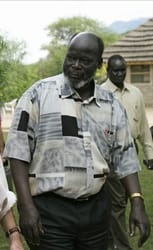
What is the hope of Sudan today?  Where will this nation be in 10 or 20 years time? What kind of church will we have here then?  What kind of leaders will lead then?

What can I (we) do today to make a difference in Sudan tomorrow?

Think of the orphans, the women and vast majority that can’t read nor write.  There’s something you can do.  This land is awash with opportunities that will surprise you.  Think of God’s healing for this nation and  how you can be a part of it.
 
Think of a visit soon.  We cannot do it alone, please let me know your questions, your heart felt desires and the calling you feel.

4 years ago today Part 1

We were two weeks into the Bible School which was going really good. Our big banner inviting interested students still hung outside by the main gate. It spoke of serious business and we really prepared for it. But no one could have ever imagined the event of 31st July 2005 and what was to follow.

It was the worst non combat event in the nation of Sudan in recent memory, especially for Southerners. We woke on Monday morning August 1, 2005, to the news that the presidential chopper boarded by Dr. John Garang De Mabior from Entebbe, Uganda to Juba, the captial of South Sudan was missing. The aircraft belonged to President Musevni of Uganda.

Dr. John Garang was the visionary leader of South Sudan. He had successfully led his people in the south through a most gruesome civil war against the northern government. The Comprehensive Peace Agreement (CPA) was secured and signed on 9th January 2005, marking the end of the war.

The radios from everywhere were loud; every listener was engaged, waiting for their fears to be allayed. Pastor Stanley walked into my room and sat down. We exchanged morning greetings and nothing more. No one was talking much. Everybody was listening and pondering. Can it be true?

By 10am, it was official. Dr. John Garang is dead. The SPLA soldiers had found the crash site in a mountainous range in Sudan and recovered his body with that of his 8 aides and the 7 crew members. He was sworn in as the country’s first Vice President and the President of South Sudan; just three weeks before his death.

Sadness engulfed us. Sporadic gun shots rang out from several quarters. The anger in the air was thick but more than that was the fear. Many foreigners ran for cover to the UN compound. Others gathered in groups to pray and plan.

I needed to contact my family and mobilize prayers immediately. Yei had a cell phone company that operated an analog system that allowed users to call out but not receive from other networks but its own. I folded my flight ticket into my international passport, pocketed it and made my way to the telecom company. It ran an internet café and the Manager was my friend. But that day, nobody was anybody’s friend. I managed to sneak into the café and send a quick email to my dear wife.

But the telecommunication equipment was faulty so people could not make calls. This further worsened the madness brewing in the heads of some soldiers that needed to communicate with their commanders. Some threatened to burn down the telecom office if they returned and their “one-way” cell phones were still not working. I knew it was time to return to our base.

I arrived the base to notice an AK-47 in my room. “Who owns this?” I inquired.

“It’s ours,” said the security guard, a beloved disciple.

“Ours?” “Who is ours… you mean we have a gun here?”

“Yes, every home has at least one. Some have many.”

It was my first time to handle an AK-47 rifle and even have the opportunity of firing it, though I didn’t. I admired it and it felt really good. For a brief second I felt different holding it. Believe me there’s something about that deadly weapon the oozes confidence.

Then, I asked the young man, “Can you imagine how many people this thing has killed?” Without attempting to answer, he took the gun from me, walked outside and let off a few rounds.

“I thought we had discussed spending some time to pray about this situation?” I was trying to recover from the shock the bangs of the shots had sent through my being. “We should show good example to our neighbors…”

He cuts in, “Uche, you pray and we watch. That is how, we’ll survive.”

I didn’t see the need to argue with him.

But should a Christian use a gun for self defense?  Or simply trust the Lord and the words of the Bible?

[Defining moments of that week in Part 2]

How I lost my cell phone

My trip back to Kampala from Yei last week was challenging to say the least. Since I was to travel to Kampala with the same transport company that lost the Bibles, for security reasons, therefore,  I chose to go through Arua, instead of Koboko, to catch the bus going to Kampala. My “friends” in Koboko,  were still trying to provide answers to my missing Bibles. I hear they want to pay for them.

I arrived Arua rather late but in time for my trip to Kampala. As I waited for my bag to be searched, I made a few local calls with my cell phone. Custom officers at the bus station search every luggage for contraband goods and whenever a bag is opened, every eye around is looking to see what’s in it; what’s in your bag tells your story.

I boarded the bus early so I could get a space for my carry-on. I placed the bag right over me in the roof rack and took my seat. I felt ready for the long ride. Suddenly, I remembered I’d not locked the bag after it was searched so I got up and locked it.

The guy whose seat was in front of mine came in after me. He was a young man in his mid-twenties I guess. He tried to force his bag in beside mine, but the space was too small. The opposite rack was free but instead of taking it, he quickly dropped his bag on his seat and dashed out of the bus. He didn’t get back until after 6minutes or so. At that time, I was already searching for the cellphone.  Some kind lady suggested I tell her the number so she could call it.

“Pity ma, I can’t remember the number. I don’t use it often…”

I’m now on my knees looking under the seats and feeling very silly with my last response. This was no cheap cell phone. It was a gift, and a good one too, bearly 3months old. With 61 passengers waiting for me, I ran off to where I sat at the lounge maybe I left it there. Pity!

Finally, I gave up, sat down and began to think. Then I remembered. I had it with me when I was locking my bag. I kept it beside the bag in the roof rack while locking it and this guy in front of me was the only one to go there and he acted really strange when he was trying to place his bag beside mine. Did he see the cell phone there, take it and dash off to turn it off outside? I leaned forward and asked him. He denied. After much thought, I was convinced he had it.

I started thinking of my options. I settled to let him go but not without a counsel. I must say something that he won’t forget too soon, a sentence that could lead him to Jesus. But my mind was blank. Anger was not letting me think or even pray. I thought of offering him the spare battery and the charger as parting gifts.

When we entered Kampala; he signaled he’s getting off before the terminus. When he did, I followed him. He had something in the trunk and demanded it; I stood by, waiting for the conductor to give him his stuff before giving him mine. To my shock, it was a brand new bow with several arrows, which he’d purchased at one of our stops, where arts and crafts are sold.

I quietly entered the bus and kept my final words and gifts to myself. Wisdom told me I was beaten. The stakes were higher now and I’m not going to heaven on this guy’s terms. He can keep the phone.

I now know why self-control is the last fruit listed in Gal 5:23; it takes the longest time to mature.

Witch doctors exposed and expelled

What strikes you when you hear words like witchcraft,
voodoo, native doctor and the likes? Depending on your worldview, you might experience a range of emotions: maybe fear, horror, anger, or even outright denial. Is it occultism,
supernatural powers, manipulation, magic, tricks? We are all free to choose what to believe or
feel.  Witchcraft as a tradition is
accepted and practiced in many parts of the world, Sudan inclusive. But the
leaders of Yei have had enough.

 
So on the 16th of July, 2009, 11 witch doctors
were arrested by the police in Yei and paraded publicly for the entire town to
see at the Freedom Square. I was there and gladly so too. It was a spectacle of
sorts. Their charms and other materials were burned and the foreigners among
them deported.  
 
There was joy in town but
this is not spiritual revival yet. Until their victims begin to confess and
repent publicly too, there’s not much to celebrate.

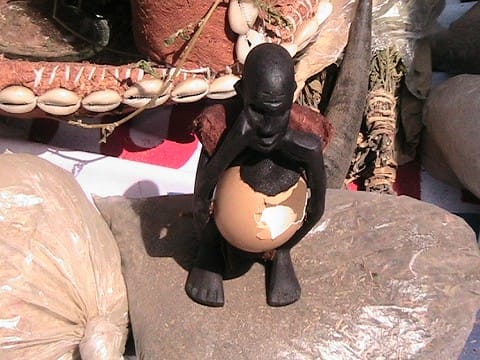
These men and many others who escaped have played god in
Yei for too long. Calling themselves weird names with Dr. attached, feeding on
the pains and insecurities of people, they promise to cure all manner of
illnesses including the dreaded HIV/AIDS.  Charms for protection from accidents and gun
shots during war, love portions, conception concoctions, wealth armlets and deadly
poisons are some of their bestsellers.

So, what led to their arrest? 

A man who wanted instant riches consulted one of these
men recently and he was told to bring his wife as a sacrifice to the shrine. That too absurd for him to imagine, much less do. So he reported to the police,
who immediately began to investigate. They discovered more than they thought
possible. One sad discovery was the picture of a young girl hanging on the wall
in the home of one of these witch doctors with a “prayer request” attached to
it. It was from someone that wanted her dead. The witch doctor was contracted to
execute the job for a fee. This and other weird findings triggered their arrest. Sadly, some escaped.

People who feel cursed or bewitched come to our church regularly
asking for deliverance. Their stories are always of torments, spiritual harassment,
unexplained illnesses, pain, and of course, the fear of death.

It’s unfortunate to imagine that some of the victims
of these crooks were hurting people, who may have at some time come to the
church, seeking help? People that need the love, assurance and protection the
gospel provides. They may have sat beside us some time ago in our church,
unnoticed. They may be neighbors, hoping we’d connect or visit.

Could it be that God was too slow and uncertain for them?
God acts in His own ways and time.

Are they still held hostage by the devil because the
gospel has not been preached to them with the demonstration of God’s power, which we claim to possess?
 

What do you think?

A bright destiny: The testimony of a disciple

When Peter Mazedi joined our Bible School, he was shy and
rather too reserved for my liking. I prefer students who come pumped up, firing
questions on everything that doesn’t make sense to them. Peter was different. When he spoke or answered a question, all the students seemed
to agree his view was theirs too. I can’t recall how he heard of the Bible
school but he was among the first to register. He’s light skinned and for a
Sudanese, that stands you out. He’s a native of Yambio, a growing town located in
the Equatoria south west region of Southern Sudan.

Our first one-on-one encounter was forgettable, he came late
with a flimsy excuse and I reacted. But as the lessons progressed, I grow fond
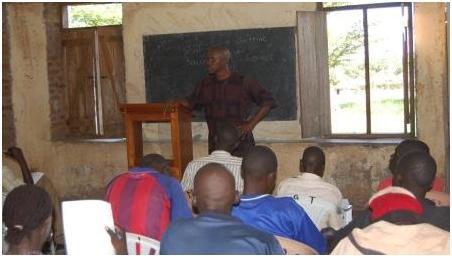
of this guy. He struck me as a very thoughtful student, always speaking with
measured words and showing more interest than most by always completing reading
and written assignments. He made me feel I was succeeding with my work by sharing
his views on various topics. He converted during one of our recent meetings, but didn’t really understand
what following Jesus meant.

Four years down the road, our relationship has grown. His
last email to me recently reads:


My dear father in the Lord, I am in
Juba. I took my annual leave from April – May to visit my family in Yambio, it
was a joyous moment for me after long time without to me.

I wish we meet, so that I can at least
share with you how the Lord is so merciful to me and my family which I can’t
tell you all on the net. It is true that I didn’t know much about God and his
faithfulness and how to wait upon him. I won’t forget you in my life till I
die. I was waiting for one step to write to you.

To mention few:

1/ I am fellowshipping in Juba
Christian Center (JCC), as a sanctuary keeper. I love working with hand for the
Lord b’se he provide me the strength & heathy. We do conduct prayer at the
Ministry every Monday. I am known as Abuna [Reverend Father or Pastor] due to
my conduct (I am not boast of it b’se it isn’t my doing, I know He is the one
protecting me in everything.)

2/ Brother I didn’t know that I will
study again in my live. But He has done it for me. I had no paper, I was
unqualified to enter University. I was courageous and went back to Secondary
School. Our result was out and I passed well, now we have submitted the
admission for Sudanese Universities’ intake.

3/ My wife is very strong and
powerful in the Lord. She has more testimonies.

My God is everything I need in life.
I see my destiny bright, whatever suffer I encounter, I see it nothing. It
is for my salvation and my family that I met you.

In Love,

Peter Mazedi

Juba   


See his comment (No.10) in Part 1 of this blog topic. 44
students started the Bible school that year, only 6 graduated. He was one of
them.  why just 6?
 
[Wait for the surprise revelation in Pt 4]

I’d rather be barefoot with a Bible (Part 2)

It was just a day like any other during those seasons of Bible School in May 2008. We had two classes every evening. They were always full of fun, drama, jokes and sometimes hash confrontations.

A student once asked, “Uche, the Bible says the word of God is milk, is it fresh milk or yogurt?” He was very serious and sincere and wondered why I was so cracked up, laughing uncontrollably.

On this fateful day, a few first timers arrived and where warmly welcomed. But as you can guess, they all came without Bibles.

Since I always came to class with a few new copies, ready for those that come without one, I asked, “Who doesn’t have a Bible?” A few hands go up. I counted five of them.

As politely as I could, I asked; “Do you have 2 pounds? All the hands go down with lightening speed.

I paused, gathered myself together and then continued marketing.

“I have Bibles here for you, we buy them for 5 pounds and we give you at 2 pounds. That’s good business sense isn’t it?” I asked with a measured smile, hoping to provoke enough interest, lighten their moods and mine too.

“It’s just 2pounds, I’m sure you spend more than that everyday don’t you?” I gestured to the guy sitting before me. His face was blank, totally expressionless.

I went on the offensive, this time, staring directly at Anuar, one of the new comers. “You know you can sell your shoe and buy a Bible with the money and have some change?” The silence in class was deafening.

Anuar was wearing a good looking pair of sneakers. When he noticed I was still admiring them, he pulled his legs back under the chair as if hiding them from my view, or was he? Unknown to me, he was actually removing them and before I could say another word, he lifted the pair of sneakers in the air and said; “Who wants to buy?”

“How much?” I asked. 

“5 pounds!” He replied, with a rather cynical smile. I guess he thought like I did- no one here will spend that on this. But then, Kuku, another beloved disciple, grabs the shoes and instantly pays 5 pounds. Anuar gives the money to me and gets his Bible.

As I walked around the class looking for his 3 pounds change, the class was in rapturous laughter and applause. “We are trading now…” someone hollered.

It was a day to remember as I recalled with nostalgia my encounter with John in the same room few years back. What made Anuar different? I guess hunger.

One of my favorite lines is- you can’t teach hunger. It just happens and when it’s absent, it can’t be faked or forced. “When you are full, you will refuse honey, but when you are hungry, even bitter food tastes sweet.” Proverbs 27:7 The Message Bible

There’s something about genuine conversion that propels growth, which progresses according to the sacrifices a disciple makes in his quest for intimacy with His Creator. It never happens by accident.

We all choose where to channel our passions, what to spend our time and money on and all these ultimately point to where we’ll end up, doesn’t  it?. 

 More in Part 3. [Another student, Peter Mazidi has a special testimony. He was in that class of July-September 2005 with John. The progress of this pilgrim will excite you.]

I’d rather be barefoot with a Bible (Part 1)

My encounter with John, a student who started Bible
classes and discipleship lessons at our base in July 2005 will remain fresh in
my memory for a long time.

 
It was the second day of the “Bible School” as we called
it, thanks to Victory Bible Institute, Tulsa Oklahoma for letting us use their
materials; 36 of the 55 students who enrolled had arrived and I was about the
start the class when I noticed John did not have a Bible. “John where’s your
Bible?”
 “I don’t have.”
“Why?”
“I don’t have money to buy one.” He replied.
“How
much is a Bible?” I asked.
“Two thousand five hundred shillings” someone
replied (South Sudan was using Ugandan Shillings until 2007).
 
With his head
now bowed, I noticed he was wearing a very neat designer T-shirt. My quick
assessment told me it could cost eight to ten thousand shillings, approximately
$5, if bought second-hand at a “bend down boutique” (BDB). BDBs are
road-side clothes markets where mostly second-hand wears, from stockings, underwear
to designer three piece suits are heaped on the ground and buyers have to bend
over the stack to select their choice.
 
“John, you know you can sell this T-shirt and use the
money to buy yourself a good Bible and even have some change.” I said, hoping
he’d like the idea. He gently lifted his head from the table, looked me right
in the eyes with a fiery piercing stare, picking at a corner of the shirt, he
said, “sell my shirt, sell my shirt?” His face was so contorted with the
question, it made me worried.
 
Till the class ended that evening, I didn’t hear
a word from him. He never answered my questions nor contributed to the
discussions. I called John aside after class and tried to explain why selling
his shirt for a Bible was not a bad thing to do.
 
“Uche, you embarrassed me
today”, he said.
“I’m sorry, I didn’t mean to… but I really think…”
He cut in;
“I wrote you a letter while the class was going on, but since you’ve
apologized, I won’t give it to you, I’d planned not to come here again. But it’s
ok now.” We parted peacefully.
 
Two weeks later, the class was discussing an interesting
topic on Creation and somehow contributions began to center around pain and
suffering in this beautiful world God made. One of the students fired at me,
“Uche, do you know that a few years ago and even months back, some of us here
were not wearing clothes?” “I didn’t have shoes, we stripped dead bodies of
their clothes, shoes… everything and we’d wear them until they fell off our
bodies like dead leaves. We don’t even think of washing it because it will
dissolve inside the water.”  
 
The civil
war officially ended on the first day of that year 2005. It was like lightening
had just struck me. I then understood what went on in John’s mind when I asked him to trade his precious shirt for a Bible.
 
This was John’s path to discipleship, rough and uncertain.
He left the school two weeks before graduation. But in June 2008, Anuar Kachu another
student, a native of the Nuba Mountains sold his pair of shoes on his first day at the Bible
class for $2.50 and immediately bought himself a
Bible in class and walked home bare-footed.
 
More in Part
2

Our Ministry in Yei, Sudan

We’ll continue to report with joy, the Kingdom’s thrust in Yei, South Sudan. Jesus will get what He paid for. This is our ultimate motivation here.
 
As we labor among the youth, we can confidently say that God has taken hold of some of the secondary schools and the young people in this nation.
 
I’m awed at the responses from these young ones.  The growth of student Christian fellowships is steady and stronger from week to week. 

Our focus is the unreached and least peoples from the middle belt to the north of Sudan. We cannot venture into these areas without the active participation of the youths, especially those who can read and write, most of whom are in various schools now.     

Our local church; New Generation Tabernacle Church has approximately 110 regular members, 70% of whom are youths between the ages of 12-28.  We recently formed groups to engage the spiritual gifts and talent of our members. The effect of this has be phenomenal. The nursery and primary school run by the ministry has over 520 nursery and primary school children today.

Our vision for Sudan is largely youth based at the moment.

We are convinced that the future of the Sudan demands largely on what we do with the youth of today. We are therefore seriously looking to change the stories out of Sudan, from that of wars, genocide, hunger and starvation to news of the manifestation of the power of the Holy Spirit, by discipling children and the youth of this land.

We long to make Jesus famous and followed here. We see that the youth a great resource but are grossly unengaged, poorly educated, poorly motivated towards the good and thus darkness rules in most places.

For light to dawn, knowledge, truth and grace has to take over. We are custodians of these great virtues and will deploy then in this land for the advancement of the Kingdom of Christ. 

Raising a large squad of gospel bearers for the Northern harvest in the Sudan, in in the destiny of this ministry. We hope to send and support these, with their families to plant churches amongst their peoples.

We need people with a passion for the youth. We are looking for models that can inspire these young people to dream, to desire the divine and then be driven towards fulfilling their individual destines. 

The challenge of orphans is great in Sudan. It’s no news why this is so. We have chosen to confront this need. We had adopted 32 orphans, ages 4-13 in May 2008 and on the 5th of July 2009, we welcomed another 38 kids. 

We need the following:

•    Children Teachers,
•    Overseas sponsorship for each adopted child. Thanks to Pastor Bill Mickler of Victory Christian Center Lafayette USA and his church for their great support. Kudos to the leadership of LeSea Feed the hungry USA too for their kindness) We need more helpers. The vision is bigger than one ministry or church.
•    Clothes for the kids,
•    Teaching aids,
•    Funds to build and furnish their dorms and classrooms.
•    Children books and Bibles, toys, games…whatever other kids delight in, these ones will surely enjoy too.

We have electricity, powered from a generating plant for the entire town from 7am till 12midnight daily. We also have internet access as long as there’s power and good weather. It’s relatively safe in Yei. It’s still pretty rural here but happily, the guns and soldiers are off the streets in most parts of South Sudan and we continue to pray for the Comprehensive Peace Agreement to hold so that the prosperity of the peoples of Sudan will cease to be a mere dream.