Pushing our children towards their destiny

The Pre-Teen department of the Children Ministry of my church invited the Parents of the kids to an interactive session on the 1st of April. At first, I thought it was an entertainment or a show with some April Fools flavor. What we got was a shocker, a barrel load of revelations and wise counsels that woke me up again.

The organizers worked hard to present their concerns as plainly and engaging as the issues demanded. It was a profound meeting. The result was clear. Most of us don’t know our children as we should and sadly, we thought we did.

Question after question, I was awed by the little bits and pieces of information I’d ignored about my son, Ed and how my negligence affected our relationship. I was surprised I didn’t know many of his favorite things but he knew mine.

Do you really know your child?

Pastor Toyin Kehinde’s pre-meeting comments that afternoon were profound. “…at this age, they are seeking for identity and adventure, wanting to prove they’re not babies anymore, and wrestling with the changes in their physical frame…” 

There are very sound Christian Parents whose children are still on the broad way. More disturbing is the fact that some of these Parents think all’s well with their children.

At this meeting, I confronted the fact that my prayers for my sons had been more out of fear than love. A measure of strictness that’s akin to terrorism had surfaced. It was obvious that my response to fear and the issues I was sensing could rock our boat.

How best do we raise our children in a vile society that’s glamorizing immorality, challenging and jettisoning the knowledge of God? As Parents, what are our limits in correcting, guiding and instructing our children along similar paths we’d once trod, without a sense of imposition or intimidation?

Hebrews 12:9-10 suggests parents should lead their children to the best of their abilities, whatever those are.

There’s a fine line between liberty and license. I sense that without grace and truth, one will hardly note the difference. We should give our children the liberty to explore and desire, but not the license to do as they please. This is where the problem lies for many parents.

Should we allow our children to base the discovery of themselves solely on what they think or feel is right for them? Should their comfort be more important to us than their character?

Jesus at age twelve knew God’s purpose for Him and was willing to engage it. However, the scriptures record, “And he went down with them [His parents] and came to Nazareth; and did as he was ordered…” Luke 2:51 BBE (my emphasis)

Jesus didn’t need to be “pushed”, He was self-motivated in the right direction. Most children aren’t. Shepherding them through the maze of life into adulthood is tougher than ever. When a Parent’s words or actions imply, “Please leave (child’s name) alone, or give them whatever they want, I don’t want trouble…”, they have unwittingly made room for chaos.

Children who shrink from discipline and never test their abilities or gifts (hidden or known), either by being “pushed” or “ushered” thereunto, grow into emotionally weak young adults who are more vulnerable to anxiety and depression.

On the flip side though, are parents who are seeking status and accolades for themselves in the achievements of their children. So their “push” is not really for the well-being of the child but for their selfish gratification. How do we strike a healthy balance?

This very interesting and hilarious video clip below illustrates the challenge some parents have as they strive to chart a predictable course for their children.

What’s fundamentally wrong with this mother’s desire for her precious daughter? Did you have such an experience? Does it work?

This blog: How do I pray for my kids has a list of great prayers and perspectives that can be helpful.
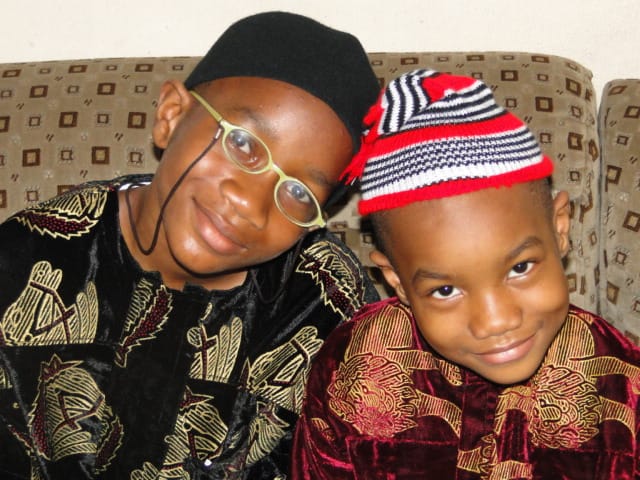
Heading to South Sudan with our kids

Sola and I are 9days away from taking our kids on their first missions trip to Yei, South Sudan. Our transition to
settling there is underway. This 3weeks trip is crucial beyond words.

The excitement is off the roof for
the kids. I don’t blame them. It’s a long holiday for them and with a trip like
this on the agenda, what could be better?

But do I feel the same way?

The anxiety racing through me in
anticipation of this trip is intense.

How are the kids going to deal with
the change they’ll experience? Someone said children handle culture shock
better than adults. I hope so.

Ed is 11yrs and Othniel is 5. Both
have never seen or used a squatty potty, needless to say a pit latrine, which is
what we use in Yei.

What of safety? Shouldn’t we be
concerned about sicknesses and diseases? Will they enjoy that “barbecued
water” for their baths?

They will spend days with the 100 orphan
kids at Dreamland, how will they cope with the meals, the bathroom,  the sanitation, bed space and other things within the dormitory
structure of the place?

As far as temperaments go, Ed is an
extrovert like his mum and seems to handle himself well amidst kids his age and
even older. But Othniel is daddy’s boy, introverted and happy to run his own show.
I can’t wait to see how they connect with other kids in Yei.

Will it be love on arrival or will
homesickness hit them when they see the dirt roads and taste the dust that
charge the air in the absence of rain?

Will they be a nuisance and
hindrance of some sort to the ministry there or bring a measure of grace we
never imagined existed within them?

Sola and I have thought through
most of these concerns and we came to a conclusion that what they stand to gain
by going and engaging, far outweighs whatever risks could be involved.

We want our boys to value relationships
and we are convinced that exposing them to cross cultural missions is one good way
of helping them meet and love people who are different from them; and learn to
appreciate the divergent beauties and also life challenges many kids are living
with.

We’d have achieved our family goals
for this trip if the boys see their time with their peers as an opportunity to
be a blessing, discover and display their gifts, appreciate Abba for the privileges they
enjoy and also see how and why they should take their place in prayers with us
for this call.

It will be a joy to see them
serving, praying for other kids, leading some to Jesus, sharing their stories and learning the language. 

It will be so worth
it if they begin to understand that God is not just willing but able to
manifest signs and wonders through them, though they are young.

Sola and I feel we won’t have the
moral right to ask other parents to release their kids to us to make these
trips in the future, as a way of discipling them and helping them discover
their place in the kingdom, if we don’t lead ours along the same path and watch them benefit from it.

We’ll be making long road trips
from Uganda to South Sudan and we beseech Abba for safety.

The funding we need is yet to
arrive. We don’t have a third of what’s budgeted, but we believe.

We covet your prayers and your
support as we plan and pray to make our first launch out.

Pit stops for a father

“I’d tried to reach my accountability partner all day
without success. I left him a message to call me immediately… I knew he would
get the message. When he finally called, I was not near the telephone and before
I could reach it, the answering machine had picked it and I didn’t know. With much tears, I shared
my struggles with pornography and sexual addictions with my friend, who
listened patiently. He encouraged me and prayed with me. When I got upstairs, I
noticed my 8yr old son was sitting by the answering machine. He’d been
listening to the discussion.”

This was the tragic mess a father found himself in, as told
by Joe Dallas.

Being a good dad is tough. Biblical models are surprisingly
few.

It’s a great privilege to be called Daddy. Sometimes I
wonder if I really understand the scope of my responsibilities as a father to
two amazing sons. I live in a culture where we call some key leaders in our lives “daddy” or “mummy” depending… But I wonder how much I know of these daddies
and how much of me they know.

How close can we get with no masks on? What should be the
healthy boundary? How much freedom do they need today? What part of me should
be private?

“Grandma, is it true that when daddy was my age you use
to spank him?” That was a question my son Ed asked my mother last year. Shocked,
she lied to him, thinking she needed to protect me by painting a good image of
me to her grandson. I don’t blame her.

But he was just asking to confirm what I’d told him about my
childhood. Luckily, I was there to correct and manage the apparent confusion.

Here are a few more questions I’m asking myself this weekend as I
think of my role as a dad.

      1.      What do my sons consider our family core values
aside what I say they are?

      2.     
What would they rather keep as secret from me?

      3.      Am I making my sons work hard to gain my
approval?

      4.     
Do they look forward to our time together?

      5.     
What was the best fun time we had together? What
of the worst… most painful?

      6.     
Are we dysfunctional in any way?

      7.     What am I doing they think I should stop or
spend less time doing or start doing, to them or with them or for them?

As I read Seth Barnes’ blog on
parenting here,
I noticed I scored pretty low in the list he made on things parents may need to repent to their children for:

        �         If you disciplined
them out of anger.

        �        
If you neglected
them at some point as they grew up.

        �        
If you yelled at
them or abused them in some way.

        �        
If you failed to
love your spouse as you should have.

        �         If you didn’t
protect them adequately (from pornography, from violent video games, from the
opposite sex, from family members, from abuse).

We can perform poorly in any other discipline but not
parenting our children to be passionate lovers of Jesus and believers in the
values we’ve set out to pursue and project.

Give this job your very best shot. My mentor Timothy Olonade told me, “…those boys are kids for a very short time. They shouldn’t grow up trying to figure out what they missed because you weren’t there.”

As a father, how are you doing with this great task of parenting your
children? Do you have anything to ask them to forgive you for?

Help us disciple future great parents at Dreamland South Sudan

The source of their identity is one of the biggest issues young
people are struggling it. What is it? Where does it come from? If they fail to
get clear cut answers to these questions by the time they are 18, they’re dangerously
setup for dysfunctional lives in adulthood.

Science has made some incredible advances on how the adolescent
brain functions. During teen years, the brain prunes itself.
 
They are like trees that need constant
trimming to add beauty to their surroundings. Teenage minds are developing at great pace in our day and thus need special care.

A significant part of the pruning needed addresses identity issues.
There’s no querying why this is essential for orphaned children. The big questions however are, “Who or what is doing the trimming and how?”

I see a few principal actors, working sometimes unconsciously and independently
for the same goal.

One is centripetal in nature, working from the inside; and the
others are centrifugal, working from the outside.

It’s clear that young people vacillate today more than they did
thirty years ago, because parents (a centripetal force) have played such a huge
role in their life. Moms want to stay close, so they smother instead of mother.
 

In fact, parents hover, serve, protect, reward and obsess over
their children more than at any time in modern history. This makes the children
tend to draw their identity from their parents when their brain is pruning
itself to become more independent.

This reality is more pronounced in social structures with pretty well
defined and large middle class.

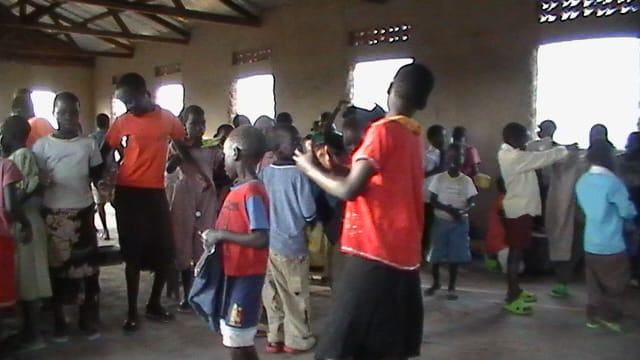
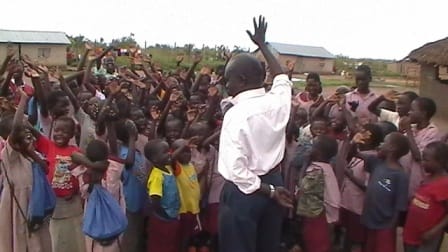
I cannot say same for the over 100 orphaned children under our
care in Dreamland (ages between 4-15), d
esperately in need of a model to admire
and follow, in need of balanced spiritual nourishment,
parental supervision and
purposeful practical coaching. This is the greatest challenge of our ministry
to the orphaned children in Yei today.

Many of these children at Dreamland are entering their adolescent
years with their identity quite unkempt. We have little time left. We need urgent
help from people with a call, the training and burden for such as these.

I’m particularly alarmed by the emotional health of the girls
among them. They are changing very fast and the world around them is taking
notice. We must protect them.

Peers on the outside (a centrifugal force) wield gradually taking
the role of parents or guardians and  in
many cases, forcing parents and their helpers to assume a more corrective (instead
of instructive) role at home in order to deal with the absurdities which are new
realities they sense or see in their children.

The emergence of great mothers and fathers, and great ministers of

the gospel is in the destiny of our children at Dreamland. But first, someone
has to model it for them. That someone must come to dwell among them.

The opportunity to mentor a new generation is begging for
connection in Yei with these children. Who will take the first bite?

They don’t have the encumbrances of the internet and TV, other
centrifugal forces the youths are dealing with. Ours have a hunger for a future in and with Jesus that
cannot be ignored. Someone said, hungry people don’t stay hungry for long. I totally agree. These
children must be fed the right kind of spiritual meals and now is the time.

A team is coming our way to pour their life into these children. But
for how long?

Please pray along for a seamless entry for them, eternally fruitful bonds
with the kids and long term commitments.

Modeling truth for our children

Parenting is serious business. There’s always a mixture of pain and pleasure in the entire experience. As I grapple with my responsibilities here, I’m beginning to understand what my parents had to put up with.

My 9yr old son Ed has been asking some very interesting questions lately.

“Before God created heaven and the earth, where was He staying?”

“Ed, I asked Him the same question some years ago and He didn’t tell me so I stopped asking Him.”

“Are the Four Beasts in heaven mentioned in the book of Revelation aliens?”

“I don’t know, I’m still reading my Bible to understand it better. When I do, I will tell you. I think you should watch less of Ben-10 Alien force cartoons and spend more time reading your books.”

“Dad, will there be children in heaven?”

“Of course!”

“Dad, will there be children in hell?”

“I don’t think so.”

“Why not, there are some very bad boys in my class?”

“What makes them bad?” I asked.

“They hit me and tell lies and steal and…”

“Well, that’s bad but they don’t know what they are doing, so God will forgive them.”

“But you spank me when I do the same things.”

“Do I spank you all the time when you do wrong?” “No dad.”

“Dad, so every child will go to heaven?” “Yes!”

“That means there’ll be more children in heaven than adults.”

“Why did you say that?” I asked.

“Adults know what they are doing but we children don’t, so God will forgive us or what do you think?”

“I guess you’re right.”

I paused to ponder; have I given this boy the right perspectives to these very interesting questions? But more than right answers to knotty questions is modeling a godly lifestyle. Am I modeling truth for my boys?

In his blogs here and here, Seth Barnes Jr. talks about his parents.

“My dad also sacrificed himself for my sisters and me. He set up dates with us to make us feel special, he played football with me every single day before dinner for years; he encouraged me to discover truth…”

“My mom has a true mother’s heart. She gives and gives and gives. She absolutely loved raising her children. She regularly spends herself cooking wonderful meals. She plans events, consistently thinks of others above herself, seeks the Lord with all her heart, and supports a very busy husband all the while.”

What are your children learning from you? What do they observe as your treasures? What do they hear you pray for? What passion oozes out of your life that influences their choices and motivates their behavior? Do they see a different you at home and another you at church?

How God-centered are your priorities, do your kids share them? Are you really modeling truth for them?

What do you think about this video clip?