Refugee School Teachers, Books and a Big Vision

Please take a close look at this photo. What do you see?
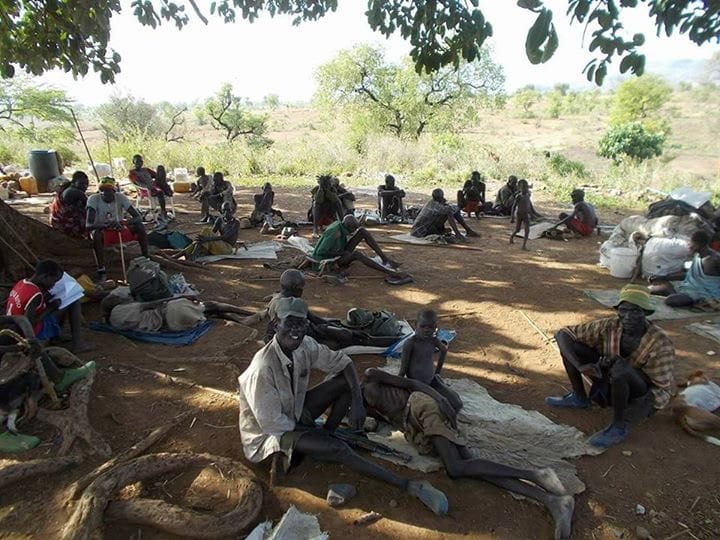
 

Did you notice the boy sitting to the left, busying himself in the midst of what seems like a catastrophe? Death appears to be lurking all around him, there are bodies littered carelessly on the ground amidst the chaos, probably waiting to die. Yet, this child is fully engaged.

What is he doing?

He’s reading.

Is he preparing for an exam?

Is he studying for a big test?

Drawing?

Painting?

Maybe, just reading for the love of a good story which can transport him away from his current circumstances.

Whatever it is he’s doing, it has him. A book is open before him. Can a book be such a precious thing right in the midst of colossal hopelessness? Yes. It can.

Some things in life can be taught, but not the kind of hunger this boy has. Hunger is cultivated in us, and until it occurs, little can be accomplished. With hunger comes the price, and then, the prize.

Our children are on loan from God for a short season. Their discipleship and maturity under our leadership is a task that demands a long-term investment. How can we pour into the children?

Looking at the influences in their lives, school teachers are on the frontlines of their education. They have the day to day contact with each child, wielding greater guidance than many parents, and most pastors. Such is the case in renown countries the world over.

However, most teachers undervalue their unique call. This is especially true in difficult places like refugee camps.  Think about what education in a refugee environment looks like?
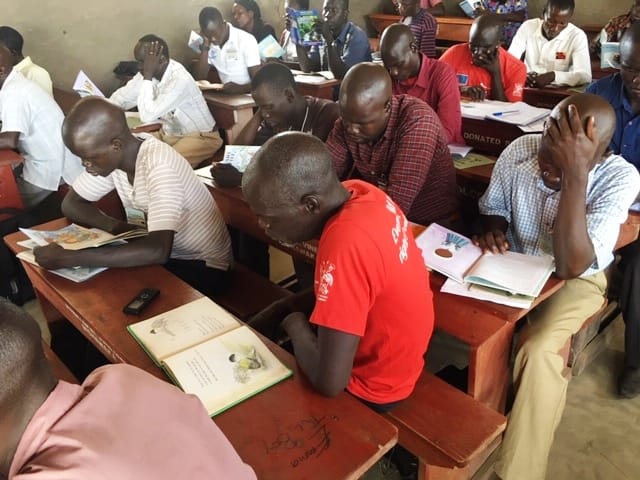
Imagine this. The UNHCR (United Nations High Commissioner for Refugees) estimated ratio of students per teacher in 2019 in refugee settlements is 1:53, yet the current 1:81 ratio is significantly above that estimate.

Consider that these camps are located in regions with low socio-economic development, poor landscape for meaningful livelihood, harsh weather and many other obstacles. At noon in the camps, it is normal to have temperatures over 40oC daily.

The question is: How do these teachers teach and how do these children learn in such discomfort?

The answer? Hunger and Hope.

Without the hunger for a better tomorrow and the hope that it is achievable, this would be truly miserable beyond words. There would be no heart for it.

Organizations, governments and departments all have ideas of what education in a refugee settlement should look like, but knowing the realities and living in them are two different things.  It is the school teachers on ground that are saddled with the incredible responsibility of enduring the hardships in order to cultivate greatness and bring healing to young minds. 
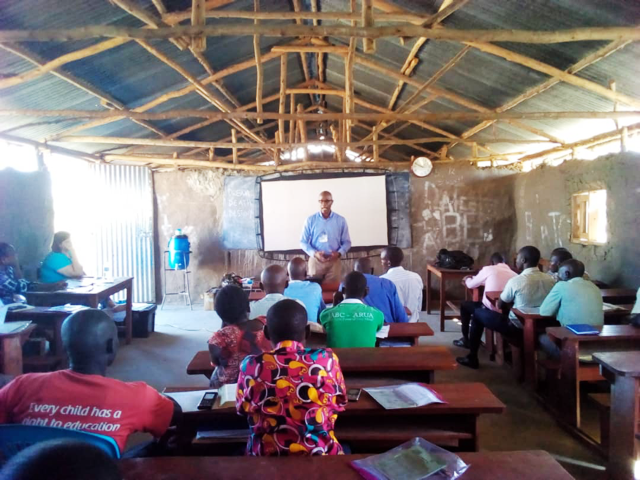
The spirit of a teacher is to make a difference in the life of their students. This is a characteristic found in teachers all over the world.  It is the unique ability to endure, believe and have the tenacity to carry out their calling. Hope is the fuel that says, we can do it!

Many parents, as broken as their children in these camps, entrust their greatest treasures— their children, to these refugee teachers, confident, that despite the difficult environment, tomorrow will certainly be better than today. With grit and determination, the community moves forward, together, for the future of the children.

These beacons of hope find little support for their work on a day to day basis, and this leads to discouragement as they cannot continue the task at the economic peril to their own families.

In many refugee schools untrained teachers are working in complex classroom settings, made up of large numbers of mixed age learners with varied psycho-social needs. They do so with very little, if any, pay.

These teachers need strong support and more training if the children entrusted to them are to receive the basic literacy and numeracy skills required to successfully transition from one level to another, year after year.
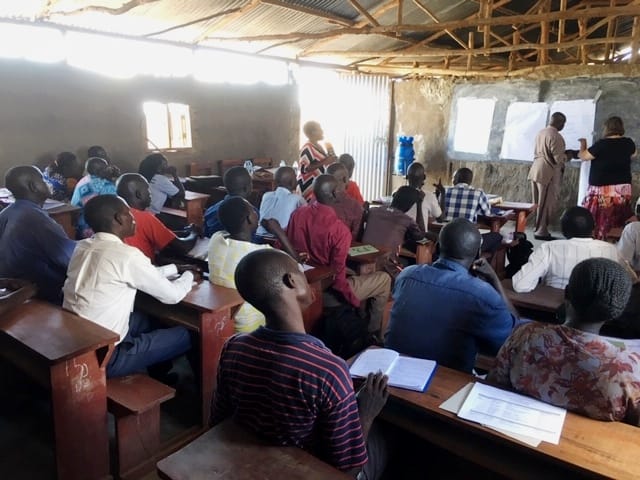
Unfortunately, the teachers in the refugee schools have little or no preparation to work in such a difficult environment. A school is only as good as its teachers, and without equipping these teachers, the chance these children will successfully grow into peace-lovers, peace-makers and peace-keepers, is nearly impossible.

To proceed with this vision and in partnership with Advancing Leaders International USA and Church of Uganda Madi West Nile Diocese, we are bringing empowerment trainings to these refugee teachers beginning at Rhino camp refugee settlement in West Nile region, Uganda.

We lack words to appreciate the friends who have donated books and sponsored our facilitators to this 4day conference with refugee teachers (21st – 24th May). On our minds is one topic— Literacy. It is the cornerstone of education here and now. It is the cornerstone of peace in the future.

We envision the refugee camps flooded with good books. We are striving to provoke a passion for reading and a love of learning, here. Can you partner with us to make this happen, and to lift South Sudan out of illiteracy? Due to decades of war, the young nation has the highest illiteracy rate in the world.
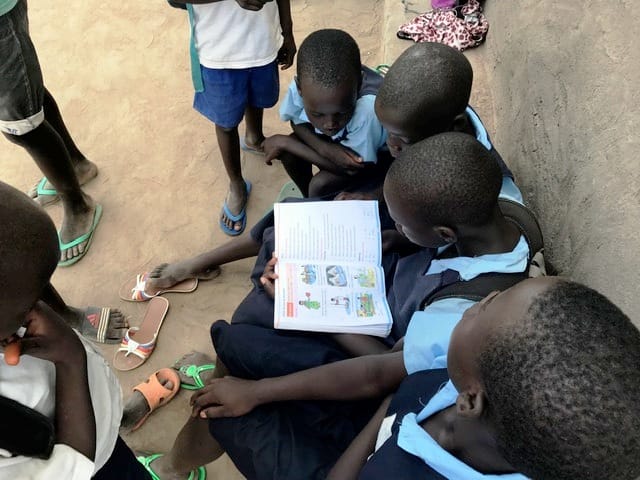
Our aim is to put good books within the reach of every refugee child and to equip every teacher with the ability to unlock language for their students. Equipping refugee teachers to create an atmosphere for this vision to thrive is critical.

What better way to prepare their return home than by empowering the children of a nation who are attempting to heal, evolve and thrive, even as they wait?

South Sudan Oye!!
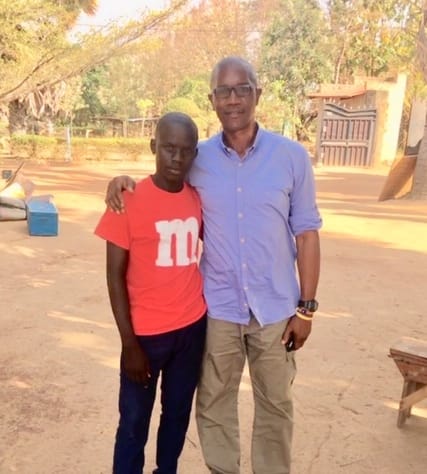
I wept at Hope Primary School

Sometimes in life, events that should elicit great joy and happiness provoke tears too. Not tears of joy, but tears that flow from real pain. This happens when the soul feels ambushed, scorched and squeezed by some regret, which springs up right in the middle of a God moment.

I visited Hope Primary School, the refugees’ founded school we are partnering with. As my time encouraging the teachers and staff there drew to a close, two of them brought the story of one of their graduated students to my attention. They wanted me to give secondary school scholarship to this student who fell below the mark by a very narrow margin. I dismissed their request because it didn’t align with the established standards governing this Scholarship Program.

As I was leaving the school, a young boy walked up to me and with a very somber look, began his story.

I’ve come to learn that sometimes, you are your best intercessor.

“My name is Caesar,” he said.

As his story went, he was a student of New Generation Primary School in Yei, South Sudan and he remembered me from my time there. When the war broke out, his father, a farmer, fled with him and his siblings to their village. Then when the war arrived there, they ran across the border into Uganda.

His father, on seeing the pitiful condition in the refugee camp, sent Caesar and his siblings to stay with an Uncle. He hoped his brother would take better care of them. However, the Uncle took the children to a friend of his in another refugee camp and abandoned them there.

Since Caesar and his siblings weren’t registered at that refugee camp, they couldn’t get their food rations, making an already miserable life more terrible. Caesar sent his siblings back to their parents at another camp because they couldn’t even afford the little money charged as school fees at Hope Primary School. Help came to Caesar through our School Feeding Program at Hope Primary, where he got his only meals for the day.

I knew there were children who lived solely on the meals we served at the school. Here, right before me, was one such student and his journey captured my heart as he spoke.

The Scholarship Fund had guaranteed the parents and the school that students graduating with Division 1 score would get automatic scholarships to secondary school. Sadly this year, Hope Primary School didn’t produce any Division 1 graduates. Caesar was the only one who came really close, missing it by just one point.

Someone said, “…it seems people who deserve our tears, hardly make us cry.” Not so for Caesar. He told his story and pleaded with me to help him find a place where he could stay in order to repeat Primary 7.

He said, “I know I missed the scholarship. I worked hard to make it because I know I have no one to pay my school fees if I don’t get the scholarship. Please sir, just help me find a place to stay, I can’t stay with my Uncle’s friend anymore. I can’t succeed if I stay there. Please help me.”

I was struggling to understand his appeal. The reason I was confused was that he passed well enough to gain admission into any secondary school in Uganda. Yet, he knew that to get a free education, he needed a scholarship. I was flabbergasted when I realized that Caesar was willing to repeat the entire year to take a fresh entry exam, with the goal of  getting the promised scholarship. This was the first option he was considering. Then he pressed on with the second option.

“But sir, if you give me the scholarship opportunity and pay my fees for one term, just this first term, I promise you I’ll get that school’s bursary award and you’ll not need to worry about me anymore. Please sir, give me a chance.”

I was so broken by this boy’s determination, his hopes, and his dreams. He had a clear understanding of what he needed to do to break the cycle; it caused me to excuse myself to find a place to weep. I couldn’t help myself.

As I wept, I thought of many others like Caesar; bright and hardworking, but who have no one to pay their fees, so they drop out of school and give up on their dreams. I begged God, to honor Caesar’s faith and hunger and also to provide support for me to sponsor him privately.

I called him into the headteacher’s office and in the presence of the headteacher and one of his assistants. I pledged to sponsor him for this first term, though I didn’t know where the money would come from. I challenged him to prove himself. You should have seen his face glow when I told him to go and get his result. That evening, I shared his story with my guests, Karin Knutson and Michelle Gunnin, teacher trainers, who were visiting with me to train refugee teachers. They raised his school fees on the spot.

Tears aren’t far from me. As a feeler, my emotions are stirred easily by another’s pain, grief, wounds, loss or matters of the heart that demand justice. What of you? What makes you cry?

Our tears won’t change the destiny of those for whom we shed them, but our actions can. Why not join me to give hope to a refugee child that wants to go to school today but has no one to pay for it?

See our student scholarship program here or connect with me directly— uche@his-sickles.org

Stories of Hope – Working With Refugees Part 3

The quality of our hope cannot be aptly evaluated in the absence of grave difficulties and much suffering; but when life’s unexpected challenges meet the resilience of spirit in mere mortals, there’s no limiting the resultant outcomes. I have some good stories.

The two most trusted professionals in any community are Doctors and school teachers. While we don’t have the luxury of resident doctors in these refugee camps, we are blessed with a few school teachers.

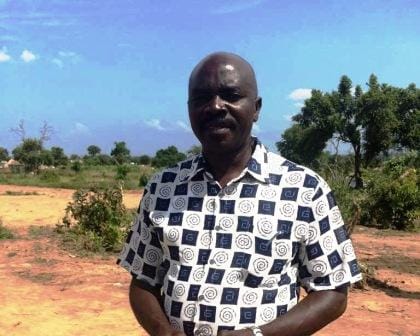
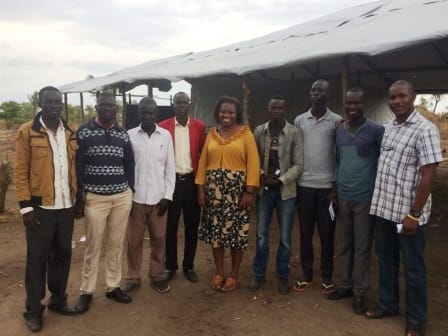
Meet Alfred,  a husband, father and grandfather. He’s happily married to Vicky and they have seven biological children, three grandchildren and two orphans, all staying with them in the camp. Alfred holds a Masters Degree in Human Resource Management and Marketing Management, and a Bachelors Degree in Primary Education.

Until the war of July 2016 that forced him to flee to Uganda, Alfred was the County Education Director of Morobo County, in Yei River State, South Sudan for four years; where he oversaw education matters in 30 nursery schools, 74 primary schools and 4 secondary schools. By all standards, this is an accomplished civil servant with many years of experience.

Today, he’s a refugee.

Alfred lives in a hut that could pass for his chickens and goats house back in South Sudan. But he’s not broken by his challenges, which includes weak health and continues to serve the nation of South Sudan as under a refugee status, as the Head Teacher of the refugee-founded school – Hope Primary School; where he and 15 other teachers, all refugees, are making a difference in the lives of 640 primary school students. Sadly though, without a salary.

Alfred gave his life to Jesus during our Refugee Teachers’ Conference in May 2018. I salute this vessel of hope and the gallant teachers laboring with him. If you’d consider supporting their cause, please go here.

Alfred’s wife Vicky, on arriving the refugee camp two years ago, promptly setup a small kiosk, right in front of their hut, selling everyday consumables from which the family is being sustained. She also knits colorful designs on bed sheets, cushion and pillow cases, dinner tables and leaving room furniture, all for sale.


She has raised a group of women to do same and employed four others, all refugees to assist her. They are looking for a market outside the refugee camps for their handiwork. If you are interested in marketing their products, and also telling their individual stories, please contact me.

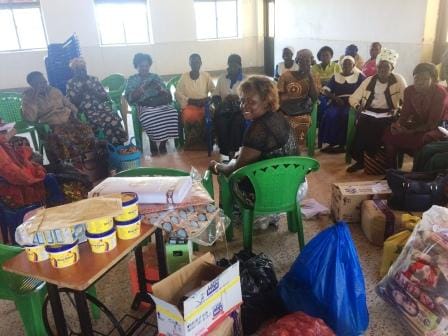
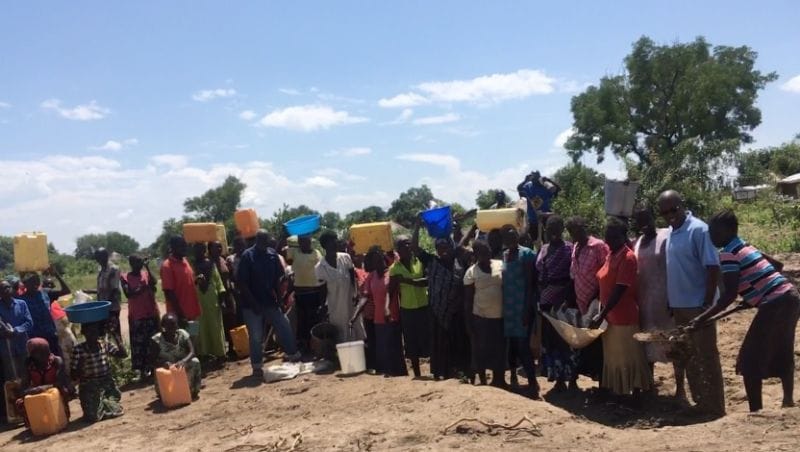
In July 2017, seven women from WOLCC, USA visited with us, to serve South Sudanese refugees. They brought psycho-social support to the camps, helping traumatized women and children process their challenges with hope. We organized a Conference and had 106 women leaders in and around eight refugee camps in attendance.

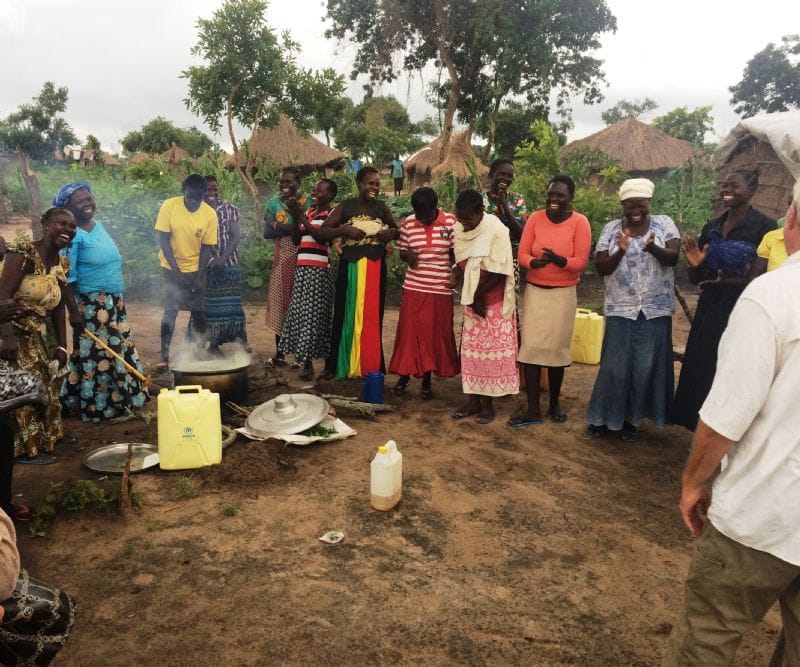
From this gathering, 23 different small groups emerged with 9 different business initiatives. From baking, hair-dressing, colorful bag making with beads, tailoring and others. Most of these women were bearing the burdens of their individual families alone and were determined to make a difference, despite their obvious challenges.

Women and Children in the refugee camps in Uganda constitute 80% of the total refugee population. Empowering women in these camps can guarantee community transformation and ultimately, Kingdom advancement, if properly midwifed.

Imagine what can be accomplished if some of these South Sudanese refugee women are rightly motivated to discover and engage their God-given gifts and purposes in the camps now. Do you sense a calling here? Please connect.

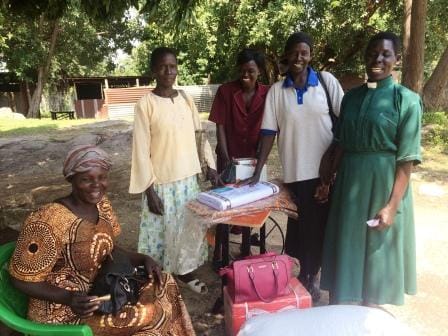
Meet Deaconess Poni. She fled the war in South Sudan with her four children and took on two other unaccompanied minors when their parents couldn’t be located amidst the chaos on the long trek to safety.

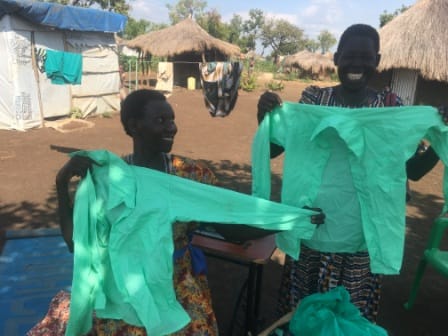
Poni was one of the 106 refugee church women leaders who came to our South Sudanese Refugee Women’s Conference in July 2017. Heeding our counsel to the women at the gathering to form small business interest groups, she obeyed, and led a group of four women in the camp to start a tailoring business.

She received a sewing machine at that Conference on behalf of her group and went to work immediately. I visited them in November 2017 to assess their work and I was impressed. They were making choir uniforms for churches in the camp then.

Today, they’ve expanded their small business and profited as a result from making school uniforms and assortment of dresses for fellow refugees.

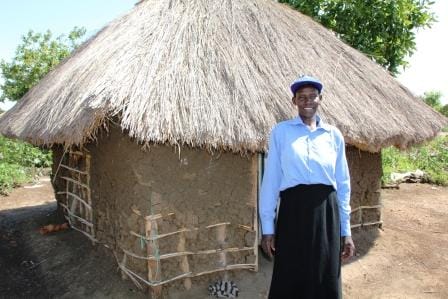
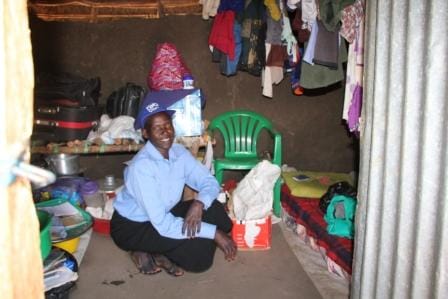
Deaconess Poni was living in this small hut above with her six children until recently. 

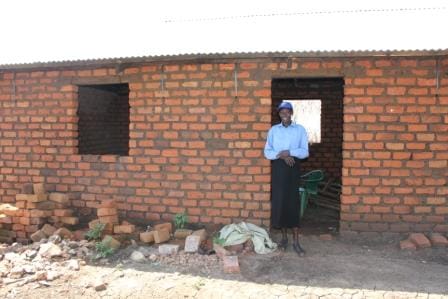
From this business within a year, she’s building herself a two bedroom house with bricks, right in the refugee camp. Poni has changed her story and brought hope to her immediate family through perseverance. Others are copying her.

We’ve bought Poni and her group another sewing machine, assured that their success will inspire hope in others as we work together to change the fortunes of some.

There are more like her in these desperate places, whose reason for hope seem irrational. But hope, real hope, birth in the furnace of much affliction, is unbreakable and makes a great anchor for the soul. Let’s stand with them.

Whenever the mystery of evil is finally unraveled by God in regions of great pain and darkness, He draws attention to Himself, offering humans a chance to embrace real peace in perilous times. What’s your story of hope this season?

In Part 4, you’ll meet Justin and Isaac. The story of their kingdom journeys will inspire you or someone near you.

Stories of Hope – Working With Refugees Part 2

Naturally, most parents who’ve experienced much hardship in life with or without a success story tend to strive more for their children’s welfare, hoping the best for them. Some tend to counsel and lead from a more resolute and deeper sense of longing, wishing their children never experience the pains they did.

While over protecting our children from real or imagined life challenges will have negative effects on their development into mature and responsible adults, helping them grasp the core components of our hope for them is better demonstrated than verbalized.

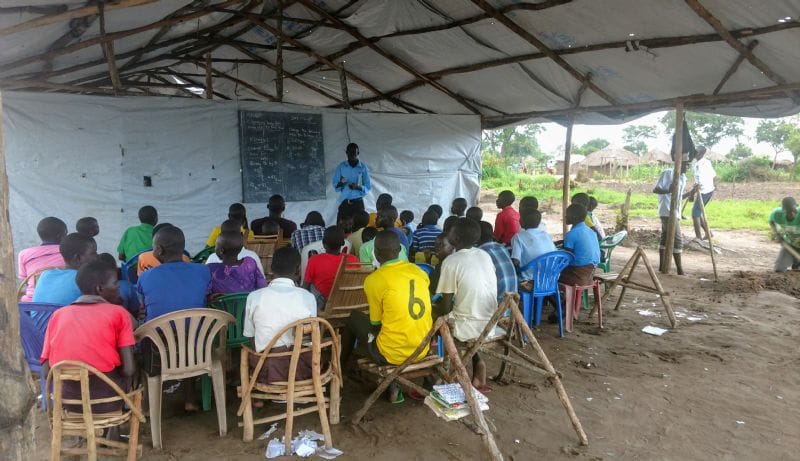
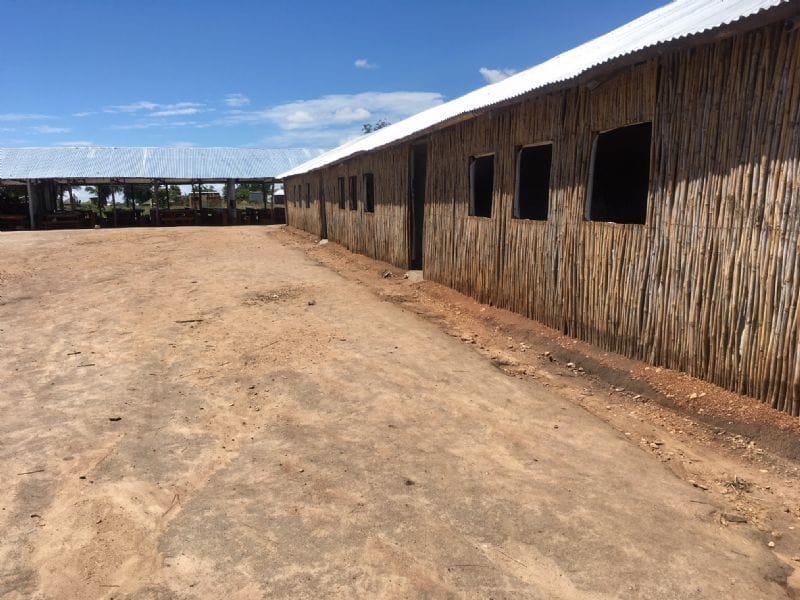
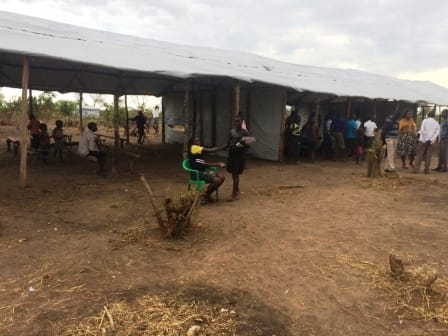
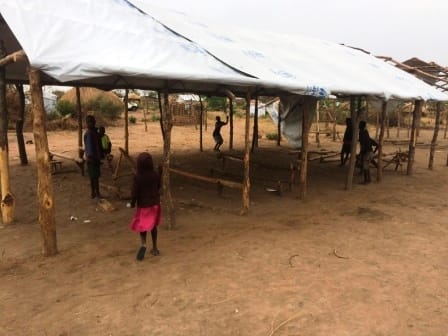
The delivery of the promised roofing sheets and building materials provoked belief in the heart of these teachers and the parents of Hope Primary School. One of them later told me, “…when we saw the vehicle arrive with the iron sheets, we said praise the Lord, God has heard our prayers.”

In broken English, another explained, “…a little education is better than no education; I was born in the refugee camp, I didn’t know how to spell my name until I was grown up. I’m willing to sell everything I have to make sure my boy gets education here…”

While the teachers were teaching the children, their fathers were building the classrooms and their mothers were preparing lunch for the working dads, right there. Four groups of people from this community gathered at this school, happily pursuing a single goal – education for the children. Please picture that!


As construction works in this school continue, we are privileged to witness firsthand, the transference of the heart of the fathers to the children. Or how do you explain our been divinely located among sixteen thousand refugees amidst a million, who demonstrate self-reliance and model it to their children and grandchildren?

The many years of conflict has made the standard of education in South Sudan low. In an earlier blog here, I highlighted one critical challenge among many. Thus, most parents would relish an opportunity to have their child study in nearby Uganda but for the cost. Visas aren’t cheap and the school fees are three times higher in Uganda.

Now, as refugees in Uganda, educating their children is top priority. Most of the children of Hope Primary School walk 7-10kms on the average to and from school daily, some without footwear and in tattered clothes; while their teachers, who are all refugees in this community, continue their work without a salary. But that’s not all.

When it became clear that launching a School Feeding Program at this school would greatly facilitate learning, boost the immunity of the children and increase attendance, the parents met and agreed they’ll contribute for their children to get a hot meal each school day.

The parents agreed that every Monday, they’ll give their children firewood needed to make the meals for a week and pay 2,000ugx (50cents) per term to support the cooks.

I was very surprised to see these children arriving for school with firewood and deeply stirred when I learned that some parents had to trade some of their food rations from UNHCR for the firewood. That’s commitment. That’s collaboration. That’s counting the cost and paying the price.

The price is for the dreams in these young innocent hearts. I’m persuaded that their expectations will not be cut off nor cut short. In my small talk with some of the parents and the children at the beginning of the school year, I was challenged by their determination and hope. Some want to become doctors, engineers, teachers, soldiers, politicians, pilots… pastors and missionaries. Why not?!

This community has the major ingredients needed for community transformation anywhere in the world – corporate vision and a strong will. We’ve pledged with hope and earnestness of spirit, to pace our steps and stops with theirs; knowing fully well it’s only a matter of time before kingdom breakthroughs are announced at multiple levels here.

In Part 3, you’ll meet some refugee friends of mine with an enduring hope, who, despite being in dire straits have proven that success is not localized to any one region or country but on the will to bounce back from apparent setbacks and each time, with hope that what looks like the end is just a bend, hiding the desired dream.

Stories of Hope – Working With Refugees Part 1

In June 2005, multitudes of refugees from Southern Sudan were returning from neighboring countries and beyond, when I made my first missions trip there. The over 20years civil war ended in January.

The wretchedness of these returnees was shocking. Many of them bore the ugly scars of unhealed trauma. “I’m traumatized…” was used frequently to justify bad behavior. Sadly, most of us then knew little to nothing of trauma and its crippling powers.

The lessons I learnt from those refugee returnees then, and the very depressing conditions they arrived home in, is helping my ministry formulate a plan for service delivery among South Sudanese refugees in Uganda today.

Fast forward to February 2017, almost two million South Sudanese are back in refugee camps in many countries and another two million are internally displaced. As sad as this is, it seems the rest of the world is getting tired of the unending crisis and atrocities that seems the bane of this young nation.

Our tactic for addressing poverty and bringing the kingdom within refugee communities in Uganda aims at first, confronting the huge challenge posed by the trauma and then helping them develop the right attitude, from which progressive self-help initiatives can be birthed, as against a one-way transactional giving of handouts that breeds paternalism.

We are persuaded that our discipleship strategies will thrive best within small groups in targeted refugee communities, where flickers of hope exist. The big question is, how? How would hope to birth again occur in such desperate places? What would trigger the needed shift to enable these broken hearts dare to dream here?

While pondering on these questions and praying for God’s leading, I met a brother in Rhino refugee camp who knows my passion for the youth and ministry work in schools back in Yei, South Sudan. He said, “Uche, there’s a primary school started by refugees down there. Do you want to see it?” This was in late February 2017.

On the way to this school, I said to my wife Sola, who was with me, “…this act of starting a school is a sign of hope for this community.” When we arrived at the school, classes were over and most of the school kids had gone home. Standing with the few teachers and community leaders still around, I heard the Lord say, “Start here”. To my surprise, this school was called Hope Primary School. It had registered over 400 school children within 2weeks of its existence.

I knew immediately with no shadow of doubt that this school would be our primary platform for service delivery among South Sudanese refugees in that area. However, the question of “how” still wasn’t answered?

After inspecting the classes and the surroundings of the school, I shuddered at the magnitude of collaborative effort invested by this refugee community to have a primary school at all cost for their children. I promised the teachers and leaders present that we’d help cover the classes with iron roofing sheets.

The provision of the first installment of the roofing sheets gave me a clearer understanding and the answer to how help could be offered to refugees humanely.

How to bring lasting healthy support to refugees is by letting them take the lead, and journey alongside them as they accomplish their dreams and chase their hopes. Any attempt to lead them with handout or our own ideas without first listening to them and understanding their heart, will lead to waste of time, resources and disappointments.

These refugees in Ocea C Settlement in Rhinocamp are poor and completely beaten by their assortment of loses. However, they knew that education for their children was of utmost importance and are willing to make the necessary sacrifices to see their dreams actualized, even in a refugee settlement.

Details of their efforts and sacrifices in Part 2. You’ll be pleasantly surprised.

While we are celebrating Christmas… Pt 2

Assorted pictorials, carvings and sculptures depicting the baby Messiah and the humble manger scenes are decors presently adorning many places this season.

The nativity narrative, rich in mystery and meaning, continues to inspire believers from year to year, with its profound paradoxes, urging us to embrace the wonders, joys and pains weaved into the journeys of the key characters at the first Christmas.

It’s a season of joy and goodwill, demonstrated in many unique ways, from giving and receiving gifts, to entertaining guests and visiting friends and places. It’s a season when many faithfuls find good reasons to suspend healthy disciplines and indulge a little.

While many of us celebrate this Christmas and prep for the new year, it’s needful to reflect on the lives of some around us, to whom this Christmas is anything but joy and jingle bells. The first Christmas had an incredible story of pain, one that the journeying young couple probably weren’t prepared for.

I invite you here, to meet three children, whose stories underline for me, a little appreciated aspect of this festive season.

Josephine Night Sebit is two and half years old. Her parents fled with her from South Sudan early this year and are settled at Imvepi refugee camp. Safety and sustenance were their priorities. From their story, it’s clear this family has wrestled with unspeakable challenges in their quest for the soundness of health of this precious little girl. Josephine needs constant care and her mother was ever present to provide it.

Right before us that hot afternoon was a human being, made in the image of God, one upon whom the Spirit could indwell; one who like Viola, is ripe for a remarkable miracle. Dear Lord, is ANYTHING too difficult for you? We invited You few weeks ago to undertake for this family and make a name for Yourself. Lord Jesus, while we celebrate you this season, glorify Your name here, heal this child! 

John Akeem Joseph is 12 and has polio. Like Viola and Josephine, his brave mother is a refugee in Imvepi Camp, with 135,000 other settlers from South Sudan. Aside the effects of polio, John can’t speak but he can hear and understand when love is flowing around him.

As I lifted John from off the floor and prayed for him, he clung so tightly and didn’t want to let go of my hand when we made moves to leave. My heart was deeply stirred for this boy and his worn-out parents, seeing and sensing the longing in his eyes and the apparent hopelessness all round. The unconditional love on display there reminded me of the essence of this season and I ask, How did John and his mother spend this Christmas? How could it have been better for them? What was their primary wish this season?

Her name is Joy and she’s two and half years old. I met her at Rhino refugee Camp in May, but I didn’t know her story then. Our next close encounter was in November when I learnt from one of the teachers at Hope Primary School that Joy’s mother fled with her from South Sudan but abandoned her in the camp and disappeared. I was shocked.

Having met other children with complicated health issues, how could the mother of this sweet, beautiful able bodied little girl abandon her to strangers? Where did she go? What was more important to her than this child? This is the story of thousands of children in various camps in northern Uganda today. They are called “Unaccompanied”. What an irony!

While we celebrate this holiday season and relish the goodness of the Lord, let’s remember those that have no clue it’s Christmas; those that new clothes, tasty meals of a different flavor, dance and songs that signals a festive season such as this, is currently far-fetched. Let’s enter their pain by choosing to live simply and plotting ways to bring lasting help and hope through our corporate efforts.

Be sure to hear more about these children and others like them from this space. The Kingdom has come and will reach these too. I invite you to be part of their journey of hope and victory. 

May 2018 be a most fruitful year for you, in Jesus name!

While we are celebrating Christmas…

Christmas is here and the frenzy has caught on. In most parts of the world this season, you can see, hear and feel the change, the fun, the chaos and the panic too. This undoubtedly is the happiest season of the year for many, especially children. It was for me as a child.

Upon returning from my ministry outpost in Uganda last week, I’ve been struggling much emotionally. Yes, it’s normal to wrestle with the barrage of issues thrust at one by those that feel God’s presence because of you. Truth is, we don’t have answers for everyone.

I met with a few people on this trip I probably will never forget. I’ve been thinking of them and wondering what their Christmas season will be like.

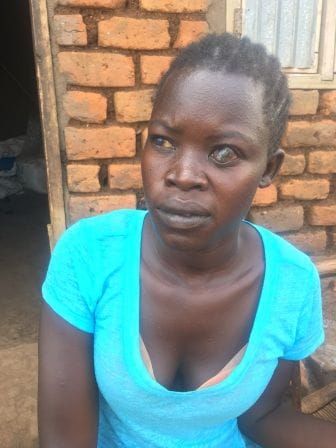
Meet Viola. She’s a 20 year old South Sudanese refugee. She began to lose her sight at age 10 and by the time she was eighteen, she’d become completely blind. At which point also, she became pregnant and now the mother of 2year old Benjamin.

I met Viola Safari at a refugee women’s meeting I had in Rhino Camp a month ago. I’d gone to follow up on those we enabled to start small businesses there in July and see how they’re doing and if we could assist others to start similar micro businesses in small groups too.

It was a very good meeting. They listened intently, shared their dreams and concerns, asked questions and began forming more business groups there and then.

Just before the end of the Q&A, Viola raised her hand to ask a question. “I have listened to what you are saying and heard what these other women are planning to do. I want to join them too but as you can see, I’m blind. How can I be a part of this?”

Her question cast a deep despair on this gathering of over 150 women who heard her speaking in Bari, her local language. The hush in the hall made the sighs and mourns and sobs from various corners seem louder. I understood why, when her question was interpreted to me. I asked to meet her after the meeting.

On arriving Viola’s home, I met her mother Loice, who’s 55years and also blind. She lost her sight 20years ago. I learnt too that Loice’s mother, now late, was also blind.

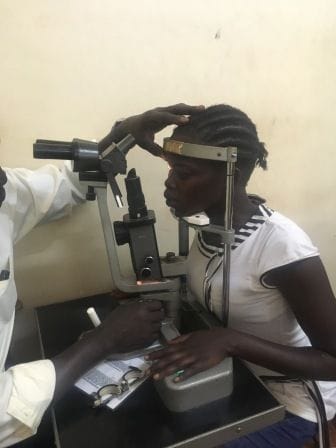
After listening to their story, I prayed for Viola and her mother, hoping for a miracle but it didn’t happen. Three days later, I took both women for a checkup in Arua, hoping there could be a medical solution. We visited two hospitals but the results were disappointing. Both cases, according to the doctors can only be reversed by a miracle. I can’t query their conclusion but would greatly appreciate another doctor’s examination. Please who can help?

As I moved them from place to place in Arua, I wanted to know how generational blindness became the story of this family and nothing serious was done to arrest the situation. Is it just ignorance, poverty or both? Who’s the father of her child? Where is he? Did he take advantage of her handicap?

How did they make it to the refugee camp from South Sudan? What kind of difficulties are they living under now? What are Viola’s dreams for herself and her son? What is this Christmas going to be like for her and her family? How can I bring hope to this family and make an eternal difference there?

It’s easy to give money and walk away but money isn’t always the greatest need. These people need vision; a vision better than what the eyes can see, a vision of an end that can’t be seen by merely looking but by believing.

Hope in what only the eyes of faith can see, is the God kind of vision. They don’t need handouts but a work or a skill, one that will help redefine their worth, to themselves and their immediate community. Their stability rests in ensuring that this disability is not embraced as inability.

Though their Christmas celebration this year may not be like yours or mine, by God’s grace and with your support, we shall bring lasting hope to Viola and her family. But they aren’t the only ones. Wait for Part 2.