Primary Passion: A New Generation


Primary education is GREAT! If you are reading this article, I believe you had a memorable primary school experience. But that’s not my major concern now. The explosion of the gospel is, at a primary level here in Yei.
 
There’s an emerging generation in the primary schools here that feel it’s not enough to have their own fellowship (which is not even a year old) or belong to a local church, sing and dance in the choir during Sunday services. They’ve caught the big bug. They are removing ordinariness from their lives and I pray it endures forever. I imagine hell is worried but Abba smiles.

When in 2006 we began to organize fellowships in the secondary schools under the umbrella of the Scripture Union here in Yei, we deliberately sidestepped the primary schools.

Though primary schools then and even now, have many teenagers as students, we felt a greater need to engage the secondary schools first.

Today, most of the secondary schools have pretty well organized SU fellowships holding weekly meetings and some twice a week.

I had my eye on the primary schools on this trip but unknown to me, some students of Kinji Primary some of whom are members of our church here had started the SU fellowship in their school last term.

I went there last Friday to fellowship with them and it was a blast of fun. When their leader announced, “We’re not happy because we have a visitor among us but we are happy because Jesus is here…” I couldn’t hold back my tears of joy. At this young age, they’ve understood it’s all about Master Jesus.

Fellowship ended and I called the leaders together to encourage them. When I said, “I think you should plan to assist other brethren in primary schools around start their fellowships too…” They all roared with joyous laughter and chorused, “We just agreed in our meeting TODAY to start that.” I encouraged them we should all take time to pray together about how and where to start as it was obvious to us all that God was leading the way.

But they didn’t tell me they’d prayed and finalized their strategies to commence fellowship planting this week. So when I visited their school yesterday, which incidentally is next to our base, I was told by some of their teachers, “Oh, those of Jacqueline and Naphtali have gone to Emmanuel Primary…” I imagined they’d gone to pray there, as Emmanuel Primary was nearby and is one of the targeted schools for an SU fellowship. I went after them.

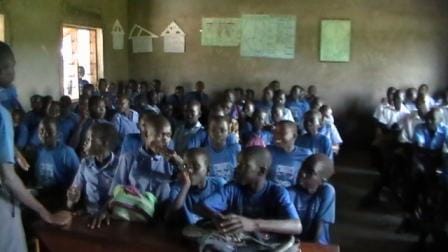
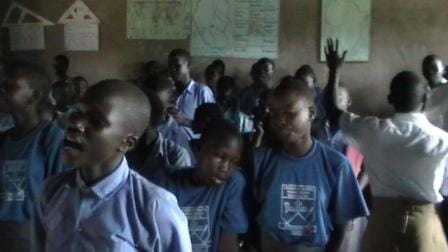
I arrived as the first SU fellowship in Emmanuel model Primary school was in the middle of a white-hot praise session with over 70 kids. I bowed to Abba and thanked Him, “Your footsteps are in the waters, who can track You?” “Thank You!” These kids did their thing. Kids to kids at their level. The video clip above captured a few moments.

I’m in the midst of some primary school kids that lift my hopes for Sudan to new heights as I behold their passion for the Kingdom. They plan to spread the aroma of this Jesus they’re carrying throughout their community; help plant Scripture Union fellowships (as is in their school) in all the primary schools in Yei. They’ll be planting another one today in Kanjaro Primary school. I’m headed there to see primary passion.

One of the boys from Kinji Primary, Naphtali, in P.7 went on a 2days dry fast that ended three days ago. Why? He’s praying that their Headmaster would allow for 15mins of preaching during the school’s daily morning assembly. He plans to see the man soon. Abba smiles; please smile too and pray along. This is the Kingdom in primary tsunami power. The gates of hell CANNOT…


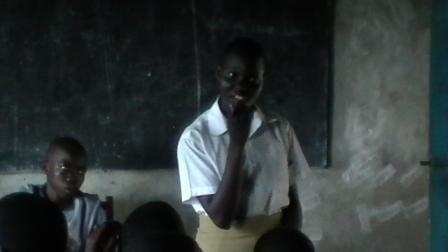
One of the leaders of Emmanuel Pri Sch SU, addressing the fellowship.


Sister Jacqueline preaching to her fellow students. Topic was: Love Not the World


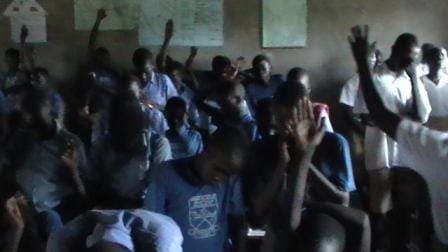
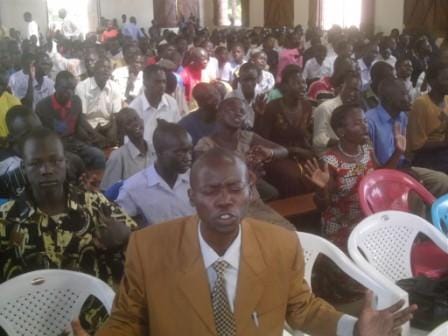
A powerful prayer time and message that led many to Jesus.


Many surrendered to Jesus.


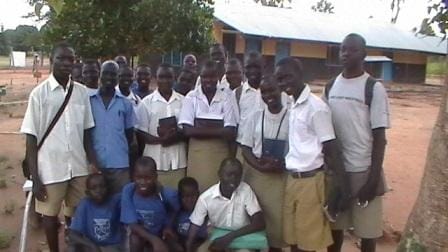
Leaders of both SU fellowships pose for a group photo after the meeting.

Looking for a Timothy, a Phebe… in Yei

“Lord, give me a
Timothy, a Phebe, Aquilas and
Priscillas,
more, more of these kinds of disciples…” Has been my heart cry for over three
months now, as I continue to think and dream of our thrust in Sudan.

I was meditating on
this as our overloaded bus drove all night from Kampala to the border town of Koboko in Northern
Uganda on Monday; wondering what the Lord will do, how He’ll respond to my
petition, who these Timothys and Phebes could turn out to be. People I could
leave the task here with and head on to new fields in the interior. The time for
that move is around the corner. I know it but do they??

I’ve met three kinds of
disciples since my arrival.

The hungry, who like
new born babes can’t wait to engage a familiar source from which nourishment flows.
They remind me of the disciples in the Suck Zone. I see more than hunger for food, I behold and hear of a passion for something the food was meant for- spiritual growth; the kind that gives momentum to Kingdom expansion here. They fulfill Abba’s joy.

They’re also those stuck
in the mud of life by reason of the heavy
and unnecessary luggage they insist must go with them to the Promised Land.
They appear standing but alas, they are sinking. They have to be told the hard truth about their situation. We’ll get to this
messy place later and my prayer (please join me) is- “Dear Lord Jesus, please make
these baggage become irrelevant enough for the barriers to cast them aside, receive strength to
press toward the mark.”

The last group need
a fresh start altogether. Their very bad condition is public knowledge. Some of them
have changed churches, acquired new spiritual counselors and comforters; while some have left town outright.
I pray the right prescription is administered to them here or there. Our God offers
second chances and much more, in His package called riches of grace.

For all three
groups, the team and I; we’ll need a great deal of three things:

1. Faitha commitment to grow
beyond the present
: We must dream and see ourselves not only as we are, but
as we could be, – depth in the knowledge of the Lord and fruit to show
for it. A corporate thrust towards church planting, where every man comes with
their own log (2Kings 6:1-2) is key to expansion. If they truly want this as bad
as I do, they’ll trust me and other coaches in our small team, valuing our
counsels and instructions, which may not make sense sometimes.  

2. Hopea commitment to a healthy attitude:
We must all have a sound hope-filled attitude. In a world saturated with professional
critics and negative people; a never-say-die mind-set is needed for every step
forward as the grounds that are yet unclaimed for the Master are the toughest to
occupy. On the flip side, I recall Butch Maltby’s comment, “I
am weary of listening to the cheerleaders encouraging deep leaps of faith even
as they make their way down the long ladder saying… “excuse me!

We must pledge not to be discouraged as we see their lousy meandering down the high calling set before us all.

3. Love – we must commit to righteous suffering: The first thing Paul said
about the agape love in 2Cor. 13:4 is that it suffers and does so for a long time, as there’s no telling when
God will breakthrough with ultimate victory. We must be pressed towards giving
more than we take. If we become self-centered or acquire bad habits, the team
could be destabilized. Some disciples and especially leaders, easily fall into the trap of not seeing how
entrenched and disruptive their bad habits have become in their lives; though they may spot it quickly in others. We all
need healing in needful or hurtful areas before we can venture into the world filled with wolves. Lord, may we meet the loving embrace of other saved sinners and reassure one another.

In all, few life pleasures
are sweeter and even greater than seeing your disciples grow and discover for themselves
that the promise of Christ’s presence, provision and power are as available as they are real; experienced in full as
they go for Him. While the stretching and
growing process may be awkward, I confess I’m becoming comfortable in
my own skin, sure of the fruit God is producing through our corporate thrust. All glory to Jesus!

Did you send your
funds to get me here again? Did you plan to but forgot? Are you praying for our efforts out here? Abba
smiles on you and please know that every thought of you in my heart brings a smile, a lifting that’s hard to express in words.
Thank You, true yoke fellow!

Pushing Bibles into the heart of Sudan

When I was a little boy I use
to read comics like Fantastic Four

When I grew up amidst the
hays, I slowly took to Hardly Chase

When I grew up just a little
more, Playboy and nothing more

When I grow old and gray, and
there’s no more room to play,

Then I’ll take the Holy Book
and give God a holy look

Just in case it turns out
fine I’ll turn my readings all divine

But just in case I turn out
blind, I’ll replay Playboy on my mind.

I
heard a preacher use this poem recently and I was awakened to the challenge of pushing more Bibles into Sudan for all that need it and can read it. Memorizing and quoting God’s
word was a daily exercise for me and my friends in our younger days. We had great fun making statements with scriptures in almost every discussion. I may be wrong but it seems to me that present day young disciples spend very little time in the word. I don’t hear it in their communication.

Despite
the abundance of the Book in nations where it’s not forbidden or burnt publicly
and even with the vest array of translations in English language today; less and less of
it seems to be read and memorized by those that call it theirs. We prefer to
wait until Sunday Service to listen to the Pastor read a portion and teach
something out of it. Somehow, we feel it’s his job to read the thing and know
more of its message. Pity!

Our
kids learn and sing more of the lyrics of the Top 10 secular songs in town and
on TV than the memory verse shared in churches that still promote the supremacy
of the Scriptures. They know great details of their favorite sports personalities,
sport clubs and entertainers than they do of key characters in the Bible.

Our
plan to put God’s word in the hands and subsequently in the hearts of every
student in South Sudan by getting them from wherever we can, creating platforms where it will be taught,
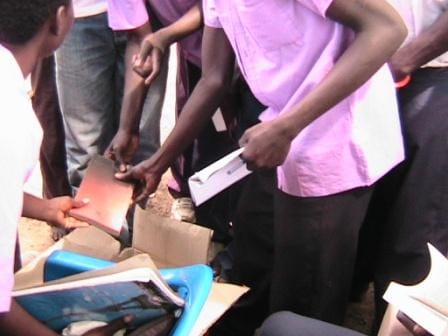
memorized, and put into action is still on course.In fact, we got a major boost this week.

I
met Brother Nelson, a representative of The Gideons International in Entebbe,
barely 9hrs after arriving Uganda on Wednesday. He’s a brave and lovely
disciple with a beautiful life testimony. He has offered to make available to
our ministry among the students in Sudan as many Bibles (NOT the KJV) as we
need, FREE!! So, freely we’ll receive, FREELY we’ll give. Praise the LORD!!

The
challenge was once the lack of Bibles, then the need for those in simple
English; now, it’s the logistics of moving thousands of easy to read Bibles
from Entebbe in Uganda to Yei in South Sudan. When I get the chance, I’ll
update my CV with the title- Bible Pusher (BP). I love my life!!

God
continues to approve of our projects and vision with provision. It’s all about
Him. Our Every Student a Bible Project is on course. If there was ever a time
we needed to move more Bibles into Sudan and put them in the hands of students,
it’s now. If we delay, Mr. Hugh Hefner’s material and others like it will cross
the borders before us and that stuff don’t need interpretation to understand.

May
God find among them, those that will say like Job and Jeremiah, “…I
have esteemed the words of his mouth more than my necessary food.”
Your Words were found, and I ate them; and Your
Word was to me the joy and gladness of my heart; for I am called by Your name
,…” (Job 23:12, Jer. 15:16)

Help me heed that cry

I had a very
horrific experience some years back when Ed, our first son was 2years old.

He woke up that day
crying and was cranky till about midday. He just wouldn’t let me out of his
sight for a second. Unlike him, he cried at and for everything. His inability
to express himself made matters worse for me. He needed something and I could
not figure it out. Everything I offered was not it. Nothing was good
enough.

My frustration and
annoyance over his ceaseless sobs seemed to ascend to new levels every half
hour. I was totally helpless, but how would he know it? His persistent cry
suggested one thing- “you have what I need and I need it NOW!” How do
mothers cope with situations like this?

Ed was with me in
the kitchen as I was rounding up my chores there and suddenly, his cry went
into overdrive. He began to cry louder and louder and I thought he felt I was
ignoring him and so had to get my attention by all means. I couldn’t take it
anymore and turned sharply towards him to shout the loudest SHUT UP! I could
muster. Lo and behold, my boy’s little finger had been trapped under the lid of
the cooker all that time.

I screamed in horror
and as I lifted the metal lid off his tiny finger. I broke down and took over
the weeping from him. I sat on that kitchen floor and wept, hugging him and
kissing him. I must have said, “I’m so sorry…” over 30times that
day to him. We both cried till sleep overwhelmed us in each other’s arms. When
we woke up, he’d forgotten the episode but I still remember. I was wearing
guilt all day long like an over-size coat.

I learnt from that
encounter that every cry, every appeal, regardless of its source, is an
invitation to connect with something; that though may not warrant tears,
certainly needs me to pause long enough to reflect and engage (if necessary)
with a heart fueled by the love of Jesus.

I’ll be leaving for
Sudan via Uganda a week from today and I’m praying God to grace me with what
people along my path who are hurting, lost or just wandering through life, need;
grant me the wisdom to assess each situation carefully and the ability to
assist graciously. I earnestly desire to be buoyed by reckless faith that’s
tempered with meekness to confront difficult situations on this trip.

The twins, Patience
and Self-control come under fire so often in cross cultural mission trips,
short term or long term. Oh that my speech, my steps and stops will flow with
the rhythm of God’s heartbeat this season.

I covet your prayers
as I long to hear and respond to the faint cries of those trapped by the cares
of this life. May the unspoken pleas of any seeking a reality that can only be
found in Jesus not escape my attention. Someone could make a lifelong
commitment to the Great Commission and the Greatest Commandment on account of
this trip.

Please let me know
you’ll be on this trip with me, kneeling before the Master. That’s where I need
you most. That’s where we are at our best.

Finding fulfillment in your regular office work


There are so many dissatisfied brothers and sisters engaging 8am – 5pm or 40hr/week jobs in organizations that was once their ultimate dream. Many express a feeling of emptiness, springing from unfulfilled spiritual dreams and expectations.

In the past few weeks, I’ve spent quality time with a good number of friends that hold enviable positions in reputable companies. It seems most of them have common challenges- finding fulfillment and a connection between their everyday work with God’s quest for global worship via missions.

The key unasked question seems to be, “How do I maximize my everyday office work for Kingdom exploits?”

Many have set out to pursue careers that looked great but seems short of God’s dreams for them as they struggle to find the balance that’d bring the Kingdom agenda into focus with what they do.

For some, the resources to be more than they are currently are obvious, but the will to engage is stifled by narrow vision, fear, selfish choices or all three. I continue to insist that the best you can be is what God created you to be.

Unfortunately, some demean God’s plans for their life because it doesn’t look attractive enough or even at all. What’s your life goal relative to God’s ultimate pursuit in this world? If you don’t know, then, all other petitions should wait until this one is resolved.

Some have put in great effort and still not made it to the top of the ladder of their career yet, some are nearer there today than yesterday; but they’re beginning to think that this ladder may be leaning on the wrong wall. This is better imagined than experienced. You may have been defined by your work and now, you know that that definition is wrong. What do you do, quit? I wish I could say, “yes quit”, but what’s God saying to you? Where is He leading you today? Is the challenge more with your work or with your understanding of its use?

Some have said to me, “Uche, take me with you to Sudan. I want to come with you to Sudan.” They’ve not made it yet. Maybe there’s so such to consider, to surrender, to attend to, maybe even fears to overcome etc.

But must you go? Should you leave that work (even for a few weeks) and make a mission trip across borders in order to feel good about yourself or to feel connected to God’s global cause or just to silence the voice of a troubled conscience that’s constantly running from a call. If any of these inspire your missions involvement, you’ve successfully missed the point.

Becoming a missionary or going on short term mission trips (though we need so much more of those) does not provide answers to the question- how can your daily 8-hours of paid employment make significant Kingdom impact?

I believe that what you do should be as important to the Kingdom as what you’re paid for it; though all jobs do not have the same immediate Kingdom value. An 8hours a day work, manufacturing buttons is not the same as 8hours a day work, translating the Bible into a language without one or even researching on a vaccine for malaria.

You may not have the privilege of switching careers or looking for another work as there are not many out there anyway, but you can maximize your potentials and privileged position for God’s glory in that same work and witness firsthand, a radical attitudinal change doing the same things with a new perspective.

A new perspective could mean simplifying your life by choosing to live on the income of an average missionary in the region of your interest and thereby save more money to support many more on the field or send out others willing and able to go. If you think God has called you to support missions, you should be thinking this way.

A new perspective could mean adopting a missionary (household inclusive) and do one or all of the following: send them regular moral support via sms, emails and phone calls; spend more time in prayer for them and their ministry. With every contact you make, with every prayer you say for this missionary, you’re visiting with him on site.

A new Kingdom perspective could involve adopting orphans around you or overseas and working to raise their standard of living with special emphasis on their spiritual welfare. 

God calls all of us to share our resources in time and treasures for Kingdom expansion. It will cost us dearly; else, our obedience is suspect.

Your current work may be humdrum and senseless in your estimation, relative to how it promotes Christ’s fame in the nations. But with fresh perspectives and focused living, you could change the destinies of many and sharpen yours.

Apostle Paul said, “Work from the heart for your real Master, for God; confident that you’ll get paid in full when you come into your inheritance. Keep in mind always that the ultimate Master you’re serving is Christ.” (Col 3:23-14 The Msg)

Why I think you should start blogging

I’m a beneficiary of great blogging. In this technology
driven age, you must take advantage of good stuff online, especially when it’s
free. Blogging is a powerful tool of influence for communicating ideas and
learning from your reader’s responses or lack of it.

Since I started blogging a little over a year ago (though
it was one of three scariest things I dared last year); I can testify to the immense
usefulness of this beautiful art. Try it and see.

I notice people love reading real-life stories more than
anything else. We become “more human” when we share part of our lives that may
have been hidden from public view. Someone said, “It’s
nice to read about the personal life of ministers of the gospel, not because I’m voyeuristic, but
because I love to know that they are just like me, flesh and blood.”

If you are a Christian leader, I seriously recommend blogging to you. Here are Abraham Piper’s 6 Reasons
Why a Pastor Needs to Blog
. Click on the link to read the
entire article.

1. …to
write.

If you’re a pastor,
you probably already know the value writing has for thinking. Through writing,
you delve into new ideas and new insights. If you strive to write well, you
will at the same time be striving to think well.

Then when you share new ideas and new
insights, readers can come along with you wherever your good writing and good
thinking bring you.  There is no better
way to simply and quickly…

2. …to teach.

Most pastors I’ve run into love to
talk. Many of them laugh at themselves about how long-winded they’re sometimes
tempted to be. Enter Blog.

Here is where a pastor has an outlet
for whatever he didn’t get to say on Sunday. Your blog is where you can pass on
that perfect analogy you only just thought of; that hilarious yet meaningful
story you couldn’t connect to your text no matter how hard you tried; that last
point you skipped over even though you needed it to complete your 8-point
acrostic sermon that almost spelled HUMILITY. And more than…    

3. …to recommend.

With every
counseling session or after-service conversation, a pastor is recommending
something. Sometimes it’s a book or a charity. Maybe it’s a bed-and-breakfast
for that couple he can tell really needs to get away. And sometimes it’s simply
Jesus.

With a blog, you can recommend
something to hundreds of people instead of just a few. Some recommendations may
be specific to certain people, but that seems like it would be rare. It’s more
likely to be the case that if one man asks you whether you know of any good
help for a pornography addiction, then dozens of other men out there also need
to know, but aren’t asking. Blog it.

Recommendation, however, is more than
pointing people to helpful things. It’s a tone of voice, an overall aura that
good blogs cultivate. Blogs are not generally…  

4. …to interact.

There are a lot of
ways for a pastor to keep his finger on the pulse of his people. A blog is by
no means necessary in this regard. However, it does add a helpful new way to
stay abreast of people’s opinions and questions.

Who knows what sermon series might
arise after a pastor hears some surprising feedback about one of his 30-second-nuggets-of-truth?

5. …to develop an eye for what is
meaningful.

For good or ill,
most committed bloggers live with the constant question in their mind: Is this
bloggable? This could become a neurosis, but I’ll put a positive spin on it: It
nurtures a habit of looking for insight and wisdom and value in every
situation, no matter how mundane.

If you live life looking for what is
worthwhile in every little thing, you will see more of what God has to teach
you. And the more he teaches you, the more you can teach others. As you begin
to be inspired and to collect ideas, you will find that the new things you’ve
seen and learned enrich far more of your life than just your blog.

6. …to be known.

This is where I see
the greatest advantage for blogging pastors.

Your people hear you teach a lot; it’s probably the main way
that most of them know you. You preach on Sundays, teach on Wednesdays, give
messages at weddings, funerals, youth events, retreats, etc.

This is good-it’s your job. But it’s
not all you are. Not that you need to be told this, but you are far more than
your ideas. Ideas are a crucial part of your identity, but still just a part. You’re
a husband and a father. You’re some people’s friend and other people’s enemy.
Maybe you love…   
 

If you stopped blogging for whatever reason, please rethink. We and
of course you, will be bettered with
your dedication and devotion to this art. This can be one new thing you started this year.

Do you blog? Please kindly share your ideas and add more sites you
know can help beginners or deserters in the comment column below. For
starters, see these two:

1.     
Before you
create Your own blog

2.     
How
to Create Your own blog

What are 20-somethings in Africa struggling with?

My reflections in this article are borne out of the deep
impression the blog by Jimmy
McCarty
made on me. So, I’m wondering and you should too, what
20-somethings around you (or even you) are struggling with, relative to the Missions
Enterprise.

Jimmy said, “Frankly, my
generation is TERRIFIED of the message we believe. We’re afraid of being
rejected, disliked, offensive, looking stupid, not having all the answers,
feeling ignorant, misrepresenting God, saying something wrong, steering someone
the wrong way, making a mistake, disappointing people, disappointing our leaders,
missing an opportunity, having things be us instead of God and not knowing the
difference, of trying something new, of not liking where we end up, of feeling
trapped, of getting caught up in a mediocre encounter at the exact moment the
“big opportunity” comes around, of being associated with an
organization that teaches something we don’t completely understand and if we
DID understand it, we would discover we don’t agree.”

I was just about writing my perspectives in response to
Jimmy’s concerns as my blog for the week when I read the following from Seth
Barnes’
blog. He said exactly what was on my heart as a first response to subject
posed as a question here. “You drink from Seth’s sweet fountain so I’m not surprised
you were thinking alike at this time…” remarked my darling wife. Seth’s a great
wordsmith so I felt it’s just apt to quote him verbatim.

“What’s the difference between
how Jesus mentored his disciples and how we do it in our day? Jesus did it by
teaching his disciples, by modeling life for them, by training and coaching
them, and by giving them specific opportunities to practice their faith. By
contrast, we moderns seem to focus on teaching as the focal point for our spiritual
formation efforts.

The problem is; people as a
general rule don’t change through teaching alone. Sermons are a good place to
lay out the rationale for change and to describe the change process, but
they’re a poor substitute for real life. You need to watch what you’re being
asked to do before you do it.

That’s why Jesus pioneered the
practice of short-term missions (STMs). His whole ministry was a journey, an
extended mission trip. He left home at age 30 and wandered village to village
for three years. And within that journey were smaller journeys intended for his
disciples’ growth. He didn’t send his disciples out in Luke 9 and 10 to
inaugurate his missionary program. That came much later after he had his disciples
wait for the Holy Spirit.”

Writing from an African perspective with my spectacles made in Nigeria, I’ve seen
that when you mix poor leadership by example with the numerous personal fears gnawing at the youth of this age; what you have is a growing breed of grossly
self-centered generation, who claim a deep love for God but don’t hear what He’s saying.

I observe with dismay, a major confusion which springs from the
lack of understanding and even denial, that what pleases and entertains this God
we pretend to love involve the sufferings and huge sacrifices for what He loves, by His lovers. But since
suffering in any way is largely synonymous with poverty in this part of the world; the
words of Dr. Ralph Winter that, “Obedience to the great commission has more
consistently been poisoned by affluence than by anything else…” is more
profound in Africa, where the striving for material comfort has consumed all
other passions.

This is not all. Many 20-somethings and over seem to believe
that what they do defines who they are and worse still, what they seek to
possess and have no control over, holds the key to their happiness in life. So, the idea that the proof of sincere love for God is confirmed by His blessings is a hallmark of present-day belief. Anything less is not acceptable.

This drive is the major thrust of most churches and
fellowships here today. It’s the reason for our prayer vigils, our fastings and
seminars that attract large audience. Listen to our testimonies and celebrations
and you’ll not miss this- we are proudly grooming a generation obsessed with personal
comfort and ease more than life itself. They are willing to go to great lengths
and suffer humiliation for their shriveled dreams than align their heart with
God’s global cause.  

True wealth is what a man has to give away that money cannot
buy. God continues to recruit and deploy to the neediest parts of the earth,
men and women, willing to give their youth and their best because Christ’s global
cause has become the integrating and overriding priority for all that He is for
them.

It’s not only 20-somethings in Africa that seem trapped. A good
majority of Christians feel duped because their beliefs as Disciples of Christ contradict
what they are determined to pursue as civil citizens. A balance is difficult to realize. So, occasional good deeds are
more for conscience sake than acts resulting from a revealed truth or a call. The
solution lies in reconsecration, practical discipleship and above all,
insightful mentoring leadership.

As this messy struggle continues, my prayer is for all that
will dare to die to the pressures of this world and the pleasures it offers,
catch Jesus’ world vision and be fully empowered by His Spirit to
effectively obey Him.

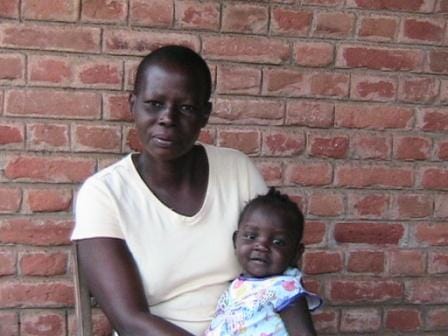
A plea for Esther in Yei

When the news got to me that
Esther had adopted three month old orphaned Rebecca, I was ecstatic. I knew
this was something she’d always wanted and felt God was involved. See the story
here.

Few months ago, some wonderful friends
developed this web page to help raise funds for Esther and
Baby Rebecca to solve their accommodation problem and also start a small
business. I highlighted this in another blog –The challenge of childless widows.
 

The target is $6,000 and $300 has
so far been raised. The deadline is this month and we are still hopeful that
God will stir someone’s heart to help Esther move to a new home, start a small
business. This is an opportunity to make a difference in this woman’s life such
that she’ll be good example among widows in Yei.

Many widows in Yei resort to prostitution,
brewing and selling local alcohol to survive and take care of their
responsibilities. Esther’s story will be different. We are committed to this
and our confidence rests in God’s unfailing word and grace for women like her.
We believe she’ll be a great mum and friend to Baby Rebecca. 

What would you do if Esther was
your sister, aunt, cousin, a neighbor or just a friend? Esther is more than
these to you and I; she’s a disciple of the Lord Jesus, a member of the
greatest and largest family ever conceived.

Please kindly connect to her
life story and help. No amount you’d give will be too small to give. Feel free
to direct all enquires on Esther and Rebecca to her Pastor, Stanley LoNathan:
stanleylonathan@gmail.com or call him on +249-955-04-8894

“What God the Father considers to be pure and genuine religion is
this: to take care of orphans and widows in their suffering and to keep oneself
from being corrupted by the world.” James 1:27

Can children be witches?

I got an email yesterday from a
friend that wanted to know what I thought about the News on CNN here of children abused and even killed, being
labeled as witches. As I watched the documentary on CNN, I knew I had to say my
mind. Feel free to say yours.

An extract of the article from
CNN reads, “A child witch is said to be a witch
when that child possessed with certain spiritual spells capable of making that
child transform into cat, snake, vipers, insects, any other animal and that
child is capable of wreaking havoc like killing of people, bringing diseases,
misfortune into the family,” Sam said.

“When
a child is accused of being a witch — that child is hated absolutely by everybody
surrounding him so such children are sent out of the home… But unfortunately
such children do not always live long. A lot of them, they’re either killed,
abandoned by the parents, tortured in the church or trafficked out of the
city.”

Sam
doesn’t believe in witchcraft and is trying to raise awareness in local
communities now gripped by hysteria…”

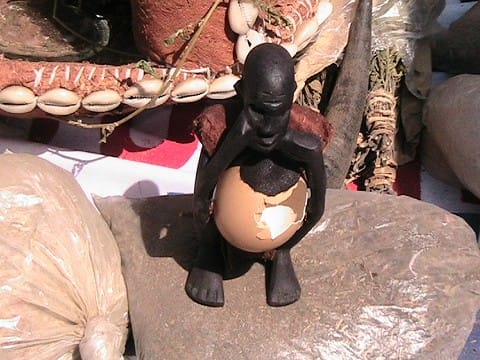
Sam could as well doubt the
existence of the devil for all I care. Get it from me here, witchcraft, voodoo
or Juju is alive and well in many cultures all over the world. Witchcraft and
occultism have been from ancient times. The questions begging for answers in this
story are; what is witchcraft? Who is a witch? Do you have child-witches or
wizards? And if you do, what should you do with them?

I’m not an authority in
occultism or demonology, but I have experienced firsthand, the operation and
manifestations of demons in people, including innocent kids. I have many
stories to tell.

People who are referred to as
witches or wizards are so called because they manifest some measure of power to harm others through supernatural means, which often
involves invocation of spirits via incantations and the use of assorted charms.

Witchcraft
is more than a craft; it’s a way of life. It runs in some families and it can
also be learnt and perfected like any trade or gift. It’s chief aim is to
connect with the spirit world in other to manipulate people, incapacitate them
or kill them outrightly.

An
individual could have progressive contact with the spirit world through many
means. Here are 5 common ways.

  •         
    It could be via initiation,
    whereby incantations and bodily incisions are made on the individual, thereby introducing
    him or her to the spirit world.
  •         
    It could be
    through ingestion, whereby the targeted victim usually unknowingly ingests some
    substances (charms) put into their meal or drink that eventually takes control
    of their mind and body.
  •         
    Witchcraft
    activities could run in some families and handed down from generation to
    generation.
  •         
    A visit to a
    sorcerer could also open the door for one to encounter supernatural forces that
    could lead down the wrong path.
  •         
    Lastly, one could
    be dedicated to the cult or the devil as a baby or even before birth. Like
    Samuel of Hannah, some children are dedicated to cults and the devil either as war or peace offerings or a pledge of loyalty.

Some
children are victims of wickedness perpetuated by adults, who themselves are
under the bondage of the devil. Children don’t belong to witchcraft cults and
covens willingly; else their nature will not serve as the blessed example that
Jesus recommends for His disciples. 

The truth is that they are children who having
been bewitched, become possessed by evil spirits and these spirits could
manifest abilities and strength beyond what is naturally expected of a child.
Does this make a child or anyone for that matter a witch? NO!

Based on
several cases I’ve encountered and those I’ve heard of, I confirm that demons can
operate through innocent children and they do. If you don’t believe this, then
you grossly underestimate the wickedness of the devil and his agents in this world.   

The
issue is not if children can possess
witchcraft abilities but how do we
respond to the challenge that such cases present. If a child demonstrates
witchcraft traits, do they cease to become humans? No! They are operating under
an influence beyond their control and need help which can only be found in
Jesus Christ.  Demons don’t differentiate
between adults and kids. Everything they do is against God and all He loves. Ridiculing
God is their primary assignment.

It’s a pity that some
overzealous ignorant exorcists who use the name of Jesus like a trading
facility treat demoniacs like wild animals. This is not only wro
ng but evil. When
innocent children are involved in bizarre cases like the ones reported in the

CNN documentary, it makes one sick. 

Any child under the influence of witchcraft cannot be helped by NGOs without good grounding in Jesus Christ. These organizations can provide food, accommodation, education and clothing for the body which is good but deliverance for the soul is the ultimate need and that is the job of followers of Jesus Christ.
 
Some beguiled parents running from the responsibility
of childcare could reject their children, claiming that they are witches. Can
anything be
more sinister than this? YES!!

We read in the Bible an incredible story of two mothers
agreeing to a most unspeakable and barbaric act of cannibalism against their own
kids.
  2Kings 6:28-29 “…What’s your
trouble?” She answered, “The other day this woman here suggested that
we eat my child, and then eat her child the next day. So we cooked my son and ate him. The next day I told her that we would
eat her son, but she had hidden him!” Yes, they cooked and ate the innocent
little boy. He was not a witch. The women were among the many that were starving those terrible days.

Some
years ago, in the company of two beloved brothers, Ken Nwaoparah and Austin
Okeke, I had what I consider till date, the most harrowing encounter with 15
demons that made their home in a 15year old boy.  They claimed to have been there since he was
born. I will tell of this encounter later to underscore the wicked operation of
demons in children.

People
can choose to be sentimental about this topic seeing that we are talking about innocent
children. But please don’t conclude on any matter you know little or nothing
about.  

If you
have had a personal encounter with children that manifested witchcraft traits
or gifts, let’s hear your story. What do you do to help?

Making sense of national flags

I’m an
admirer of national flags and coat of arms and I’m ever so intrigued by their
delicate designs, the meaning of the various colours, the symbol of the animals
and birds and other features therein. A study of these is called Vexillology.

Depending on
their form and function, flags are variously known as standards, banners,
ensigns, or pennants. They’ve been used as symbols of tribal, national, and
military identity since ancient times. Even the scriptures record, “When the
Israelites set up camp, each man will camp under the banner of his division and
the flag of his own clan. The camp is to be set up all around the Tent.”

(Numbers 2:2)

Lately, I’ve
been thinking about some national flags and asking a few questions. Are the
colours on this flag relevant to the nation’s current identity? What is
the connection between the colour(s) and design of this flag with its peoples?
What should prompt a change of these colours or the design? Should flags
reflect only a nation’s historical heritage or its anticipated future? Could it
be both? What part can they play in our daily living? I was reflecting on the
flags of Sudan, South Sudan and Nigeria when I heard over the radio that Malawi
has altered their national flag. The Raising Sun on it has now risen. They
say they’ve moved from developing
(raising sun)
to developed (risen
sun).
Awesome!!

The Flag of
S
udan 

Red, white,
black and green are called the pan-Arab colors and have been historically
linked to the Arab people
and Islamic religion for centuries. The colors stand
for Arab unity and independence.

The red
stripe represents Sudan’s struggle for independence and many other struggles,
and the sacrifices of the country’s martyrs. The white represents peace,
light and optimism. The black represents Sudan; in Arabic ‘Sudan’ means
black. Green represents Islam, agriculture and the prosperity of the
land.

Question: If Sudan means black, why the genocide in
Darfur? Why the current political tension on the issue of the referendum which
is part of the Comprehensive Peace Agreement (CPA)? Should there be a North
Sudan
for Arabs and then The Sudan for the southerners since Sudan means
black
?

The flag of South
Sudan

The signing
of the CPA allows
South Sudan to enjoy some level of autonomy and the prospect
of independence after a referendum. It will also be free to fly a distinct
flag.

The south
has a flag that closely resembles Kenya’s in its features and colours. A black
stripe at the top represents the identity of the people. There is a golden
star
which relates to the Star of Bethlehem, lying on a blue
triangular background representing the River Nile. It signifies a future with
optimism for the people of southern Sudan. Red stands for the blood shed
by the southern Sudanese in the 21 years of armed conflict while green
stands for the region’s great agricultural potential.

Questions: What of the oil?!! This one commodity which is
not reflected in the flag is at the crux of the current tension in the middle
belt of Sudan. Should the black on top represent the people and their
oil?

This brings
me to the Nigerian flag.

 History has it that the Nigerian flag was chosen
in 1959 from among 2870 suggestions in a competition, which was won by Michael
Taiwo Akinkunmi, who was then, a student from Ibadan. His design showing two green
panels
which represent agriculture sandwiching a white panel, which
represents peace and unity became the official flag of the Country on 1st
October 1960.

Questions: Green is for agriculture?!! Which agriculture??
Where are the groundnut pyramids in the north, the Oil Palm and rubber
plantations in the mid west, the cocoa in the west? What’s the price of a 50kg
bag of Garri (cassava flakes) now? How much of the rice we eat is grown
locally? Shouldn’t this flag be changed to reflect current realities? Shouldn’t
the colour black tell of the oil in the Niger Delta, which has helped
glue us together peacefully as a people 50years on? Imagine a black
white black flag for a minute.

What’s your country’s national flag saying to you? I’m still
wondering what a flag for the Kingdom of God should look like. As a Christian,
what core identities would you project on such a flag if you’re asked to design
one? Which colours and why?