We are debtors

This is not a fanciful title. We hate to be in debt. The thought of it strips us of our pride and dents our ego. But
as God’s creatures, we are all debtors to Him- to obey Him with all our spirit,
soul, and body. Having broken His commandments, as we all have, we are debtors
to His justice, and we owe to Him a vast amount which we are not able to pay.

But for the believer in Jesus Christ it can be said that
he does not owe God’s justice anything, for Christ has paid the debt His people
owed; but for this reason the believer owes the more to love as he has been
loved. I am a debtor to God’s grace and forgiving mercy; but I am no debtor to
his justice, because He will never accuse me of a debt already paid. Some still
struggle with this truth and try to help their conscience by good works instead
of simple faith in Christ.

Jesus said, “It is finished!” this could mean
several things to different people but to me, He meant, that whatever I owed
was wiped away forever from the books of remembrance because He has satisfied
divine justice; the account is settled; the handwriting is nailed to the cross;
the receipt is given, and I’m no longer a debtor to God’s justice.

But then, because we are not debtors to our Master in
that sense, we become a thousand times more indebted to God than we should have
been otherwise. How?

Let’s pause and ponder for a moment. What debtors we are
to divine forgiveness and mercy. Consider that after multiple thousands of
disobedient acts, He loves us as infinitely as ever. Consider what we owe to
His power; how He has raised us from our death in sin; how He has preserved our
spiritual life; how He has kept us from falling; and how, though a thousand
enemies have flooded our path seeking to snuff life and grace out of us, we
have been able to hold our own on His account.

Consider what we owe to his immutability. Though we have
changed a thousand times, he has not changed once. I heard John Bevere speak in
a sermon where he said God spoke to him in a vision and said, “…ask
My people, if they want me to be as faithful to them as they have been to
me?”
His name is still Faithful and True.

We are as deep in debt as we can be to every attribute of
God. To God we owe our very existence. He made all things for His pleasure, for
His entertainment, to just amuse Himself. Some people may be tempted to feel
offended with the idea that they exist solely for God’s amusement. But all creatures find their fullest fulfillment in actualizing the very essence of their creation.

Shouldn’t we therefore count it an honor and a great privilege
that the Creator of the vast unseen heavens and all their hosts, thought it wise also to
make us, along with the unknown depts, with a longing in His
heart, a hope and an expectation, that pleasure and pure fun will flow out of our
short-spanned lives and meet His eternal hunger? We are not just to yield our
lives as a living sacrifice; it is our only logical (reasonable) service said
Paul to the Romans. As steward of His blessings, we owe Him faithfulness and fruitfulness. This, in one word is- worship.

Oh that God will get all His due from our lives.
 I’m still awed that He won’t mind less than a 100-fold return on His
investments; He delights in a 60-fold and even a 30-fold. I don’t know how
He takes these measurements. But I know His righteous judgments will be
manifest in time. Until then, we must ask now, “What will my
repayments be worth to God when the night comes and books are closed? How would your gratitude to His unfailing mercies be valued? Your priorities today can help straighten out your judgment, in case you seem confused.

Flunking forbearance: two cripples at war

 The phrase in
Colossians 3:13 that command forgiveness and forbearance deserve a diligent
study. I’m not a fan of the King James Version of the Bible (though I was
thereby nursed), it uses an expression in that text I feel is foreign in modern
grammar- “Forbearing one another…”

To forbear or forbearance isn’t very romantic or inspiring;
in short it means “to put up with, to endure.” It may not sound very
spiritual to say that we have to “put up with” some kinds of people,
but isn’t that exactly what this scripture and Ephesians 4:2 are requiring of
us?

There are some people and some things we need to forgive.
Many more, we need to grit our teeth and put up with and endure. I’m learning
my lessons by observation and examination. We need wisdom to be able to make a
distinction between forgiving and forbearing. If I turn every grievance into a
forgiveness issue, I could become a very lonely person. I could also appear to
others as proud and they may choose to avoid me or labor unnecessarily to
satisfy me; thus making me a graceless egghead.

Dictionaries give a variety of definitions of forbearance:
“a delay in enforcing rights, claims, or privileges”; ” self-control,
especially in not responding to provocation “; “a good-natured tolerance
of delay or incompetence.”

For some people, forbearance refers to the postponing or
reducing of payments on a debt, though the interest keeps accruing and the loan
is still due; they says, “I may not make you pay now, but your day is
coming and the interest is growing!”

Forbearing is not about postponing repayment, but rather
involves putting up with the weaknesses, frailties, and failings of others, without
charging it to their account or making it a big issue; without continuing to
relate to them based on their past errors. It is like a lubricant that helps
minimize interpersonal friction which abounds in any relationship.

We are usually convinced that it is other person, not us,
who possess irritating mannerisms, annoying habits and negative personalities.
We wonder why they seem to enjoy such bad music (not our kind, the good stuff),
have such a poor taste for clothes, seem to demand or command special attention
or act immaturely? They probably feel
the same way about us! One of the great surprises of the first year of marriage
is how many unexpected and some unexplainable things you discover in the person
you once viewed only through the misty lens of romantic love. But marriage,
friends, family, and church exist in the cruel world of reality.  Our reactions and responses matter more than
we think they do.

The great missionary leader Hudson Taylor was once
challenged by his fellows about the incompetence of some of his missionaries.
His response- “My greatest temptation is to lose my temper over the
slackness and inefficiency so disappointing in those on whom I depended. It is
no use to lose my temper-only kindness. But oh, it is such a trial!”

To forbear is to grit your teeth and to put up with
differences, mistakes, and failures in an attitude of grace, because we are
deeply and humbly aware of our own need of grace. Forbearance is all about enduring
discomfort on account of love without showing it. I wish I could stress the
importance of not SHOWING IT. I mean not hoping the other party learns their
lessons from your coded silence or comments. I know my wife will certainly take
me up on some of these comments and she should.

I’ve thought much about the story behind the fight captured
in this video clip between two friends, cripples. They fought the way to
national fame on TV over a girl and some few change. Could this their disgraceful
public row be better than your private graceless restraint?

How are you dealing with hurt from friends and
family? Have you started asking that dreadful question, “for how
long…?” If yes, then it’s time to acknowledge, embrace and dispense the graciousness
of a love-charged forbearing spirit which we enjoy freely in and with Jesus Christ.

Fear and anxiety: A choice

During a debrief session I had with my mentor Tim Olonade, on returning from Sudan,  he asked me, “What do you fear about
your work in Sudan today?” My response was not well thought out. I simply
answered- Nothing. As I chewed on that very question, I have since noted several things I’m anxious about in relation to my mission in Sudan. I’m surprised to see that some are so unnerving that I don’t even want to discuss them.

One major cause for apprehension is- war. I totally dread another
outbreak of war in Sudan (who would not). But what about the fear of suspicion?
What of the fear of falling out with partners or team mates? What of the fear of being forgotten? The consequences
of these possibilities are grave, with the first rather unfathomable. Though
the fear of another war somehow fuels my motivation to return there and
continue plowing at the vision; the thought of having to run for my life through
the bushes as a result of any fracas is never a savory one. 
All the same, choosing
to take advantage of the relative peace we enjoy there now to connect with the people,
offering them the blessings of salvation in Christ and teaching followers of
Jesus how to obey Him, is a great privilege I won’t trade for anything.

You can’t read far in
the Bible without encountering fear. From Genesis to Revelation, Scripture is
awash with examples. In every circumstance though, one principle is consistent:
God wants to be trusted with every detail of our lives, especially with those
unknown elements that provoke fear. Our resolve to serve God and seek His will
despite the fears, worries and anxieties of life is a testament to His
faithfulness and unchanging purpose.

As I meditate on
anxiety and ask questions about its meaning and workings, I imagine that like fingerprints, everyone has their own brand of anxiety, ranging from vague
feelings of dread occasioned by various handicaps, to paralyzing fears of loss
or of discovery of personal secrets.

Fear is a normal part
of the human experience, even for Christ’s disciples.
Paul reminded the Corinthians, “I was with you in weakness and in fear and in much trembling.” (ICor2:3) On the healthy side, fear
is a God-given ability to detect and deal with a dangerous threat. A little
anxiety may also stimulate thinking and problem-solving. But exaggerated fear
and anxiety often disrupts our lives, drains our spiritual strength, clouds our
judgment and robs us of the joy-filled life that we should enjoy in Christ.

Anxiety may stem from
unconscious feelings which may go undetected and thus never be confronted. But worry is a conscious
act of choosing an ineffective method of coping with life’s issues. Worry
suggests the absence of trust in God. Scripture instructs us not to worry.

Procrastination and
avoidance of an uncomfortable issue creates most of the problems associated with
anxiety. Though these twin strategies bring temporary relief, they both promote
and compound anxiety in the future.

“What am I
avoiding? How? Why am I putting this off?” “Why am I hiding
this?” When you ask yourself these kinds of questions, be prepared for
some internal resistance, a mini war, which I pray you don’t win. May
everyone who engages these questions be overcome by them deeply enough to seek
sincere solutions. It’s difficult to understand and accept that sometimes the
very things we’re doing for relief could be causing or complicating our fears
and heightening our anxiety.

Consider these words
of wisdom from Chuck Swindoll:  

“Stop reading
only the grim sections of the newspaper. Watch less television and start
reading more books that bring a smile instead of frown. Locate a few
acquaintances who will help you laugh more at life. Ideally, find Christian
friends who see life through Christ’s eyes, which is in itself more
encouraging. Have fun together. Affirm one another.”

It’s our choice. We
can allow fear and anxiety to make us their victims or we can defy them by deepening our dependence on God as we prayerfully follow Him.

Reflecting on Integrity and remembering Peter in Yei

In Nigeria today there’s been a breakdown, and a compromise in integrity.
Recent headlines say it all. From the ailing banks and their Chiefs to the
sickly but “recovering” Commander-in-Chief,
who his predecessor recently called an invalid (or was I the only one that
heard that); we are witnesses to and victims of a system built on a foundation devoid of
integrity.
I’m still waiting for a name from someone in the Presidency, for
this current government. We’ve once had “a child of circumstance” and “a child
of necessity”. What shall this “baby” be called, after fifty years of self rule?!

Sadly though, insensitivity, wickedness and greed aren’t
limited to
bank CEOs and other Executives in government. We
are witnessing a moral laxity behind our pews and, even worse, behind the
pulpit.

A person with integrity does not manipulate others or
the system they serve, for private goals and ambitions. He or she is not prone to pomposity
or arrogance. Integrity even invites constructive and necessary
criticism beca
use it applauds accountability. Integrity is not afraid of
the
white light of examination or demands of close scrutiny. It’s
honesty at all costs.
 It is
expensive but a higher price is paid without it.

In addressing this crucial mark of character, I could come
acros
s as the “white knight,” but those that know, will agree
that
I
struggle and even fail more often than I’d happily
admit; though I try not to spend time mourning my falls of yesterday, neither
do I treat myself with kid gloves when the questions, “for who and why?” cannot be answered without a tincture of guilt. It’s important to establish this here and now because
there are some things integrity is not. It is not sinless perfection. A
person with integrity does not live a life absolutely free of sin. No one does.

After all, Nathanael (in whom there was no guile John 1:47), still needed the
saving grace of Jesus.

Integrity means the absence of duplicity and is the opposite
of hypocrisy. If you are a person of integrity, you will do what you say. What
you declare, you will do your best to be. Integrity also includes
personal
r
eliability, private purity and financial accountability.

This is the story of Peter, a disciple in Sudan. I met
Peter in April 2006. He came to South Sudan from Nigeria by road in October
2005; traveling through the infamous roads and bush tracks from Cameroon to the
Congo, via Central African Republic. His journey was that of an adventurous and
desperate businessman, with big dreams for success in a land he knew absolutely nothing
about. He’d later confess, “… if I was given $1million now to make that trip
again, I’ll not do it.” He traveled for 2months. He’s a red-blooded Ibo
man with a nose for business.

Peter came to know the Lord Jesus through my witness and
a whole new journey started; one far more challenging than his trip from
Nigeria to Sudan by road. Driven by his ambition to “make it” in business, he’d
learned to speak Juba Arabic which is the local dialect in just 5months. But
that was not what surprised me the most.

Peter walked into my room one day and showed me $1000 in hundred
dollar bills and said, “… I noticed the bank has credited my account with this-
and I didn’t pay that into my account. What should I do?”

We were at the bank an hour later and they were shocked
he was returning the money. I was overjoyed for him. Though life was tough those
days, it was so satisfying to see he loved the decision he made. He passed the
test of integrity several times on different occasions then after and still continues
on its path today; enjoying the riches of Christ as he matures along the narrow
way.

When you work and walk with integrity, you honor the
Lord.
Regardless of your profession, your character and conduct are
methods of ministry.

Apostle Paul wrote, “For our gospel did not come to you in word only,
but also in power and in the
Holy Spirit, and in much assurance, as you know what kind of men we were among you for your
sake.  And you became imitators of us and
of the Lord, welcoming the Word in much affliction, with joy of the Holy Spirit, so that you were
examples to all who believe in Macedonia and Achaia.
” (1Thess1:5-7)

Do we really desire change? Then let’s stand with
integrity in a culture weakened by hypocrisy.
Let’s start by doing what
is right when no one is watching or would know. Brazen
courage demonstrated on behalf of righteousness, never goes unnoticed and
unchallenged. The rewards are greater than we could ever wish for.

The Widow’s mite

Do you like great God stories? This is one you’d not forget soon. Seth Barnes posted this story here in 2007.


The following story
happened to me in 1991. I’ve written a book of stories like this

one called “Revolution of the Broken
Heart.” One day maybe I’ll publish it.

“Unless a seed…” John 12:24

Paradoxically, months after Fidel died, I found myself
sitting beside another deathbed high in the Sierra Madre Mountains, in the
village of El Derramadero. But this encounter left me uplifted as few other
experiences ever have. The people of El Derramadero have a history of
persecuting the church. Indeed, when our group first arrived in town, we were chased
out by town people throwing stones at us.

When we returned the next day, I was able to view the site where the proposed
church was to go. The people who lived around the site supported the project.
One of them, a woman whose name I now forget, but whose face remains indelibly
printed on my memory, was the mother of thirteen children. When I walked into
her front yard, the pigs and chickens scattered.

She paused in the midst of her work and fixed a big smile
on me. I explained why we were there and introduced her to my then six-year-old
son, Seth Jr. Catching him quite by surprise, she grabbed his blonde head
between her two weathered hands and squeezed his cheeks in delight. Seth Jr.
just gazed up at her, wide-eyed, unsure of what to do.

On the second day of the project, Beth Jacobson, an
occupational therapist who was assisting me, walked up and exclaimed,
“You’ve got to come meet this old lady I’ve been talking to. Her name is
Petra, and I believe she’s about 98 years old. She hasn’t been able to eat for
a month now and is dying. I’ve been praying for her, but she’s been ministering
to me even more. Come over and
meet her.”

Petra’s two-room adobe house was very dark inside except
for the shaft of light that fell from the window to the bed where Petra lay.
Beth and I pulled chairs up to the bed and greeted Petra. She looked to be
about the oldest person I’d ever met. She peered up at me with wizened eyes.
The work of living was an obvious moment-by-moment battle for her. She was
frail, but oddly unbowed. An air of holy victory seemed to infuse her tortured
breathing. Though I had no idea what she would say, when she began to speak,
reverence was the only appropriate response.

“I am Petra,” she said in whispered Spanish,
pausing for a breath. “I am a servant of our Lord and Master, Jesus
Christ….I have known His grace and His mercy for many years….It has been my
privilege to roam these hills preaching the good news that all those who call
upon His name can be saved….What a Master I serve! He is altogether
wonderful….His name be praised and lifted up….Though I know my time is
short and I can barely eat or drink, I thank Him for the life He has given
me.”

Neither Beth nor I knew what to say. I felt somehow
unclean and small. After a silence, I asked her more about her life. She
obliged me with answers, but always she turned the conversation back to the One
to whom she was devoted. Her life had so narrowed in focus that only one thing
remained, and that was her relationship with Jesus.

So often we hear sermons on the subject of completely
abandoning ourselves to Christ. We live in the gap between the biblical ideal
of holy living and our own guilty puttering in the well-worn ruts that comprise
our lives. Yet here in flesh and blood before us lay one for whom no gap
existed. She could say with Paul, “For to me to live is Christ and to die
is gain.”

It was enough simply to sit in her presence, to glean
from her communion with the Lord. At length we prayed for her. I can’t remember
if we prayed for her healing, but perhaps we should have prayed for our own
healing. Here we crawl across this dark planet, half the time bumping into
walls and not knowing what we’ve hit. We pray for spiritual sight, yet seem to
be perpetually tapping our blind man’s cane in front of us. Petra was seeing.
Her physical eyesight had grown dim, but spiritually, her vision was acute.

Both Beth and I were abashed by the holiness of the
moment. Tears were the only appropriate response. When our prayers were done,
we looked up and dried our eyes. Petra motioned for me to come close.
Simultaneously, she struggled to sit up in bed, itself a Herculean task. As she
sat up, I wondered what her intent was. Did she want to give me a hug?

She began to fumble for something that hung around her
neck beneath her blouse. She struggled to pull it out and show us.

At last she pulled out a woven cloth amulet closed up
with a small drawstring. She opened the amulet and began talking. “For
much of my life, I have wanted to see a church built in our little village of
El Derramadero….Though most of my ministry has been outside this town, my
heart’s desire is that we would see a church built here….I don’t own much,
but I have saved this coin and I wonder if you would use it to help build a church
here.” Having said this, Petra pulled a large, 5000-peso coin (worth about
$3.50 at the time) from the amulet and placed it in my hands.

What could I say but, “Yes, I will.” Suddenly,
it was as though I were transported to the first century A.D. Here before me
was the widow contributing her mite to further the Kingdom. Anything I might
give to the people of El Derramadero would pale in comparison.

A few weeks later, Petra died, but not before the walls
of the church she had prayed for all those years began to rise up out of the
ground. Petra seemed to have walked with God so long that death was just a
natural last step toward Him. What an example of one who has fought the good
fight and finished the race so well!

If Fidel’s story was that of one cut down too soon, it is appropriate that his
hometown should produce a woman like Petra. God is not willing that any should
perish. As a seed must die to bring forth new life, so Petra’s giving and dying
brought the Kingdom nearer in her corner of Mexico.

The great story of God on mission with His people in this world, is the basic framework of the entire Bible. The Bible is not a collection of unrelated historical events. It’s a single story of how God blessed all nations and was finally glorified.  I think the Edition
we are currently reading is Earth’s edition, which is documented by holy men under God’s prompting (2Peter1:21). Heaven’s edition will have Petra’s detailed life story and others like her in it; as it will be chronicled by angels.

Jesus said, “…Much is required from the person to whom much is given;
much more is required from the person to whom much more is given.”
(Lk 12:48)

Is what you are giving today, a worthy percentage of what
He has given you? If you are thinking money… Tithes (i.e. 10%); I would imagine God could feel cheated or even insulted.

Chaos at the contested grounds


Last week was filled with tales of survival and death. The Haiti story continued and then suddenly, our attention shifts as hell’s envoys visit the city of Jos, the capital of Plateau State in Nigeria. As usual, they leave behind their horrific signature of death and destruction.

This was no earthquake, but had all the trappings of one. It was humans versus humans, with all manner of deadly weapons deployed. Like in Haiti, it’s still uncertain how many were killed. But we know they are in their hundreds; the injured and the displaced, in their thousands.

The following letter was sent by a resident of Jos to his friends last week.

“Dear Friends, The past few days had been a miracle for some of us in Jos and for some a nightmare. The Jos crisis has changed the lives of many, we loss some of our friends and others made homeless, Over 370 people lost their lives, we were told of a Corp Member serving in Jos, who was on phone with the parents and screamed “They are coming” he tried to run for safety but he was killed, the parents tried reaching him on phone again, his killer answered their call saying “I don kill am” (I’ve killed Him). Many have survival stories to tell, life is indeed a miracle to many…”

I was reflecting on this blog yesterday when another email from a well-known Christian leader in Jos hit my in-box . It reads in part,

“Muslims have been harassing, tormenting and killing Christians; for how long will this be allowed to continue? The Muslims manipulate the media locally and now they are doing same internationally in order to discredit the Church when the Church is deeply hurting? The current General Officer Commanding the Nigerian Armoured Division based in Jos is a Muslim; the Officer Commanding the troops to quell the riots in Jos is a Muslim. This state of affairs would not be accepted in any of the core Northern states who are known to have rejected Christian Military and Police Commanders in the past. The evidence of premeditated attack is indisputable and says it all.”

As the blame game begins and difficult questions wait for sincere answers backed with action; the dead are being buried and mourned; while the survivors recount their ordeal and some count their blessings. Sadly, many Christians in Jos feel undone.

A look at this map of Nigeria here reveals a significant and dynamic partitioning showing the spread of the two dominant religions, Christianity and Islam.  

The city of Jos and many other major cities lie along this “Contested Religious Ground”. These cities are like gateways to the interior. The belt is tagged “Contested” because Muslims and Christians live together in sizable proportions but with a history of forced Muslim pre-colonial rule that involved enslavement. The struggle for dominance has since continued to elicit tension in the socio-political structure of the region; such that the slightest and flimsiest of qualms from anywhere could provoke a killing spree. A stronger Christian foot hold in these gateway cities create a great sense of insecurity among Muslims. This is why the Christian witness is vehemently opposed in most cities in the North, from campuses to the corridors of power.
 

The Nigerian religious spread is a neat microcosm of the African religious partition and the challenges thereof. Is there a way to take advantage of our vast experience in religious upheavals to advance the Kingdom of Christ northward? Could this recurrent painful situations profit us in any way? I believe Vision 5015 provides a perspective worthy of pursuit. Check it out.

I’m certain that this “contested religious ground” will continue to widen northward as God by His Spirit propels the Church in Nigeria to corporately pursue the mission enterprise with unquenchable zeal.

God is not managing evil in the world. He has destroyed it using His Son Jesus and He is manifesting that victory through the Church today. It’s now an expansion project, one that CANNOT be stopped or even delayed; and as Apostle Paul said, “… we can do nothing against the truth but for the truth.” (2Cor 13:8)

At the crux of the struggle is the dominion of the promised eternal Kingdom, with Jesus as Lord of lords and King of kings. It’s all working for the good and growth of the glorious company we belong.

I’m mindful of the immense sacrifice the followers of Jesus residing in these frequently troubled spots are making. God must have strategically located them there for His precious global purpose. These are prized and endangered creatures! The natural survival instincts will keep many of them at their post. But more than surviving, we pray for souls fully alive and abounding in the task set aside for them from the beginning of time.

In the past week, many believers dwelling in these “contested areas” in Nigeria have prayed more, drawn closer to God and even to their spouses and children. Though some have fled. There’s a curfew in Jos now and as long as it lasts, some husbands may feel stuck at home with their wives and may eventually resolve one or two quarrels (that will be nice:). Nine months from now, the maternity wards there may be teeming with pregnant women; you never know… good things can come out of some quarrels that meet solution in times of uncertainty like this.

Though many have lost loved ones, lost a body part and (or) property; there’s a song of victory for all God’s people who will stand fast at their post, waiting for His hour.

Our prayers are in God’s ears for you that stand for the Kingdom at the expense of your lives. We thank God for your faith and resolve to keep your focus northward until all is accomplished. We are in this together and it may last our lifetime.
 
May God prepare us all to deal with subsequent riots that will end with His approval. We know the weapons of our warfare are not of this world. Though sometimes I must confess, I wish they were inclusive of them.

The Lord is still saying, “…there’s still much more land to possess and occupy before He returns.”


If you were in Haiti now

Since January 12 when the earthquake hit Haiti, I’ve continued to wonder with some measure of grief, what I would do if I were somewhere around Port-au-Prince right this minute, as a survivor of the catastrophe or just arriving as a helper, a volunteer  with much needed aid and a word of hope.

I was thinking of the various needs and challenges I’d identified while watching the news on Haiti when I received this report from my dear friend Seth Barnes.

We’re talking to Miguel Shaul now who just returned from Haiti. He described a school that was full of students at the time of the earthquake that completely collapsed.

They had turned the large cement slab in front of the school as a triage center for the living right next to that place of death because there was no more space for them. A pickup truck with four crushed but living people showed up. There was no room for them there. The man driving it said, “Where else can I take them?”

There was a woman crying beside the body of her sister who couldn’t get treatment and had just died. A mass of people are fleeing Port-au-Prince. It was hard to move. It is becoming like a war zone.

People are being triaged all along the way from the capital to the Dominican Republic border.

Miguel describes the situation as “on a knife’s edge.” But he added that this can push us to a complete dependence on God. The pastors are saying that people are turning to God in an unprecedented way.”

Can you take a moment to reflect on the pictures you’ve seen posted on the internet, video clips from the various news media and their reports on Haiti in the last one week; what do you think you’ll be doing now if you’ve lived through the last one week in Haiti? Yeah, you may never know, but just imagine it.
How would you lift yourself to be able to lift the people around you? 

What would you say to someone that has not seen their loved one, who’s probably dead or still under the debris somewhere, praying to be discovered and rescued? 

What encouragement would you give the fellow needing medical attention right beside you but not getting it?
 The security crisis seems to be worsening as 4,000 convicts are on the loose. The main prison in Port-au-Prince holding them collapsed too. With your safety at sake, would you dare to go help save people that may die if you stayed back?

Based on what you’re seeing on TV or reading from other sources, what kind of help would you love to render in Haiti now?

The Great Commandment and the Great Commission will always blend perfectly, especially in catastrophic places like Haiti. But who will respond and how? It’s unfortunate that some Christ’s disciples are indifferent.
 
Can the rest of us that would love to be in Haiti now giving a helping hand but can’t make it, kindly express our desires for Haitians below? You can say a prayer here.
 
Click [here] if you want to go beyond just making a comment or praying and fund the efforts to save lives and restore hope in Haiti.
 
For updates on goings-on in Haiti, check [here].
 
“Faithful and True God, you’ve seen worse cases before, but please find for yourself in Haiti, a platform to manifest your greatness in the midst of the mess we see. Make room for yourself, be in the news today and let men celebrate you. In Jesus name! Amen!”
 

Pray Sudan out of bad news


Sudan will likely be in the news more often for the next 14months. We trust the Lord that it will be for all the good reasons.
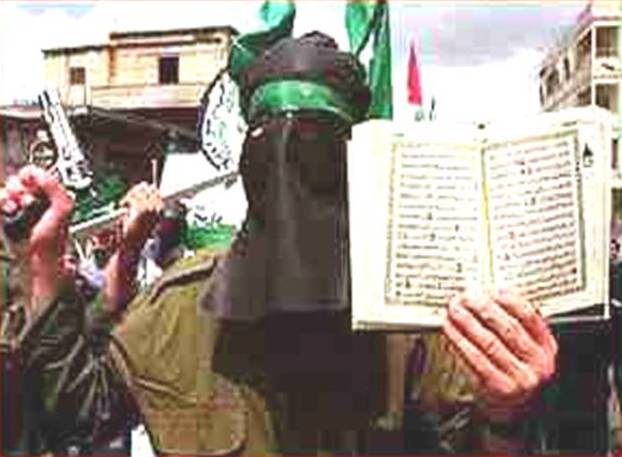
 
 
I wonder what you know about Sudan, its past, present and anticipated future. When you hear Sudan, what first comes to mind? If it’s bad news, can it change for good? My answer is YES!! Only if we pray.

The Comprehensive Peace Agreement (CPA) which took effect from January 1st 2005 shared power between the rebels from South Sudan called Sudan Peoples’ Liberation Army/Movement (SPLA/M) and the government in Khartoum.

The CPA was to divvy up the region’s oil wealth, most of which is in the South and set a timetable for elections which is slated for April this year and a referendum on Southern independence, scheduled for January 2011. This model offered and offers a way forward for Sudan, a way out of the gruesome civil war that lasted over 20years, a way for prosperity, for freedom and ultimately, for God’s breakthrough with the gospel of Jesus Christ.

It must be said, that the peace of Darfur which seems to have over-shadowed the challenges in the South is strongly knit to the success of this CPA between the North and South Sudan. This treaty must not fail! God forbid!! The consequences of its collapse are better imagined than experienced. Let’s pray Sudan out of its mess.
 
Some top ranking government officials and ill-informed reporters are using their tongue and writing skills unwisely to sponsoring strife. The beneficiaries of an outbreak of war are waiting to take advantage of poor leadership and feast on innocent blood. May their enterprise fall headlong!! This is where we must come in as the church and petition God on behalf of Sudan. This is how to join a rebel movement armed with weapons made in heaven. Prayer is essentially an act of rebellion. It is far easier to pray now than to go or send our loved ones with relief packs in the event of another crisis. Thank you for saying God forbid!!

Stand with us in prayer this season because impious politicking in high places and war plots in other areas are being conceived for execution. They will fail!! These are trying times for many Sudanese and those with vested interest in their land. We are commanded not to be ignorant of the plans of the devil. He is planning, we must be praying; not out of fear, because we fight from victory not for victory. Jesus said, “It is finished!”

Sudan, strategically set in the midst of 9 neighboring countries stands at crossroads yet again and I’m calling on all lovers of peace, progress and prosperity to stand in the gap with us. 

1.      Pray for healing from the hurts and pains of the many wars and regional strife.

2.      Pray for the emergence of more peace makers not just peace keepers.

3.      Pray for peaceful elections in April 2010 and a smooth referendum in January 2011.

4.      Pray for purposeful leadership from the government house to the classrooms.

5.      Pray for the peaceful resolutions among the warring tribes in the South, East, and Darfur.

6.      Pray for the manifestation of the power of God in signs and wonders among the peoples of Sudan, leading to radical conversions and deliverance from the powers of darkness.

7.      Pray that the emerging Christian youths, especially those in school, catch the vision of a godly and glorious Sudan.

8.      Pray that Message Bearers engaging the Sudan be fruitful and faithful in their assignments as they disciple many and plant churches.

9.      Pray that the Lord of the harvest will more than ever before, thrust laborers into the huge field of unreached peoples in the Sudan.

 10. Pray that news coming out of Sudan will bring to God the praise and the worship due Him.

 As we strive to put Sudan in the news on Jesus’ terms, let’s not forget to thank Him for what He’s doing now and intends to accomplish in the future.
 
“Father, please glorify your name!”

Martyrdom or suicide

This letter from John Calvin to five young Frenchmen
about to be martyred in 1553 for carrying the gospel into France was the
introduction to John Piper’s book- Filling up the afflictions of Christ.

It reads,

“We who
are here will do our duty in praying that He would glorify Himself more and
more by your constancy, and that He may, by the comfort of His Spirit, sweeten
and endear all that is bitter to the flesh, and so absorb your spirits in
Himself, that in contemplating that heavenly crown, you may be ready without
regret to leave all that belongs to this world.

Now, at this
present hour, necessity itself exhorts you more than ever to turn your whole
mind heavenward. As yet, we know not what will be the event. But, since it
appears as though God would use your blood to seal His truth, there is nothing
better for you than to prepare yourselves for that end, beseeching Him so to
subdue you to His good pleasure, that nothing will hinder you from following
whithersoever He shall call… Since it pleases Him to employ you to t
he death in
maintaining His quarrel, He will strengthen your hands in the fight and will
not suffer a single drop of your blood to be shed in vain. Your humble brother,
John Calvin.

I spent time meditating on this letter when I
began to read this book a few weeks ago. I showed the letter to a dear friend
and his response was, “Uche, don’t you think this is what Osama Bin Laden would
write to his followers?” I was quiet; a little ruffled with his perspective but
awakened by the seriousness of Christ’s call to His disciples, which Brother
Calvin stressed in his letter.

One Umar Abdulmutallab, a disciple of Osama from
Nigeria was arrested last week Friday (on Christmas Day for crying out loud)
for attempting to blow up himself in a plane on its descent into Detroit
Metropolitan Airport USA. As if our national challenges are not enough. Are we breeding suicide bombers now? The
signs are worrisome. Let he that readeth, understand.

On the first Christmas, God entered into history by
sending His Son Jesus as a suffering slave who would ultimately give His life
after enduring torture and martyrdom. With that event, God revealed to us that
self-sacrifice is His specific method for tackling the problems of rebellion,
evil and the sin of mankind. Josef Tson said, “Self-sacrifice is the only
method consistent with God’s nature.”

God cannot respond to hate with hate, because if He did,
He would be borrowing not only the method but also the nature of the devil, who is
the originator of hate. God can only respond with love because He is love and
by giving Himself for those that hate him, He expresses the essence of His
nature. All who are born of God have become partakers of His nature and must
respond to evil as the Father did. This is our call, this is how He
triumphs over evil and gets glory for Himself through mere mortals like us.

The question that needs to be properly addressed when
martyrdom is discussed alongside suicide is, for what or whose cause?

We have several cases of suicide in the Bible; from King
Saul and his Sword bearer to Judas Iscariot and Samson. Others include
Abimelech, Ahithophel, and Zimri. What led these men to such tragic exits; selfishness
or service? Samson stands out among the lot. In contemporary terms, Samson rocked the Philistines with a great push. Call it a suicide-push, I call it a destiny fulfilled. He was born to end the Philistines oppression and he did. What are you born to start or end?

The Lord Jesus still
calls His disciples to radical living. A scripture appears in all four Gospels and the letters to the Churches in Revelation reechoes it, “
…whoever will
save his life shall lose it, but whoever will lose his life for My sake, he
shall save it… Be faithful to death, and I will give you the crown of life.”

Matt 16:25; Mk 8:35; Luke 9:24; John 12:25; Rev 2:10

Martyrdom is a great responsibility God gifts few of His children, most of whom die several times over in the course of living for His glory before their life is finally harvested by the Master.
 
If it’s not for Jesus, it’s for you and if it’s for you, you are on your own..

We need thanks-living dances

 It’s been a season
of thanksgiving in many churches around me. My Church had a great time
recounting God’s mercies in 2009 during our annual Thanks Giving worship
service yesterday. It’s impossible to keep an accurate catalog of God’s
goodness from day to day, but we are encouraged to remember Him and give Him
His due.

“Thank God no matter what happens, this is the
way God wants you who belong to Christ Jesus to live”
1Thess 5:18 (The
Message)

So as we danced to and fro the church altar with our
various offerings, I remembered this video clip below that someone sent to me a while back and
reflected again on David’s famous dance before the Lord. It was a great show of
extravagant worship with raw passion, flowing from a grateful heart.

In many churches around here, offerings are collected at
the altar and worshippers go dancing. Sometimes those that don’t have cash to
give, just dance to God in a special way, as an offering to Him.

I was told this brother presents this altar dance regularly. (May it delight the Lord forever).

 I pray that such dance steps would be a
manifestation of authentic fellowship with God flowing from the private to the
public place. May this manner of celebration abound in our homes and worship
gatherings, such that thanksgiving dances will cease to be special events but a
way of living.

 I’m tired of useless religious pantomime and
hypocrisy. What about you?