 Years ago, we derived immense satisfaction and, I must confess, even some excitement from engaging demons and dealing with them.
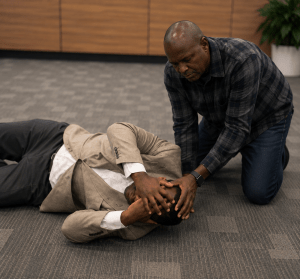
In those days, you dared not fall to the ground during one of our prayer or worship meetings! If you did, we were likely to interpret it as evidence of demonic activity, and you probably weren’t going home until whatever we believed was troubling you had been confronted.
We were young, zealous and sometimes overconfident.
Yes, Jesus warned His disciples not to become carried away because spirits submitted to them, but rather to rejoice that their names were written in heaven (Luke 10:20).
Still, there was something thrilling about the thought of little me confronting something supposedly bigger and stronger than myself, and seeing it submit to the authority of Jesus.
But don’t worry about me. My name had better be written in heaven!
Since arriving in Yei a couple of weeks ago, however, I have heard about and witnessed several situations attributed to demonic attacks. Some have involved children.
And it got me thinking.
Back home, encounters of this dramatic nature seem to have become less common, at least within the Christian circles familiar to me.
So, what happened? Did the demons flee?
Are the people in our neighborhoods suddenly free from spiritual oppression?
Have the demons somehow become immune to our prayers?
Or have we simply stopped recognizing their activities because they no longer look the way we expect them to look?
Could it even be that we are looking for dramatic manifestations while the enemy has become far more sophisticated, comfortably and quietly working among us?
That question took me back many years.
Fifteen Demons and a Fifteen-Year-Old Boy
In an earlier blog, Can Children Be Witches?Can Children Be Witches?, I promised to tell the story of one unforgettable encounter from my younger years.
Here it is.
In the company of two wonderful friends, I participated in what we understood to be the deliverance of a fifteen-year-old boy from fifteen demons.
It happened on the final night of an evangelistic outreach on a university campus. We called the meeting Holy Ghost Night and what a night it became!
The main meeting had ended, and most of the students had already left when I suddenly heard loud prayers coming from an unfinished building near the meeting hall.
Then came the repeated command, “Come out!” “Come out!”
I raced toward the sound. There on the floor was a young boy being physically restrained by several young men while Brother Austin Okeke, now a pastor, led the prayer session.
I watched for a few minutes.
When this young boy attempted to move his restrained limbs, the guys holding him down could hardly hold their ground. It was a war.
I became so fascinated by what was happening that I ran back to the hostel to get a tape recorder.
This encounter, I thought, must not go unrecorded.
By the time I returned, the team had cast out six of fifteen demons.
Brother Austin was using an approach we had not tried before. He asked each supposed spirit to identify itself and describe what it was doing in the boy’s life.
One after another, voices responded. I began recording when they reached the seventh.
The voice coming from the boy sounded to us like that of an old man and sometimes it came like an echo. He repeatedly gnashed his teeth in a manner that sent cold shivers down my spine.
For some time, he refused to answer our questions.
Then came these words, “When a foolish man holds his peace, he is counted a wise man.”
I was stunned.
About two weeks later, I came across those exact words in Proverbs 17:28 and it pained me much that the demon quoted a scripture and I didn’t know.
We continued asking for a name.
The boy’s face contorted strangely before the voice asked us, “Can you imagine a tree growing in the middle of the sea?”
Brother Austin tried to interpret the statement.
“So you are Oke Osisi?” he asked, an Igbo expression referring to a great tree.
No.
The answer, we were told, meant something more.
Then came the name, “Nkpologwu bi na mmiri.” In Igbo, roughly, “a root that dwells in the water.”
Each time the boy moved with such extraordinary force that the brothers restraining him lost their balance over and over.
The message being communicated was clear, “You cannot uproot me from this boy.”
But we continued praying, addressing the spirits tormenting this boy.
By now it was very late. We were getting tired.
Someone suggested that instead of continuing one by one, we should simply command all the remaining spirits to leave at once.
So we did.
There was only one problem:
Where were we sending them? To the Moon? The Sun? The Arctic? Everyone commanded them at will. The boy tossed and turned on the ground and let out a loud and prolonged scream. We believed he was delivered.
We were young and naive. Looking back today, I can smile at some of our youthful enthusiasm and theology.
Eventually, the boy opened his eyes. We celebrated and retired to sleep, assuming it was over.
But the following day, the boy approached Brother Austin and said something chilling, “How do you think you can cast all of us out like that?”
Apparently, as far as we understood the situation, it wasn’t over.
The Final Night
That Sunday evening, Brother Austin, Brother Ken Nwaopara and I took the boy to a quiet area of the campus to pray with him again.
This time, we approached things differently.
There was less physical restraint and less commotion.
We also kept asking ourselves one question, Why did this boy voluntarily come back?
Whatever was happening inside him, something within him seemed to want freedom.
We attributed that to the work of the Holy Spirit.
What followed remains one of the most extraordinary deliverance ministry experiences of my younger years.
The remaining demons each manifested in their unique voices and characteristics. They gave their names, described their supposed functions and made numerous claims about the boy, other people, local and national events.
Some things they said appeared to correspond with information we later encountered. Other claims concerned events and supposed spiritual schemes far beyond anything we could verify.
That experience taught us something important, but perhaps not exactly what we thought it taught us at the time.
We came away convinced that evil was more organized, deceptive and determined than we had previously imagined.
But today, years later, I think there was another lesson waiting for me.
What If the Enemy Doesn’t Need to Make You Scream?
When the last demon came out that night, the boy suddenly stood up and looked around.
“Why are we here?” he asked.
Then he noticed us sweating.
“What happened?”
We explained what we know had taken place.
He wept.
And there, that night, we led him to Jesus Christ.
I have never forgotten that encounter, but neither have I stopped thinking about it.
Because spiritual warfare doesn’t always look dramatic.
Perhaps this is where we sometimes get distracted.
We look for someone screaming on the floor.
We expect strange voices.
We expect violent manifestations.
We expect something spectacular enough to announce, “The devil is here!”
But what if deception has become quieter?
What if the enemy can accomplish more through a Christian’s pride than through a dramatic manifestation?
What if unforgiveness can keep someone bound for years without anyone shouting, “Come out!”?
What about envy?
Secret lust?
Greed?
Bitterness?
Self-deception?
Spiritual apathy?
What if a believer can attend church, sing worship songs, quote Scripture, carry a Bible, and still become increasingly useless to the purposes of Jesus because something has quietly captured the heart?
Perhaps the most dangerous bondage isn’t always the one that throws somebody onto the floor.
Sometimes it is the one that allows us to remain comfortably seated in church while our hearts slowly move away from Christ.
So, Where Did All the Demons Go?
Maybe that’s the wrong question.
Satan’s ancient strategies of deception and camouflage have not fundamentally changed. Scripture still describes our struggle as extending beyond what is merely physical.
But perhaps we need to become less fascinated with manifestations and more attentive to fruit.
What is happening to our hearts?
What is happening to our marriages?
What is happening to our integrity?
What is happening to our love for Jesus?
What is happening to our compassion for people?
What is happening to our obedience?
What is happening to our churches?
The signs of warfare may not always be spectacular.
Sometimes the battlefield is the human heart.
So let me leave you with the question I am asking myself, Are the signs of this war visible where you live?
And more personally, Are you moving from victory to victory, from glory to glory, or have you become so accustomed to the battlefield that you no longer recognize the war?
Eugene Peterson’s rendering of Ephesians 6 reminds us that this is no casual contest from which we simply walk away. We face realities greater than our own strength, and therefore need everything God provides if we are to remain standing (Ephesians 6:12–13).
And yet our confidence remains anchored in the supremacy of Christ,“The LORD (God) says to my Lord (the Messiah), Sit at My right hand, until I make Your adversaries Your footstool.” Psalm 110:1 AMP
The enemy may change tactics.
The manifestations may change.
The battlefield may change.
But the authority of Jesus Christ has not. Hallelujah!!



 leave Yei on Sunday 5th December

 Kingdom Exploits With Uche