
What would you do if a cat, bat or rat that had been terrorizing you at night with blood-curdling cries and strange noises finally got caught in your trap?
You approach it, ready to deal with the troublesome creature, and suddenly it cries out in a human voice, “Please don’t kill me. Have mercy!”
What would you do then?
A cat had been visiting the dormitory of the orphaned children at Dreamland at night. The children became convinced that this was no ordinary cat. They prayed for its visits to end and eagerly looked forward to the day it would finally be caught.
After several unsuccessful attempts, one night they trapped it.
They killed the cat and burned its remains.
The children celebrated almost throughout the night. As far as they were concerned, the creature that had terrorized them was gone. They believed the cat was associated with witchcraft, and its death represented a spiritual victory.
But their celebration raised some difficult questions.
If it really had been a witch, that is, if their understanding was that a human being had somehow taken the form of a cat, should they have killed it, believing that somewhere a human being might consequently die?
On the other hand, what if it was simply a cat?
Animals that are regarded with suspicion in one culture are loved as pets in another. Could this have been somebody’s pet scavenging for food at night? Could it have been a stray animal simply looking for food, warmth or shelter?
These were some of the questions that troubled my Western missionary friends when they heard the children’s story.
When Two Worlds Meet
And this is where missionary work becomes interesting.
In cultures where certain animals are traditionally regarded as spiritually significant, whether evil, sacred or mysterious, a missionary can easily misunderstand the people he has come to serve.
We bring more than the Gospel when we cross cultures.
We bring our upbringing.
Our assumptions.
Our fears.
Our education.
Our ideas about what is rational and irrational.
And unless we are careful, we may confuse our cultural worldview with biblical truth.
This is where contextualization becomes important.
Contextualization is not changing the Gospel to make it acceptable. It is learning how to communicate the unchanging Gospel faithfully within the worldview of the people receiving it.
The Gospel itself may offend. But we, its messengers, should not create unnecessary offence through cultural arrogance.
We must clothe ourselves with humility and love, patiently learn from the host culture, and prayerfully search for the pathways God has already prepared within that culture through which the Gospel can enter.
But What About the Spirit World?Scripture does not ask Christians to pretend that the spiritual world does not exist. The Bible speaks openly about witchcraft, sorcery, deceptive spirits and spiritual powers.
But acknowledging spiritual realities does not mean that every strange animal, unexplained sound or frightening occurrence should automatically be labelled demonic.
That creates another danger.
The real question, therefore, is one of discernment. How do you differentiate between an ordinary cat behaving like a cat and something you believe has spiritual significance?
When is something real, imagined or misunderstood?
When should a missionary challenge a cultural interpretation, and when should he first sit down, listen and try to understand what lies behind it?
These are not always easy questions.
And quick answers are often dangerous.
Things Are Not Always What They Seem
In the movie The Matrix, Neo eventually discovers that things are not what they appear to be. The world he has accepted as reality is actually an elaborate illusion. He needs an awakening.
In a very different sense, Scripture also reminds us that there is more to reality than what our physical eyes can perceive.
Yet Christians are not called to live suspicious of everything around them. Neither are we called to dismiss everything we cannot explain.
We are called to discern.
Among the gifts of the Holy Spirit listed by Paul is the “discerning of spirits” (1 Corinthians 12:10). That gift reminds us that spiritual matters require dependence upon God rather than fear, superstition or mere human reasoning.
So when my missionary friends wrestled with the story of the Dreamland children and their mysterious cat, I understood their discomfort.
I grew up with pets. I love animals. We have two dogs here ourselves.
But I also understood something my friends initially struggled to appreciate. For those children, this was about much more than a cat.
For nights, they had lived with fear. They had prayed. They believed something was terrorizing them. And when the nightly disturbance finally ended, they interpreted that moment through the spiritual worldview in which they had been raised.
Their overwhelming emotion was not cruelty.
It was relief.
It was victory.
And, rightly or wrongly in their interpretation of what the animal represented, the experience strengthened their confidence that God heard their prayers.
That is the part a cross-cultural missionary must not dismiss too quickly.
Our responsibility is neither to validate every traditional spiritual explanation nor to ridicule what we do not understand. Rather, we must patiently bring every belief, fear and experience under the light of Scripture while helping people grow from fear and superstition into mature faith in Jesus Christ.
Perhaps, then, the biggest question raised by the Dreamland cat is not:
“Was that cat really a witch?”
Perhaps the more important missionary question is, “How do we help people interpret frightening and unexplained experiences through Scripture without despising their culture, or reinforcing their fears?”
That requires more than logic.
It requires humility.
It requires Scripture.
And it requires discernment.
May Abba Father give us wisdom to recognize truth, courage to confront darkness, and landmark testimonies of His faithfulness that deepen our confidence in Jesus Christ.
 As we employ our gifts and grace towards building a new nation in South Sudan, we are strongly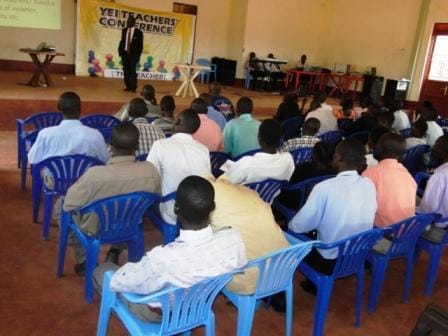
 2. We are convinced that our
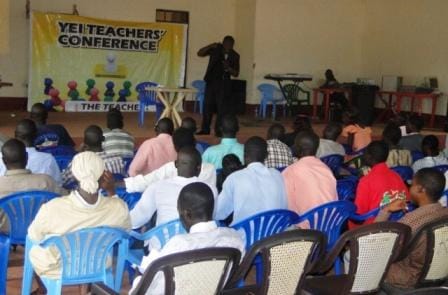 4. We made it clear that we want
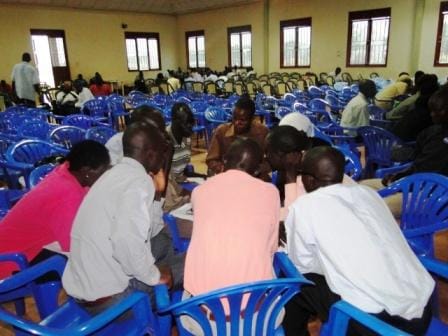 c) Make it possible for teachers to meet
 If you have a call or a passion to instruct teachers and














 “I’d tried to reach my accountability partner all day